All posts by Indesign Media

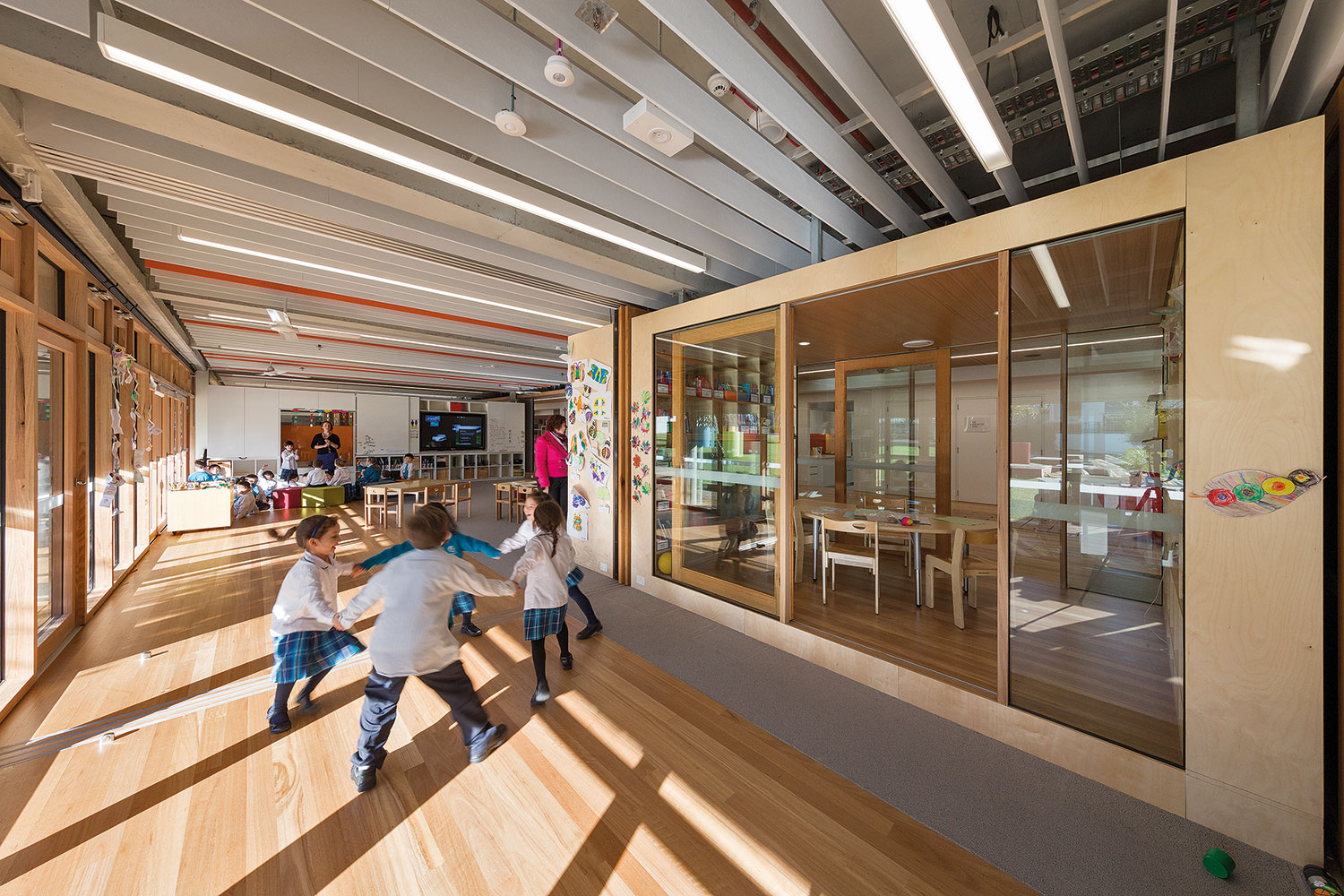
Beaumaris North Primary School

ARKit

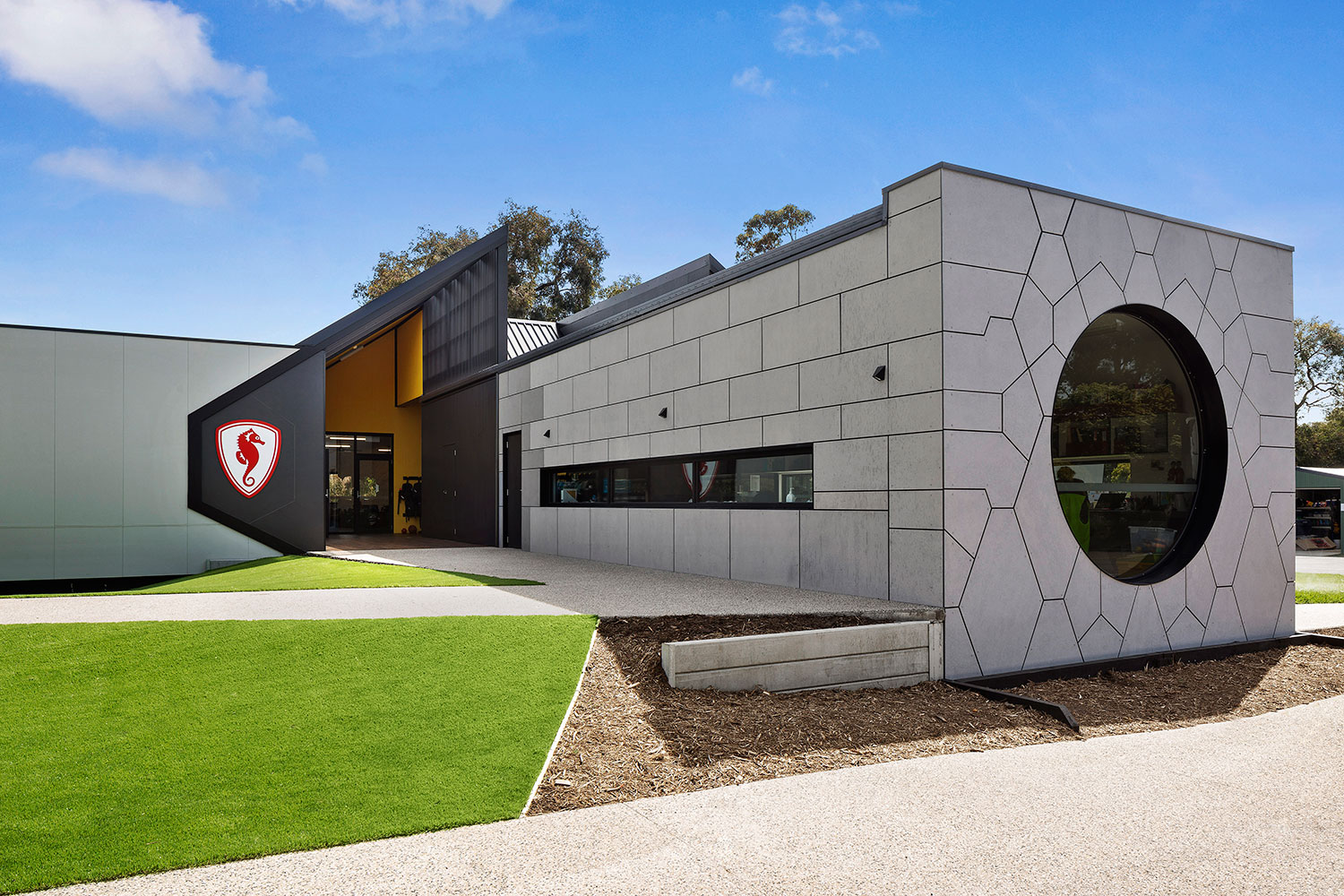
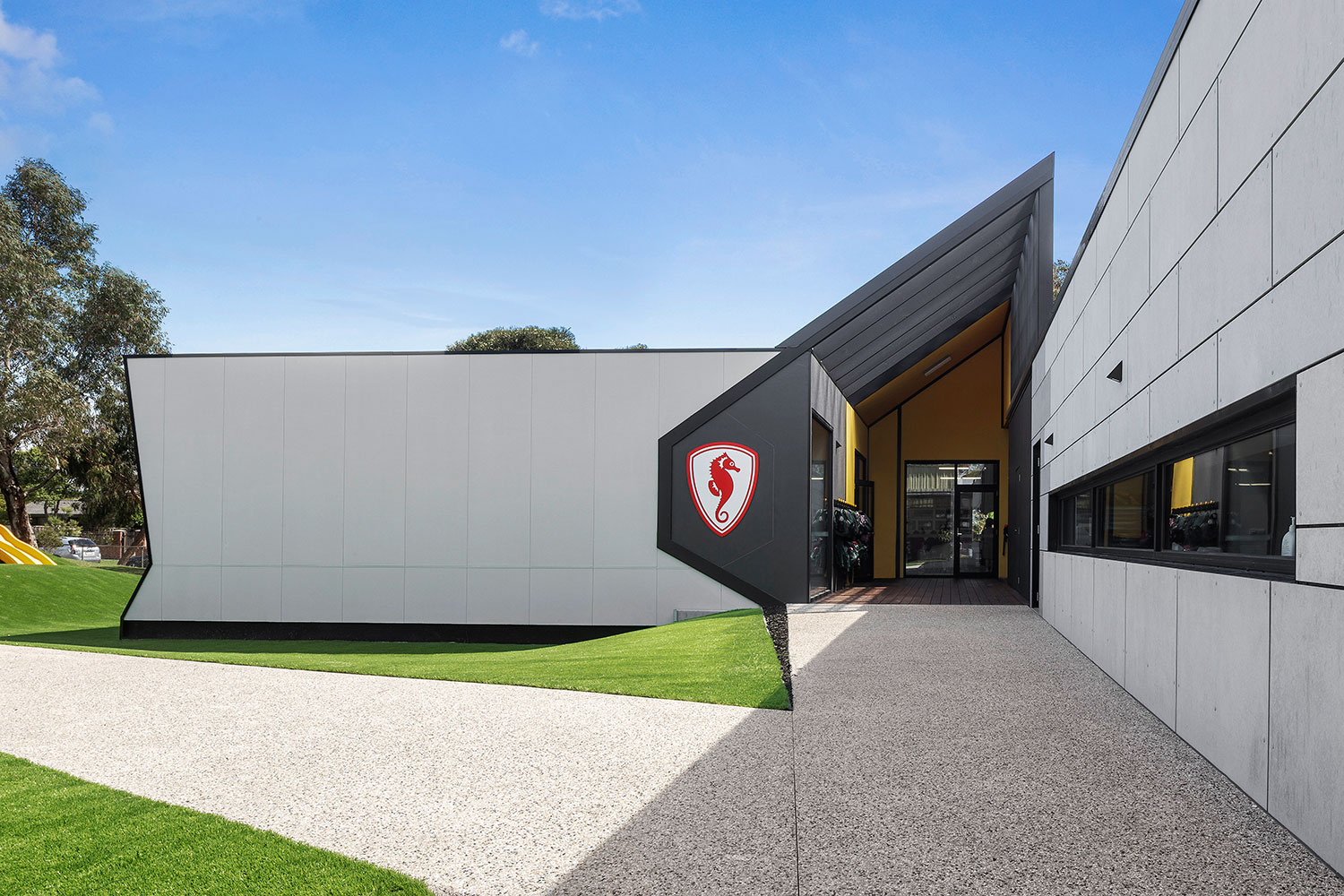
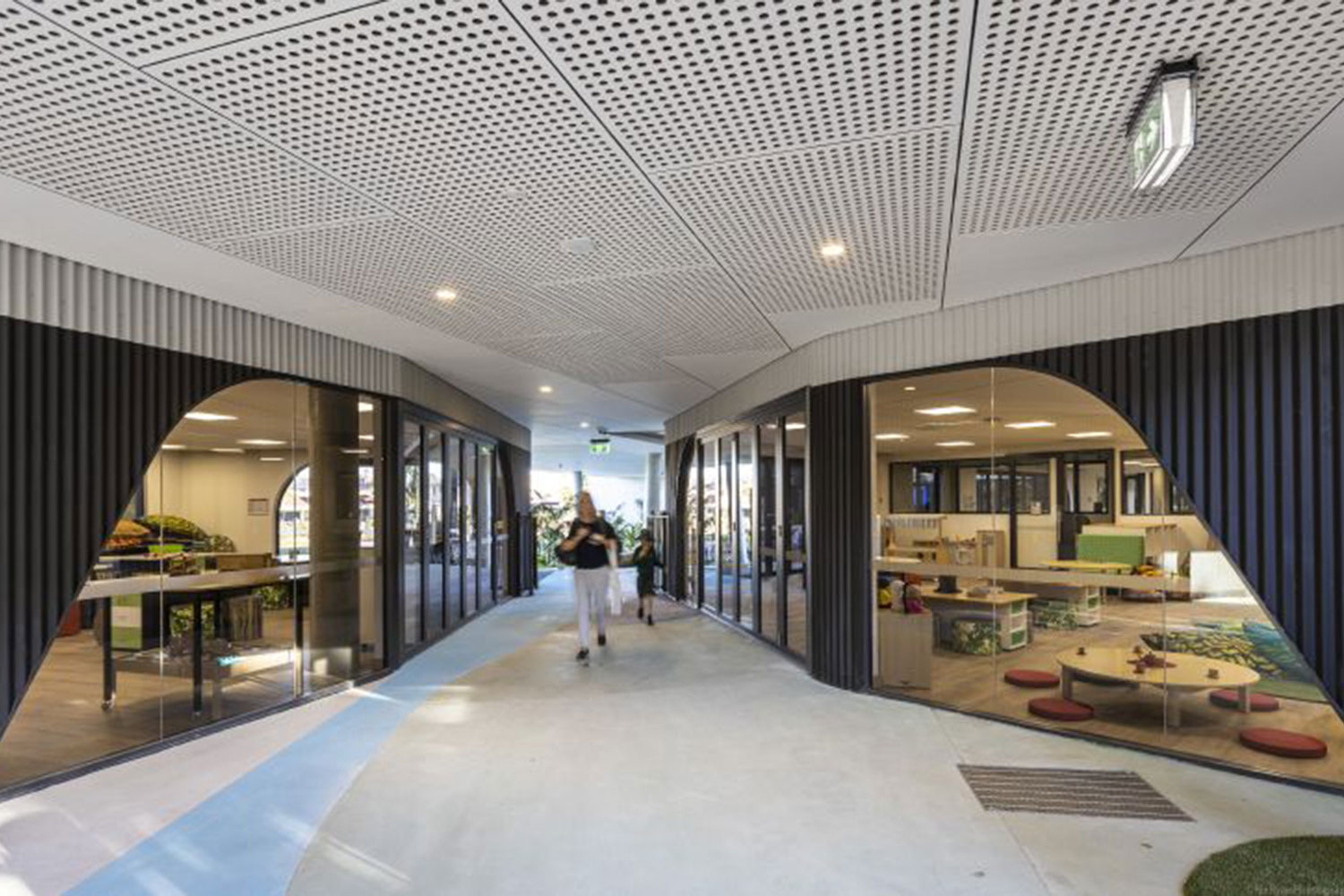
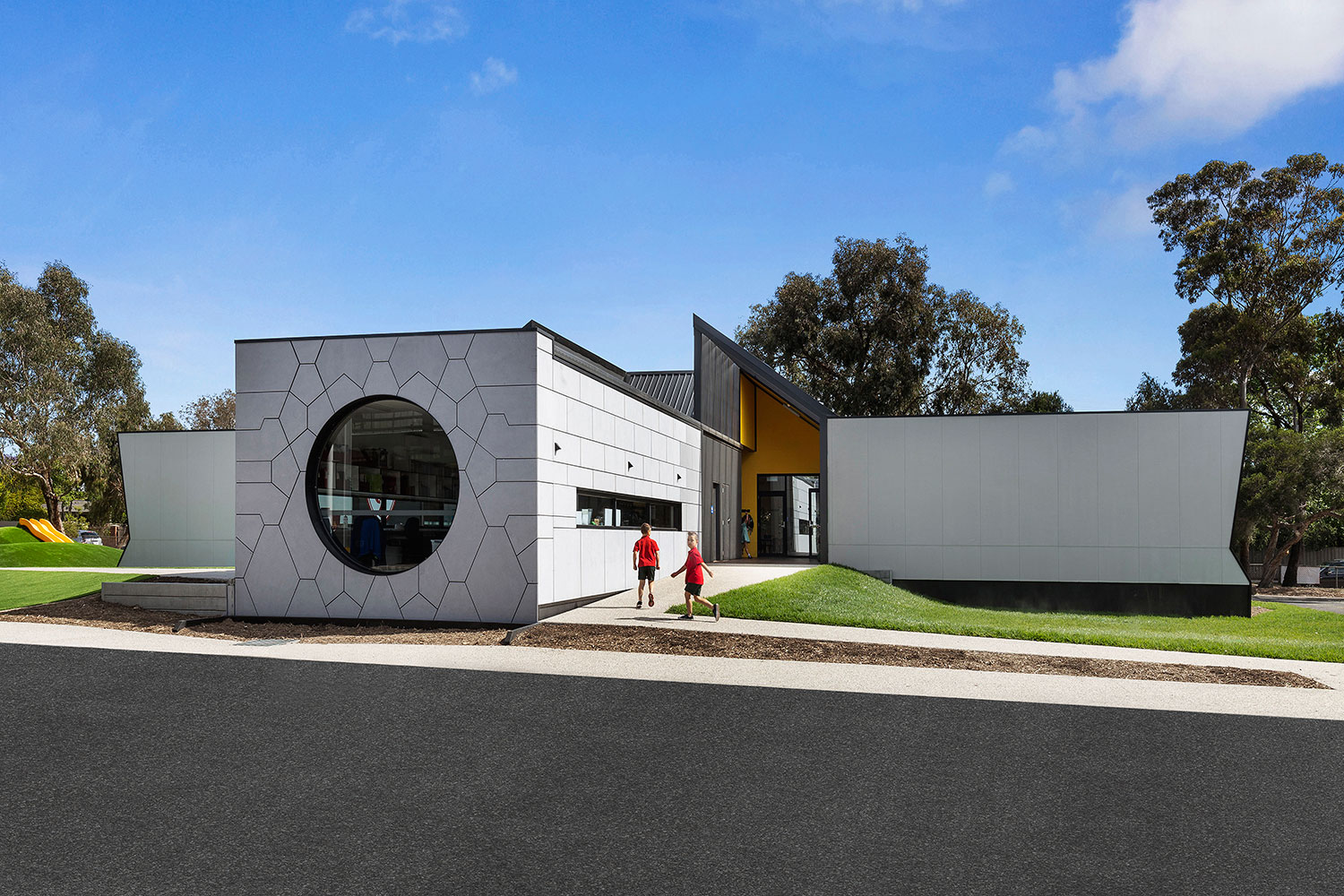
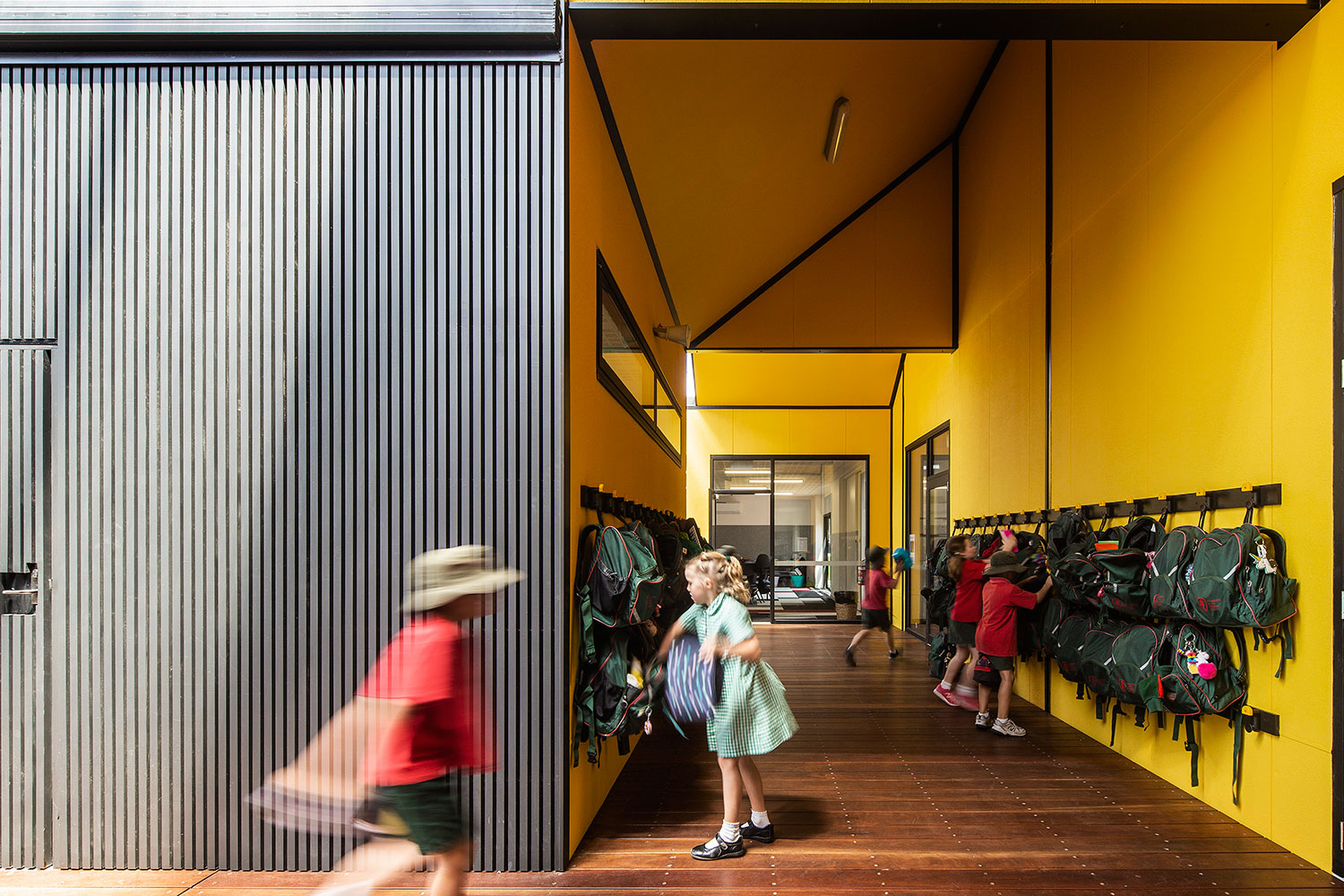
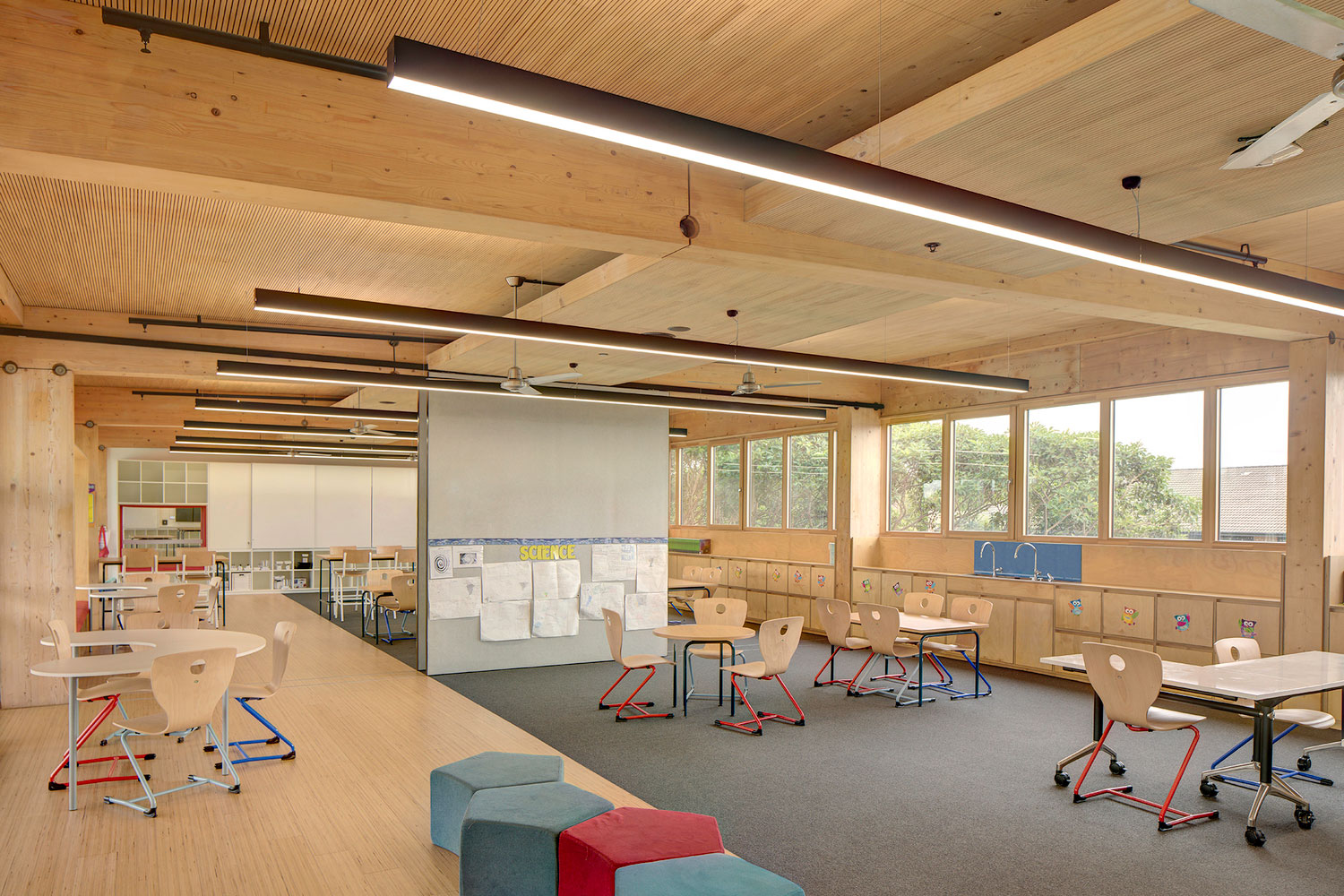
Beaumaris North Primary School is a part of the Government’s Permanent Modular School Buildings Program, which is focused on the removal of asbestos from Victorian schools. The brief for this project comprised the removal of existing buildings and the creation of a new, custom designed teaching and learning facility. The school’s vision for the project was to provide considered passive spaces, designed in a way that would engage and inspire young minds, while operating as state-of-the-art, flexible, modern learning facilities.

A.B. Paterson College’s The Winton Centre

A.B. Paterson College

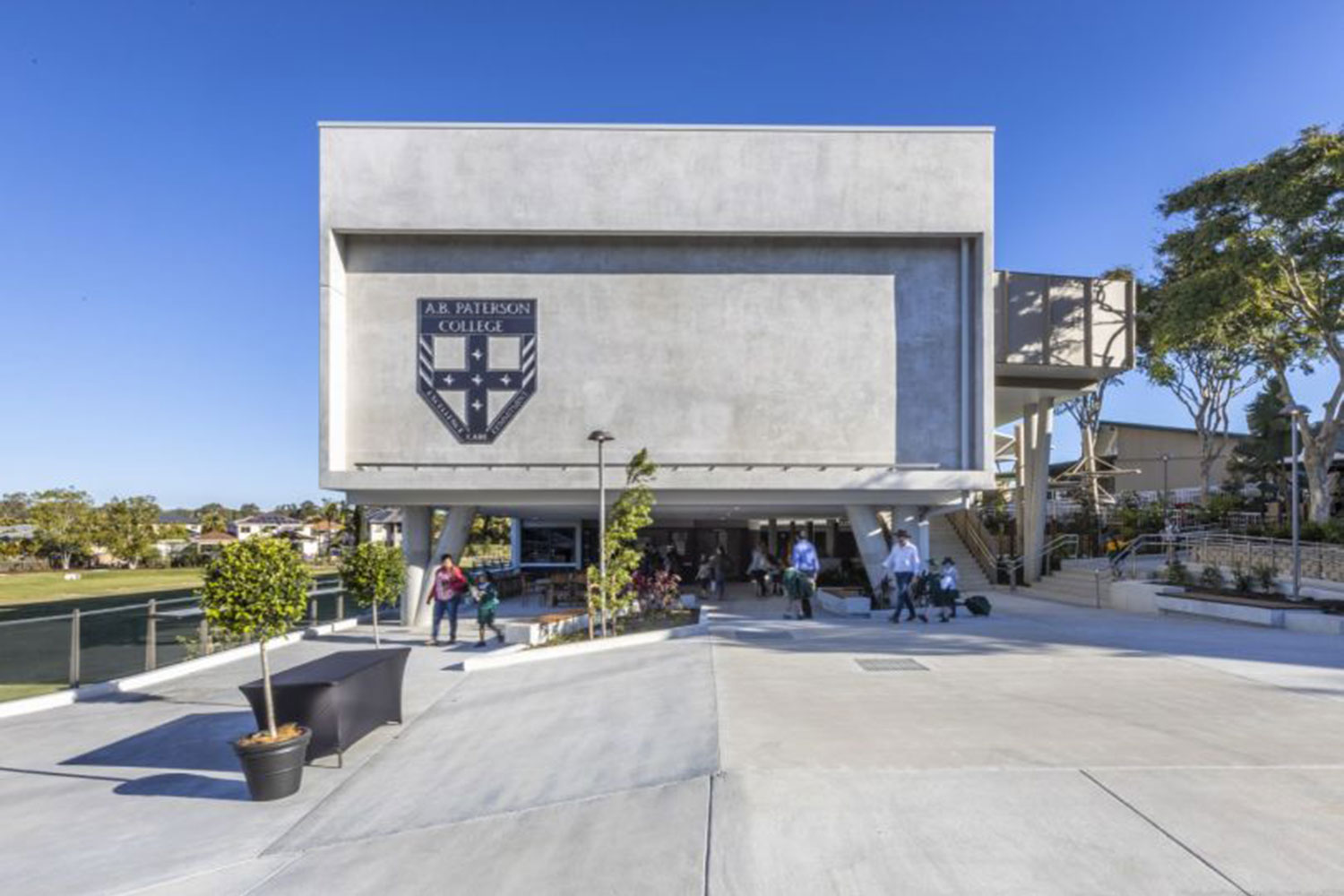
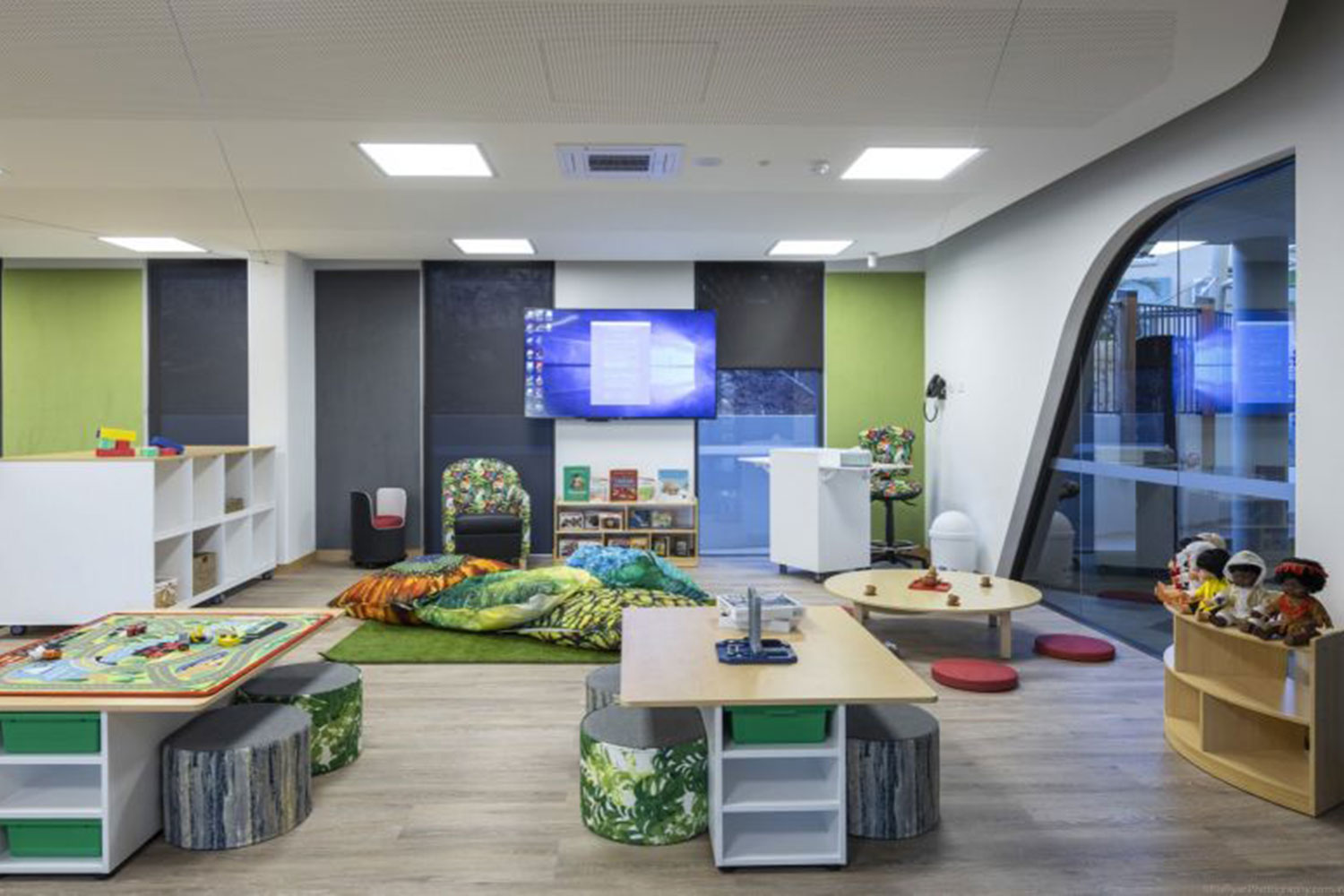
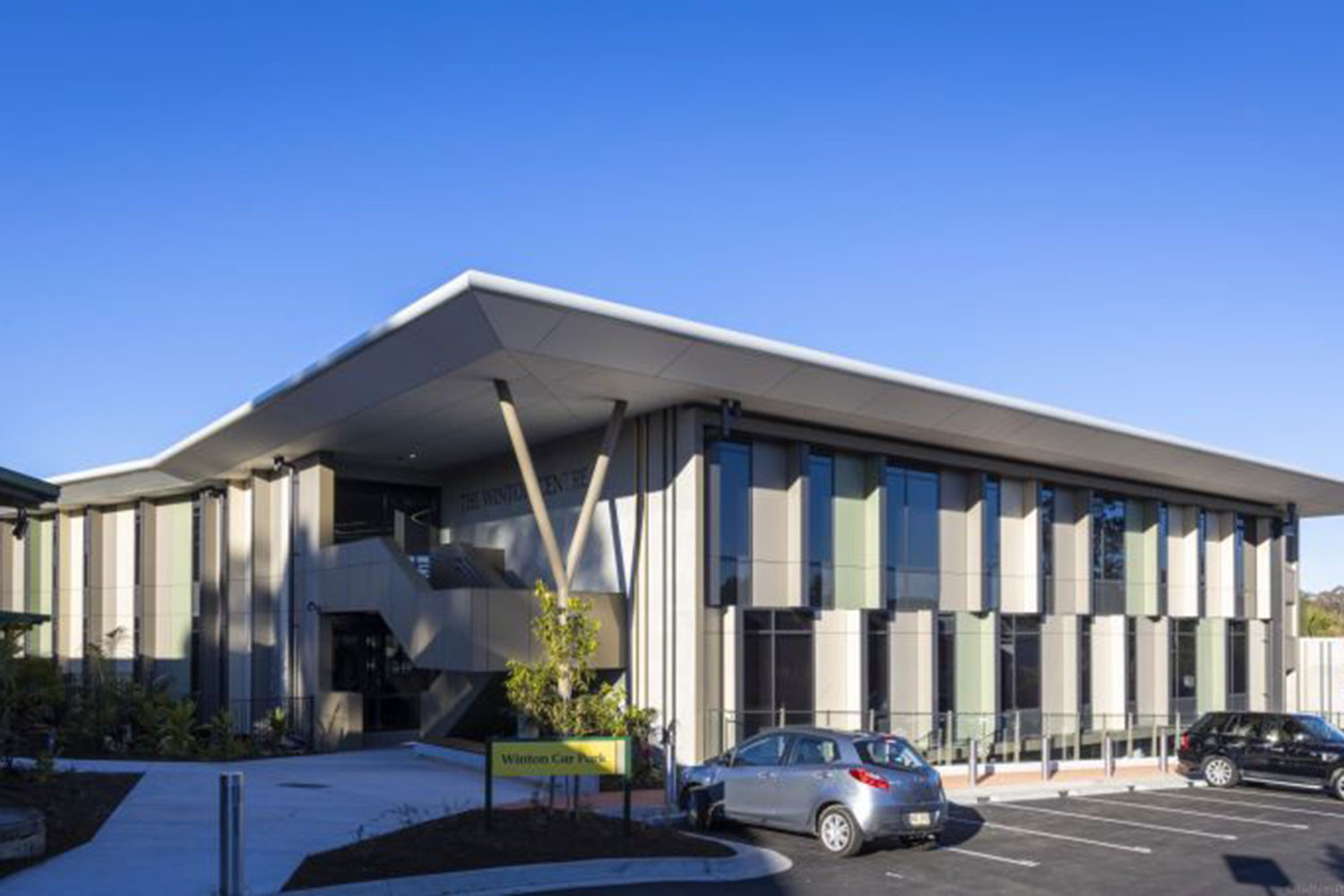
The Winton Centre spans over 4,500sqm across three levels, housing multi-functional spaces catered for early years students and K-12 students as well as teachers and parents. The vision was centred around A.B. Paterson’s students and staff. The design brief required a great understanding of their behaviour and needs so this new space could benefit the physical and mental health of its occupants. Many design references point back to nature and its preservation, to evoke the feeling of happiness and joy.

Workspace Transformation

A1 Office

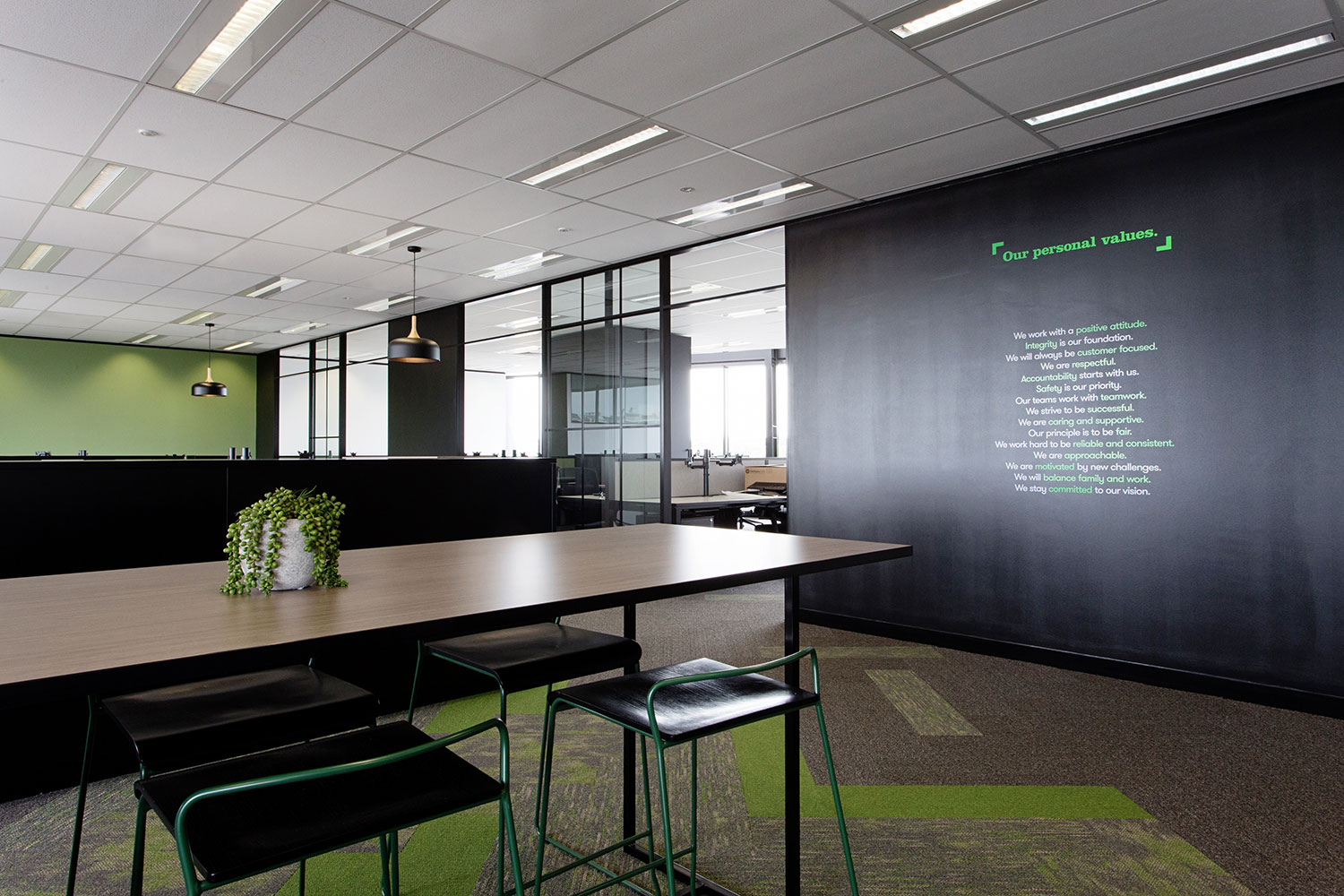
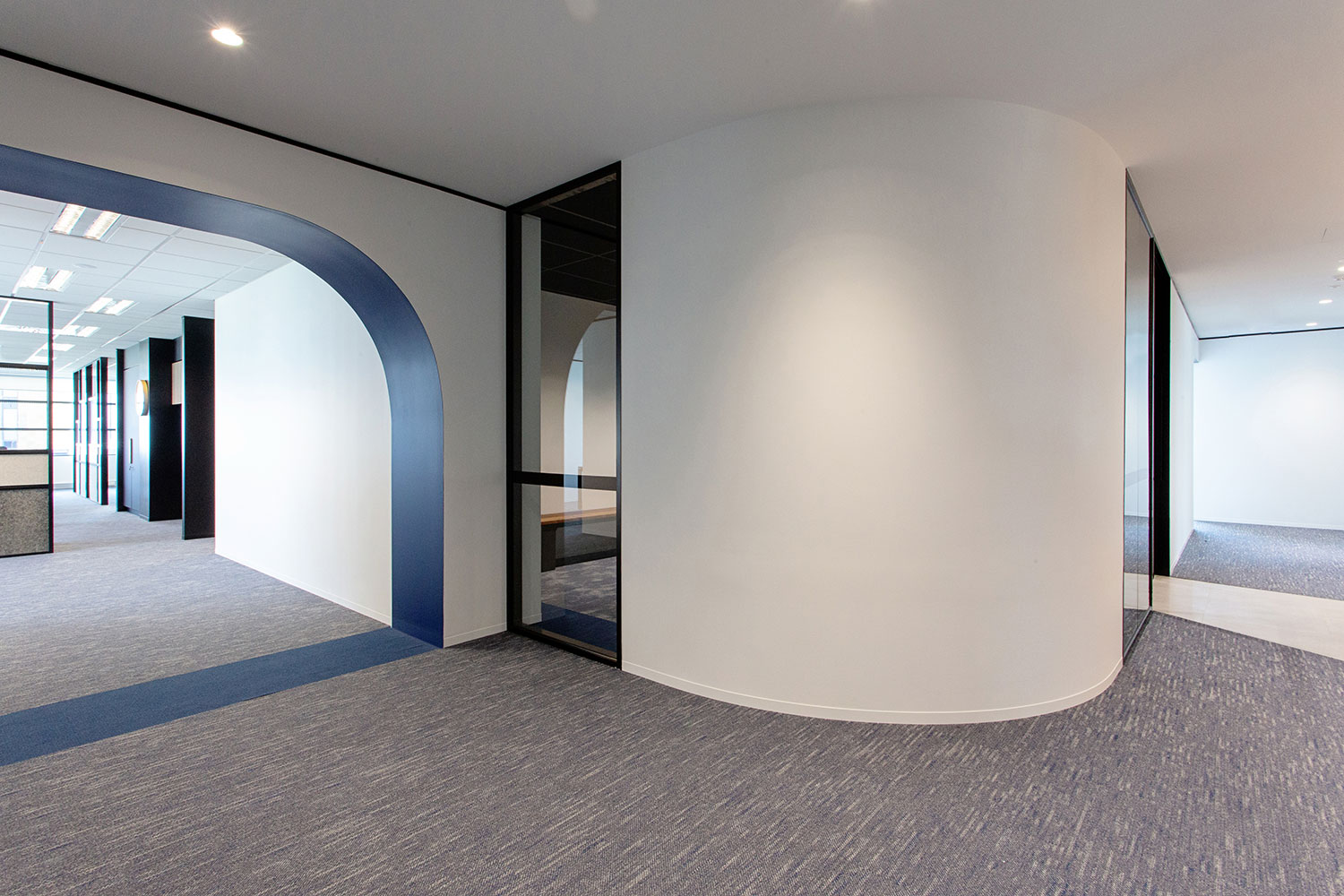
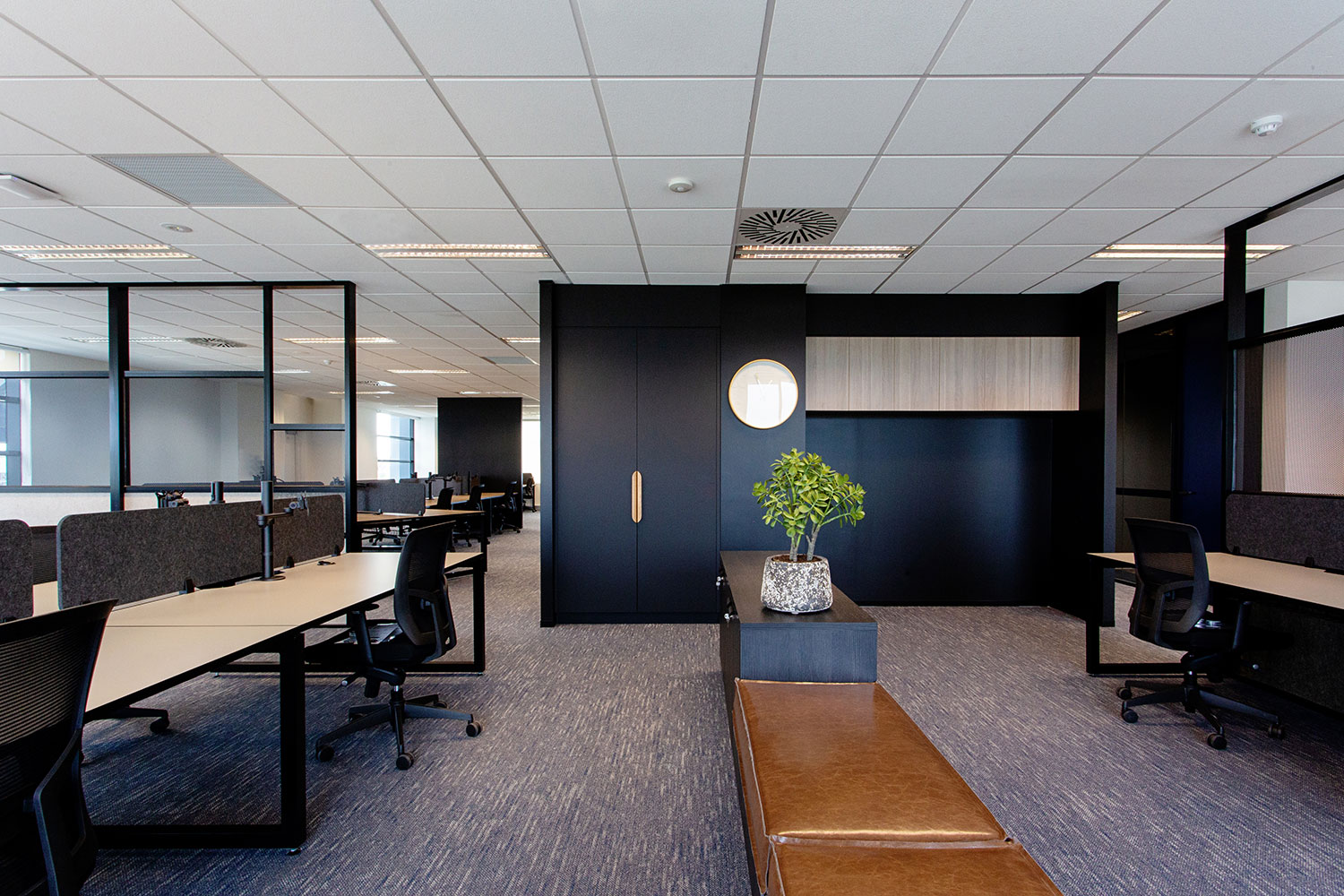
Inspired by humble beginnings, a successful present and exciting future, the workplace’s design concept gave a nod to Art Deco style. A sense of nostalgia was created throughout the space, allowing the architects to incorporate sustainable materials and furniture, including a vintage sofa that became a centrepiece in the welcoming lounge. The use of natural light, homely furnishings, greenery, communal and breakout areas and sustainable materials all contribute to improving the wellbeing of people in the space.

Kinley Cricket Club

Winter Architecture

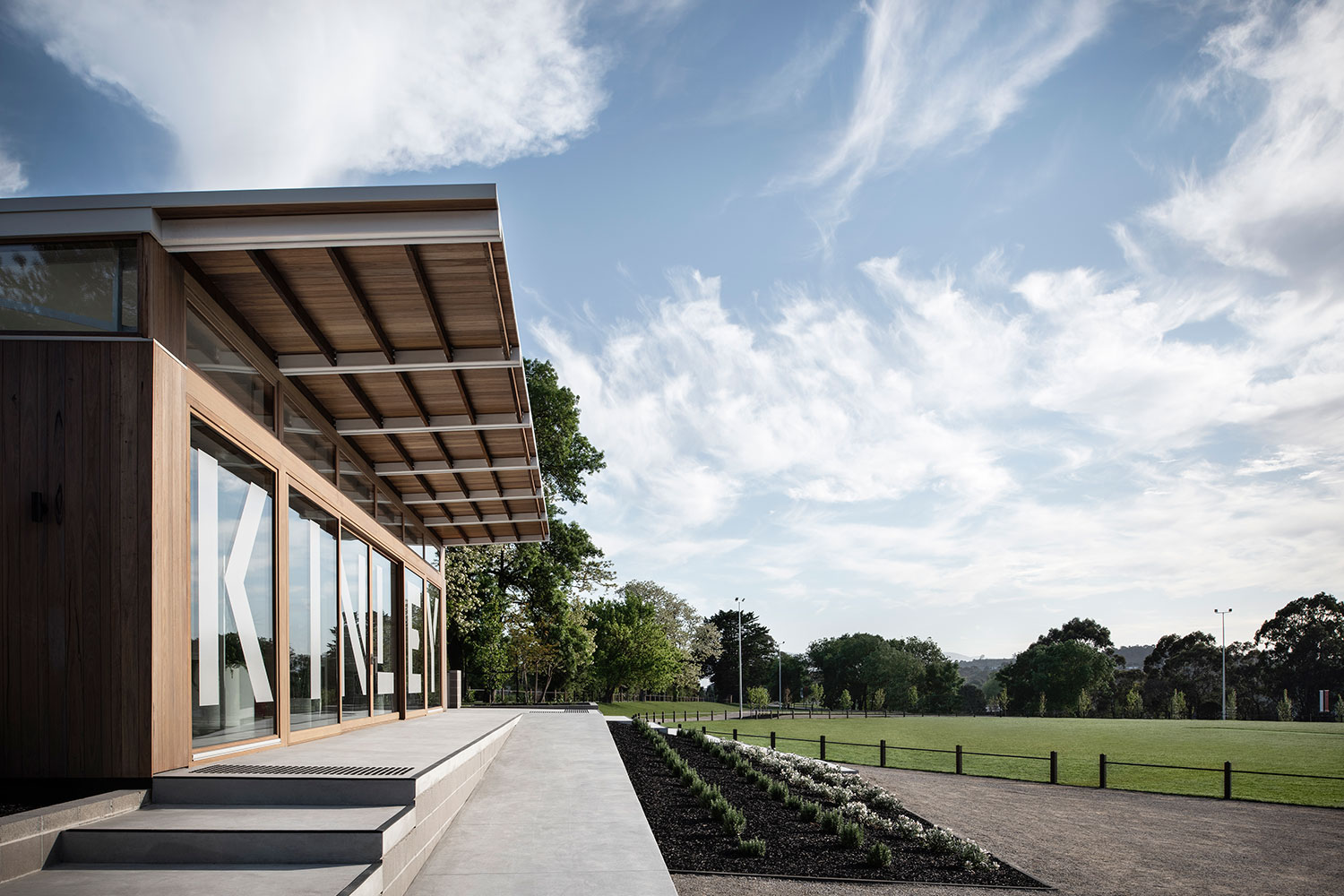
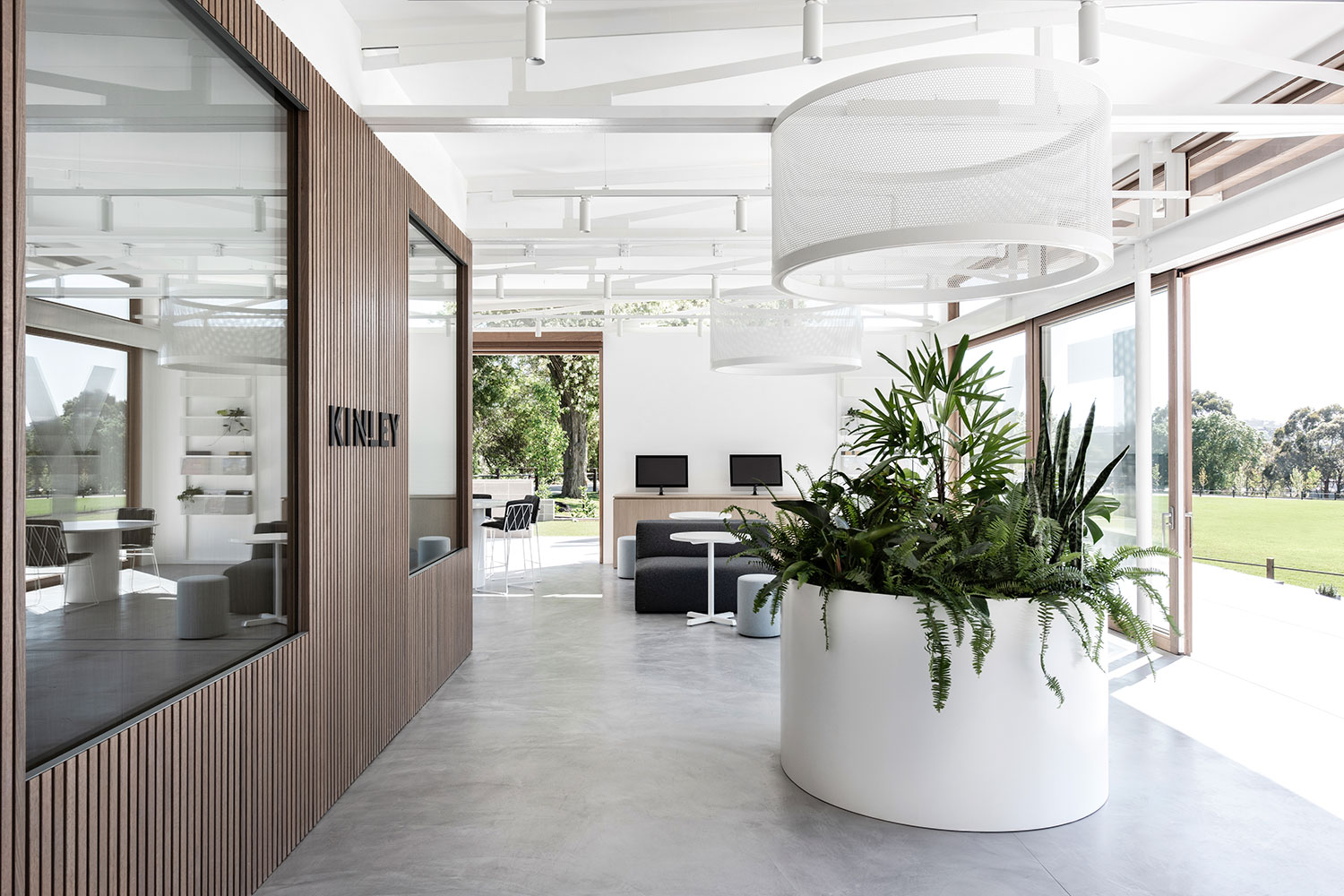
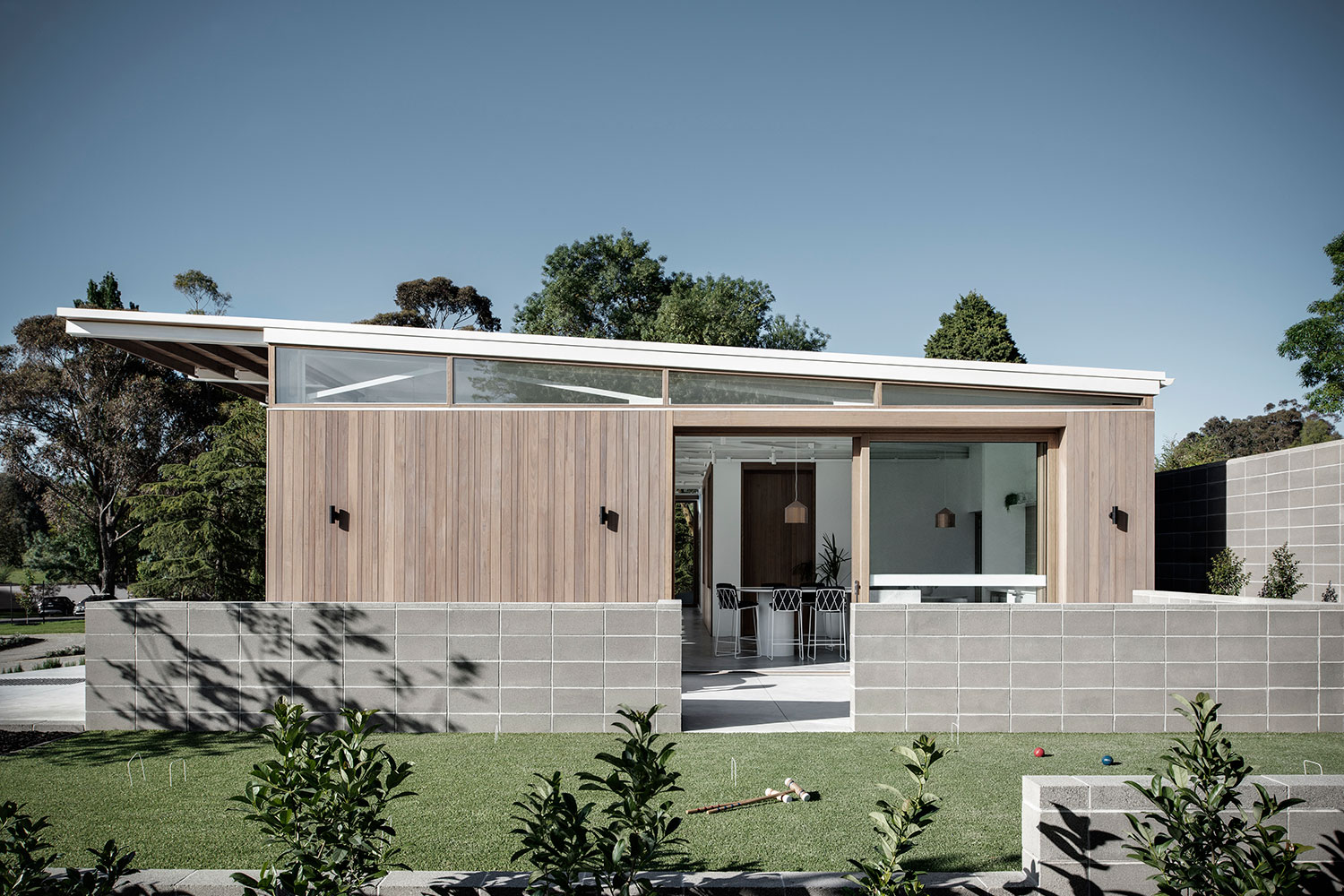
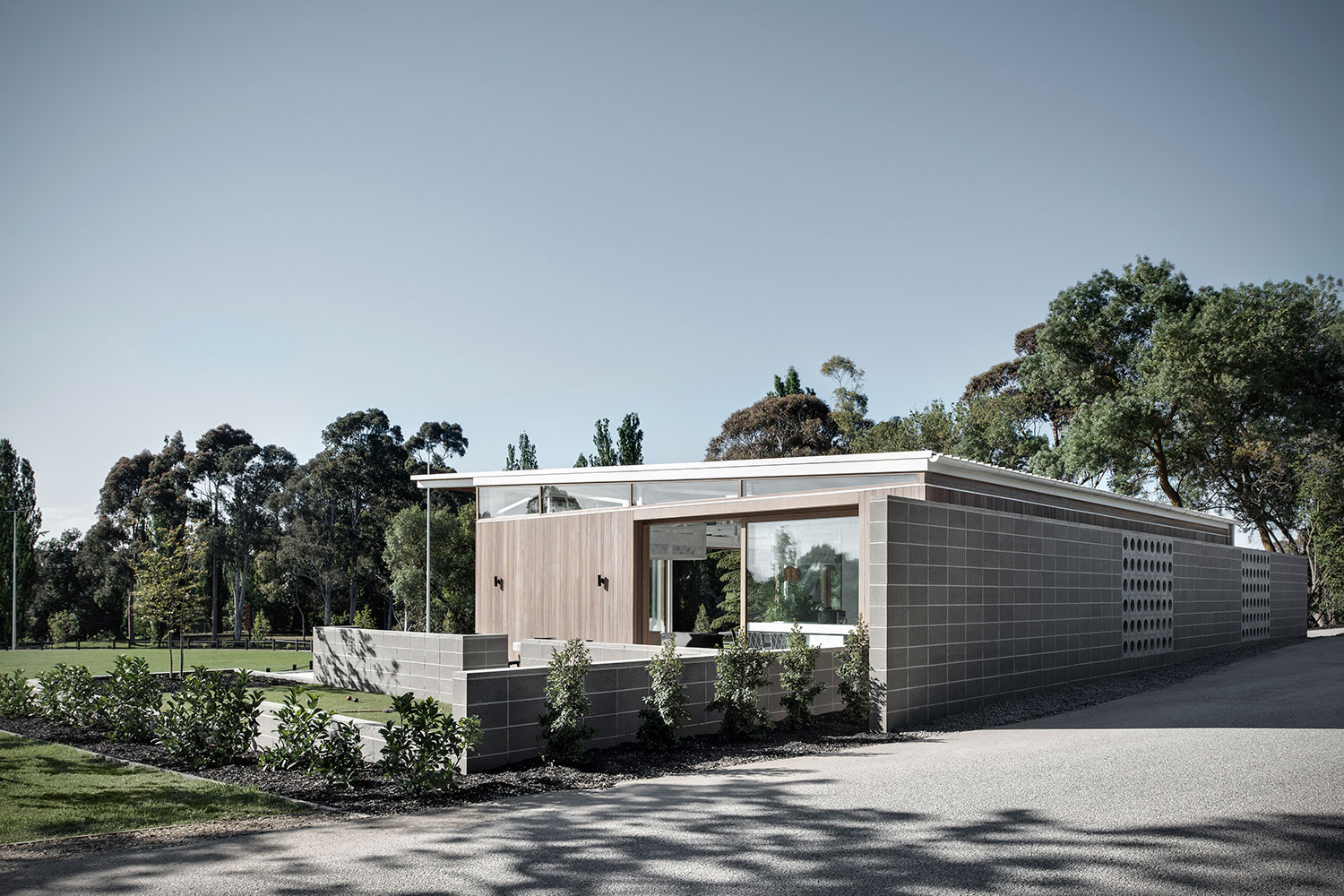
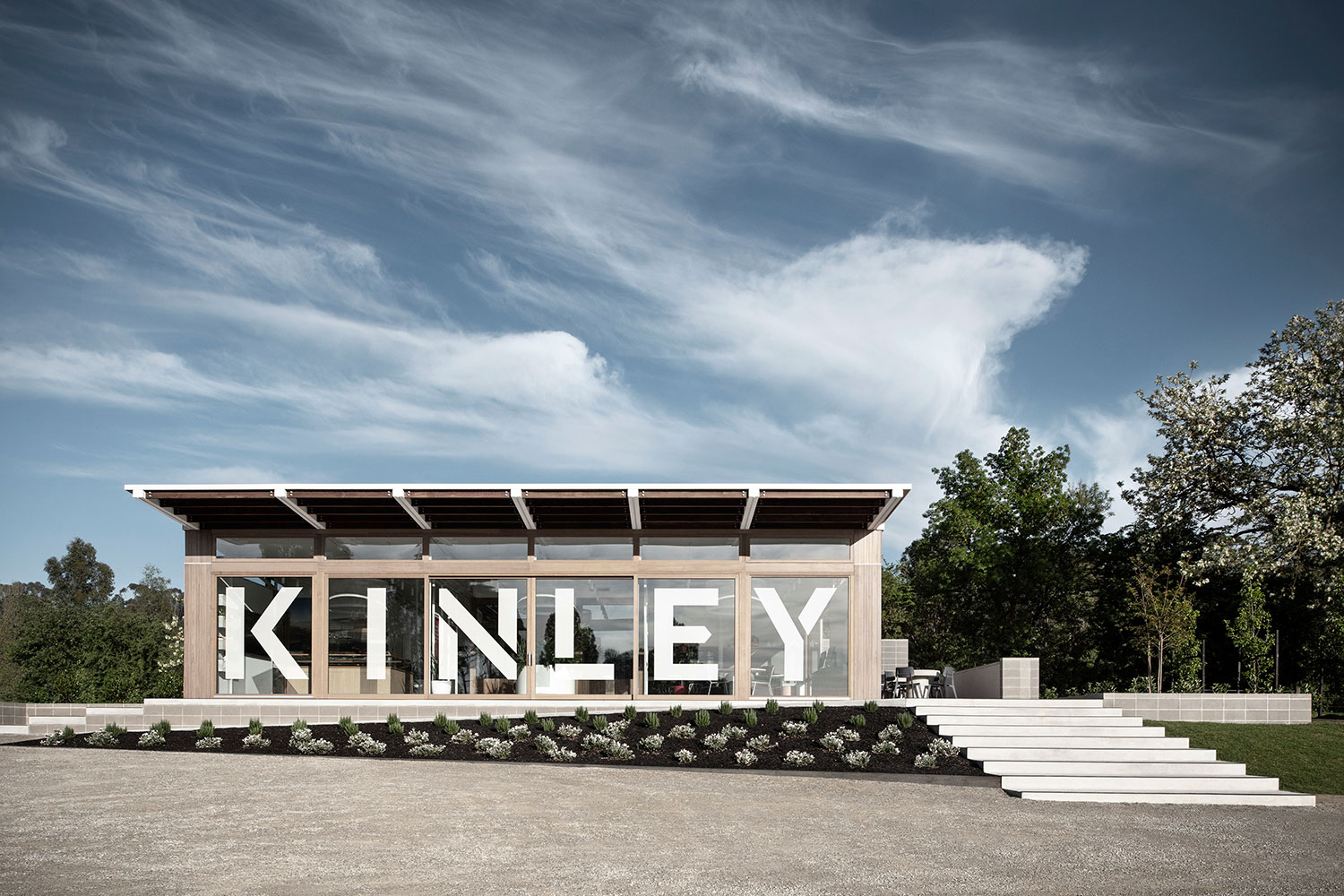
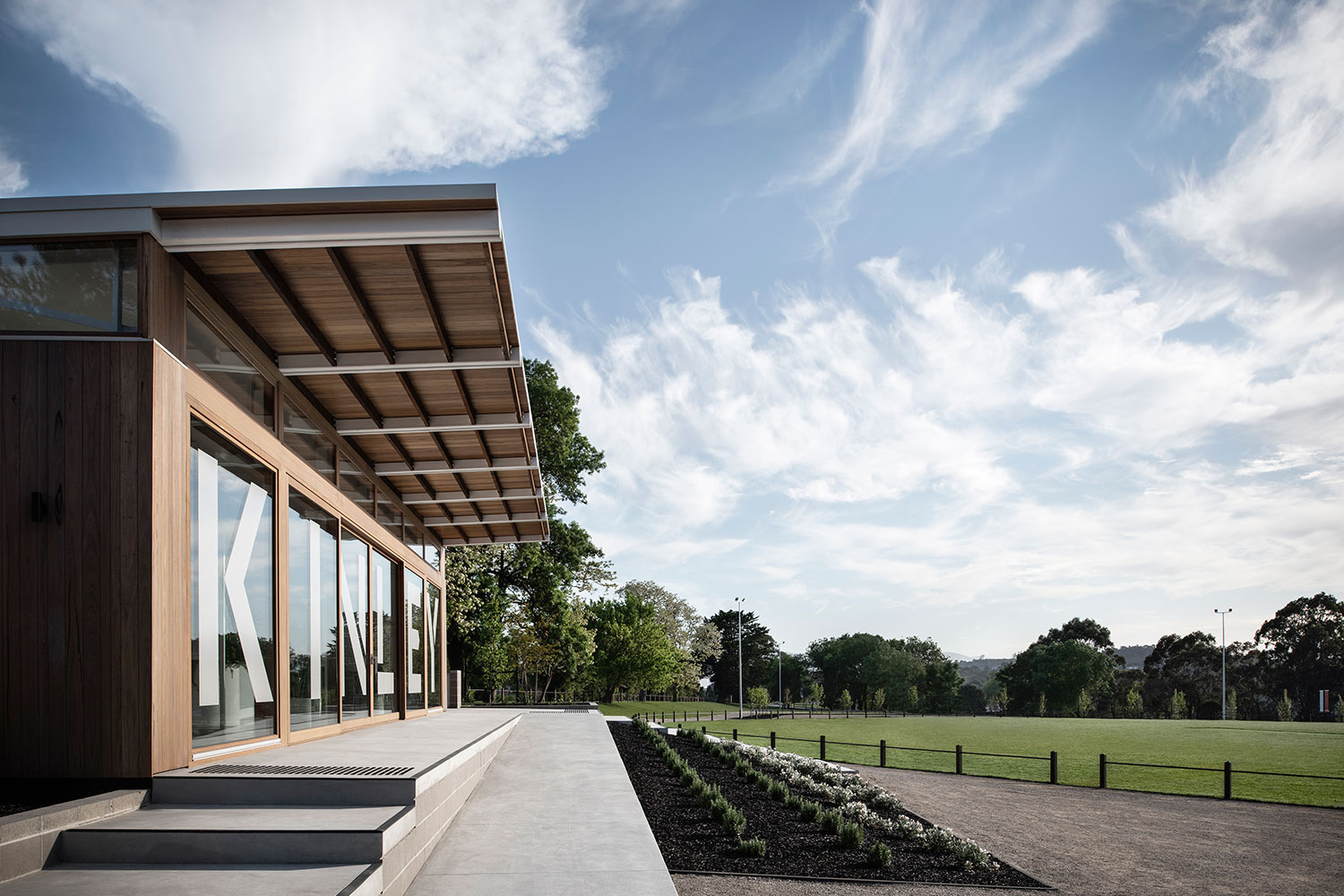
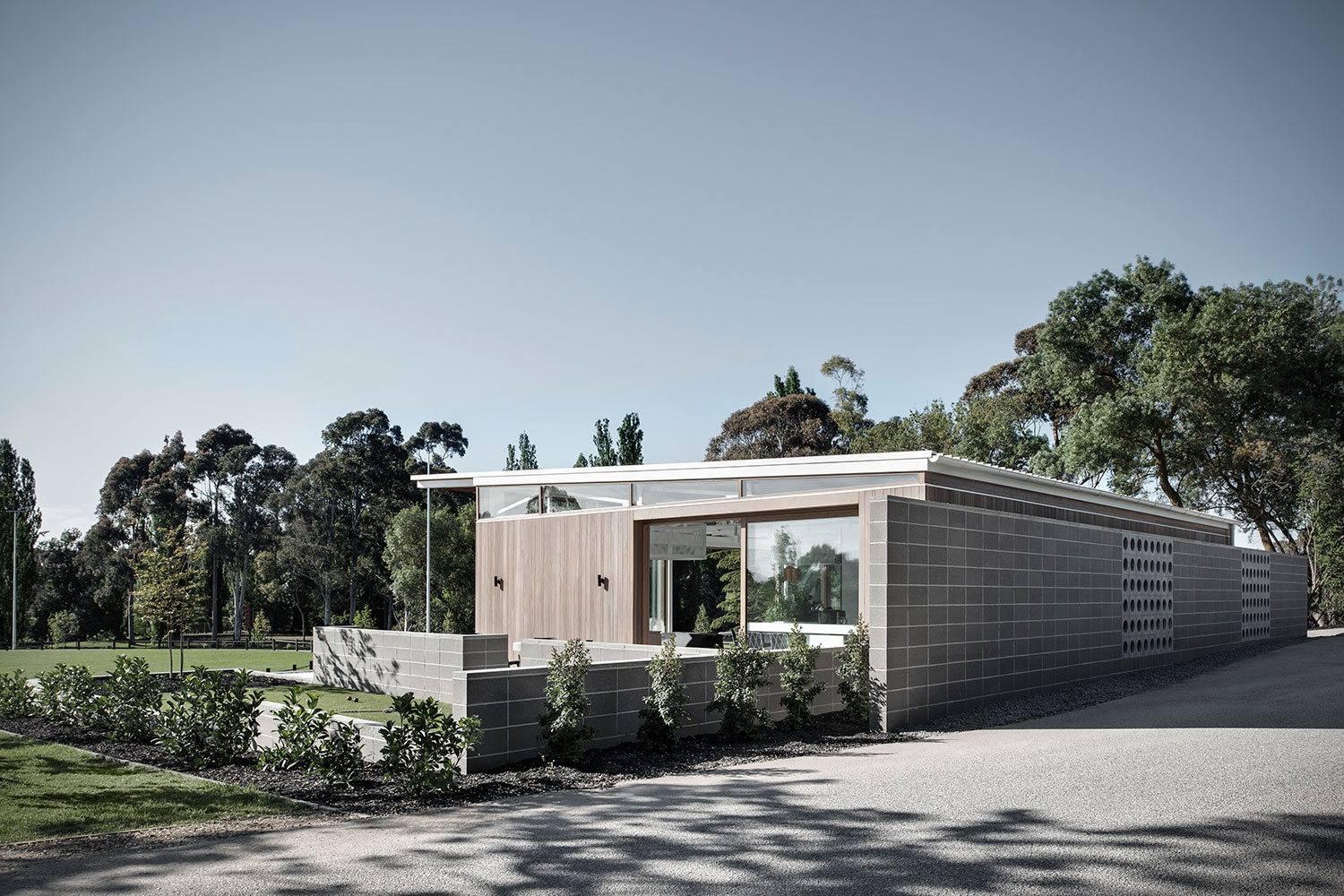
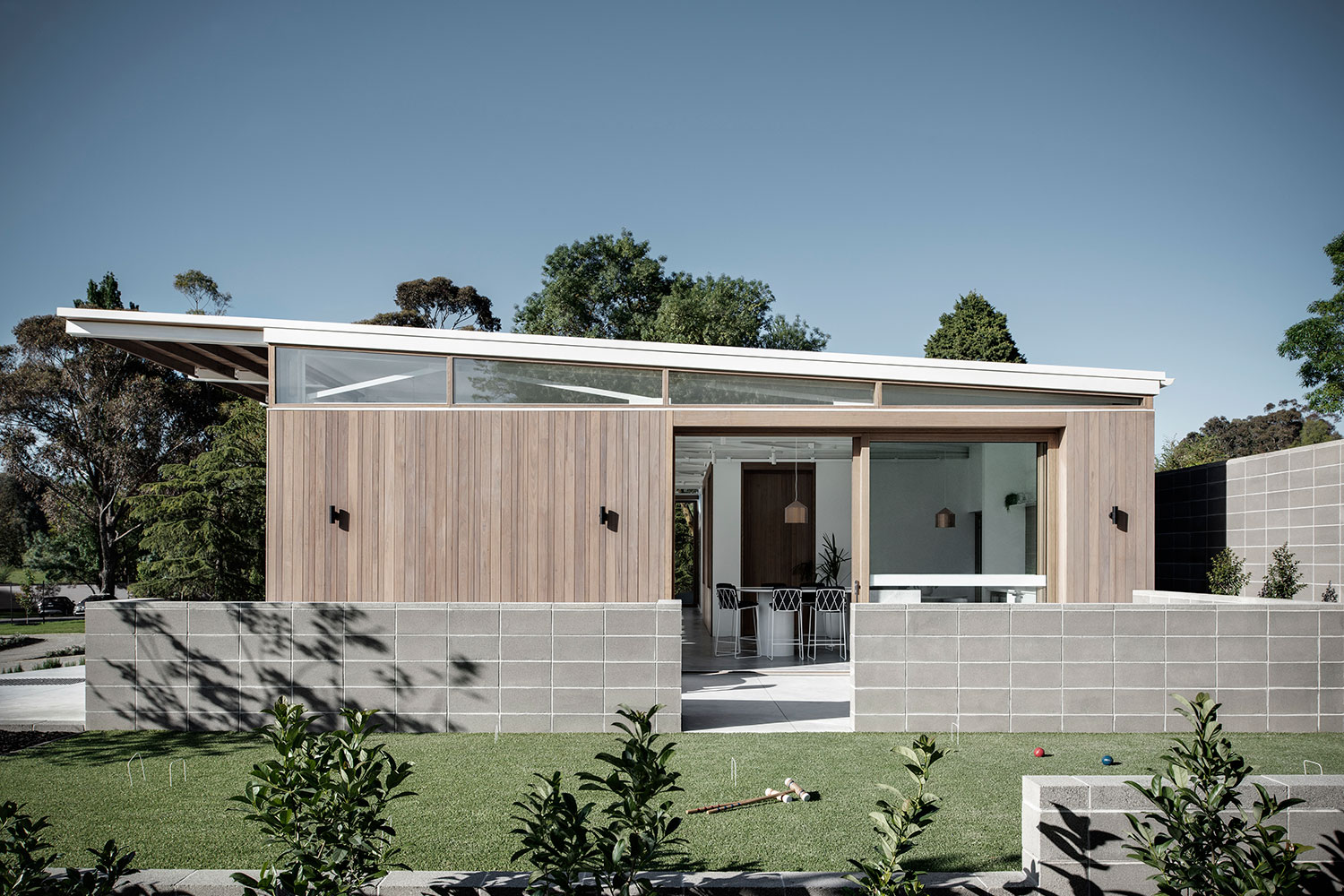
The Kinley Cricket Club is the renewal and conversion of an existing cricket club in Lilydale, Melbourne. Winter Architecture, in collaboration with Zunica Design, set out to balance the requirement for a functional sales space between the existing building’s former use as a cricket club and its future use as a community centre. The existing utilitarian structure was a tired and underutilised concrete block clubhouse bunker, complete with the familiar smells, dingy natural light and flickering fluorescent tube glow. The practice questioned the typical, internalised ‘clubhouse’ mentality, deciding to open up the cricket pavilion through a circulation axis. The new design seamlessly connects the internal and external spaces, blurring the ‘clubhouse’ line and facilitating spaces to be enjoyed by the wider community.

Dales Of Derby, 5 – 7 Main Street, Derby, Tasmania, Australia

Philip M Dingemanse

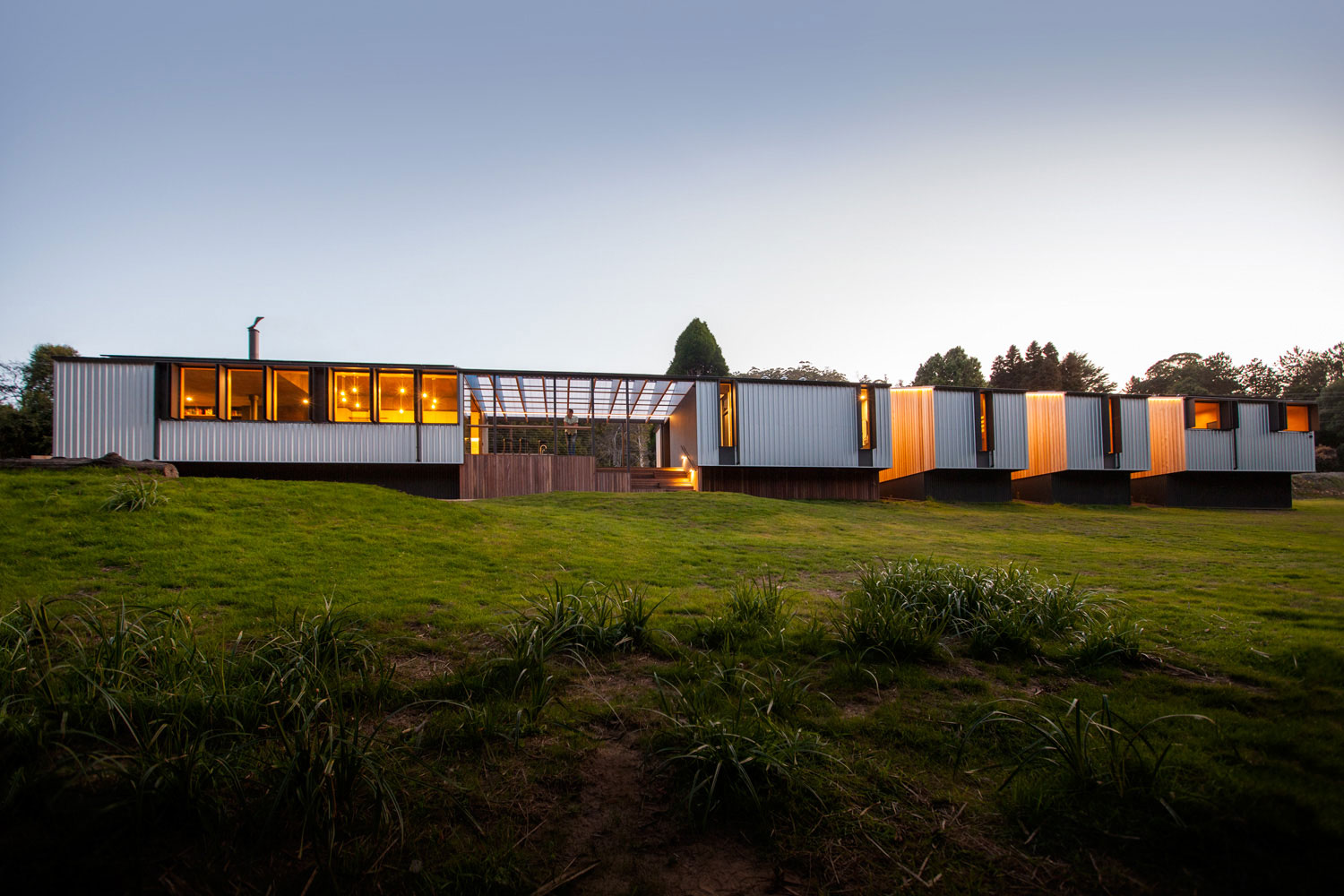
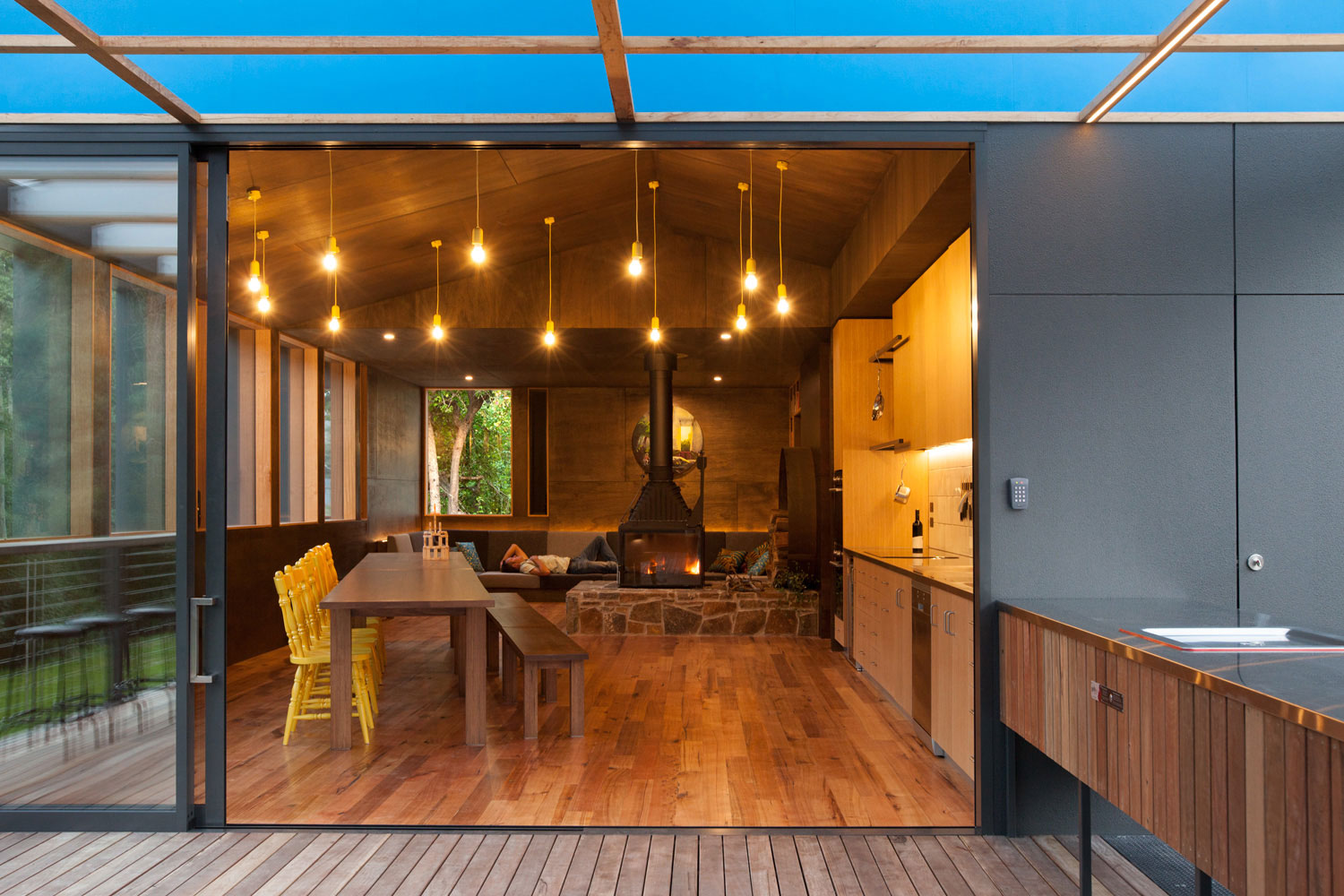
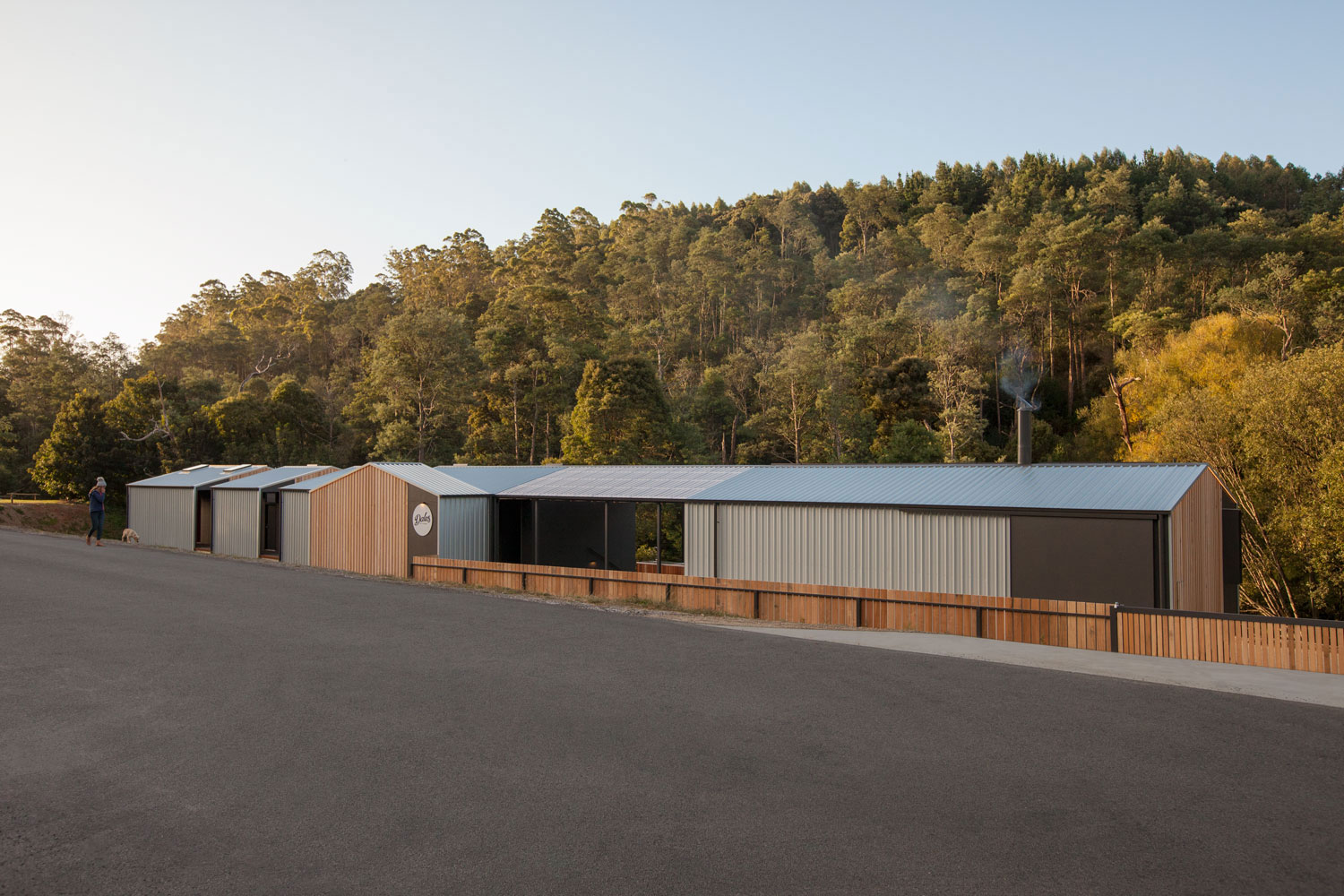
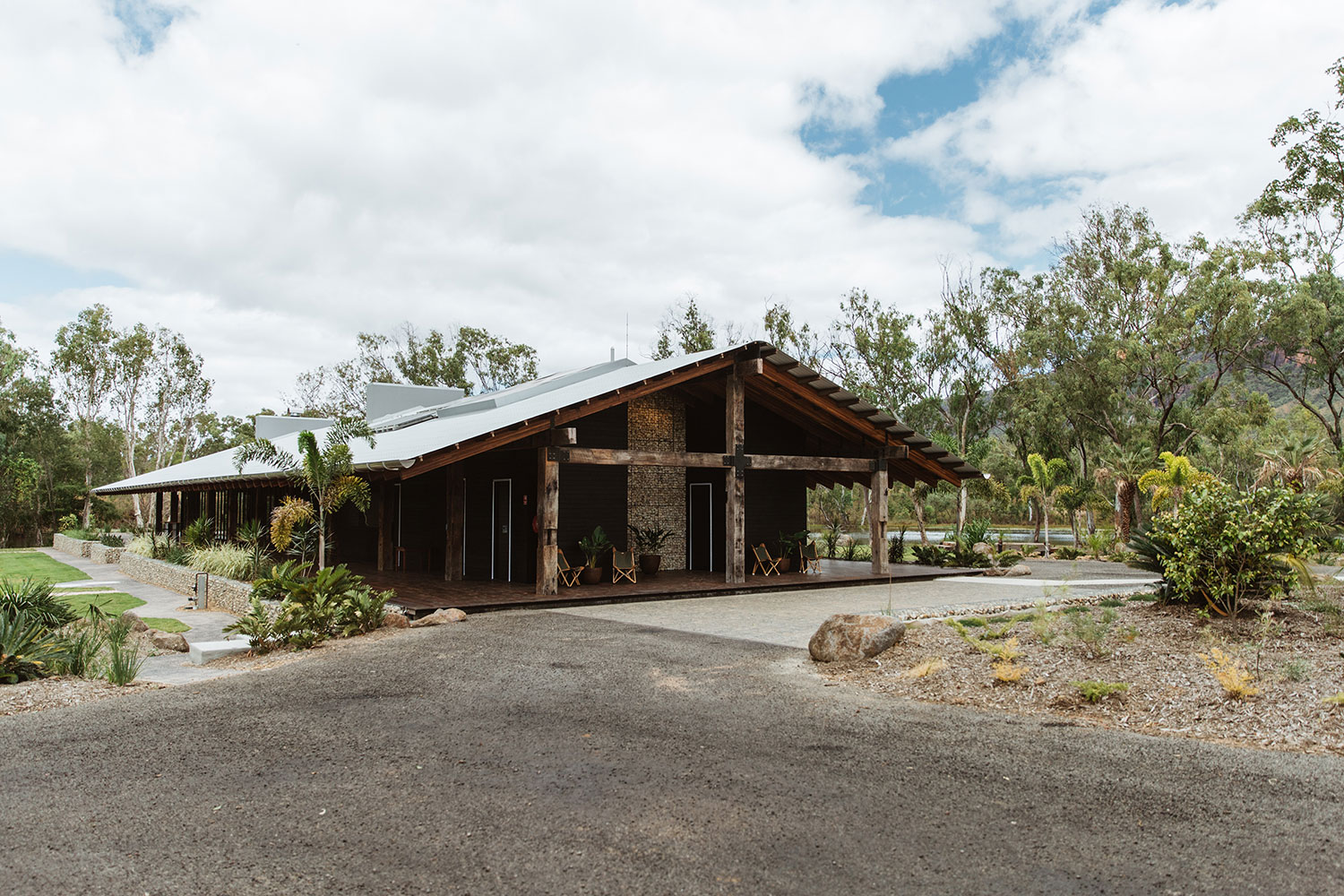
Located in the picturesque region of northeast Tasmania, Australia, Dales of Derby is a place to stay next to the river on the edge of town. An introductory building to the small village of Derby, a gable roof suggests a link to the local mining, timber and farming history, calling to mind utilitarian tin miner accommodation, high country slab hut or tractor shed.

Visy Essendon Fields

A1 Office

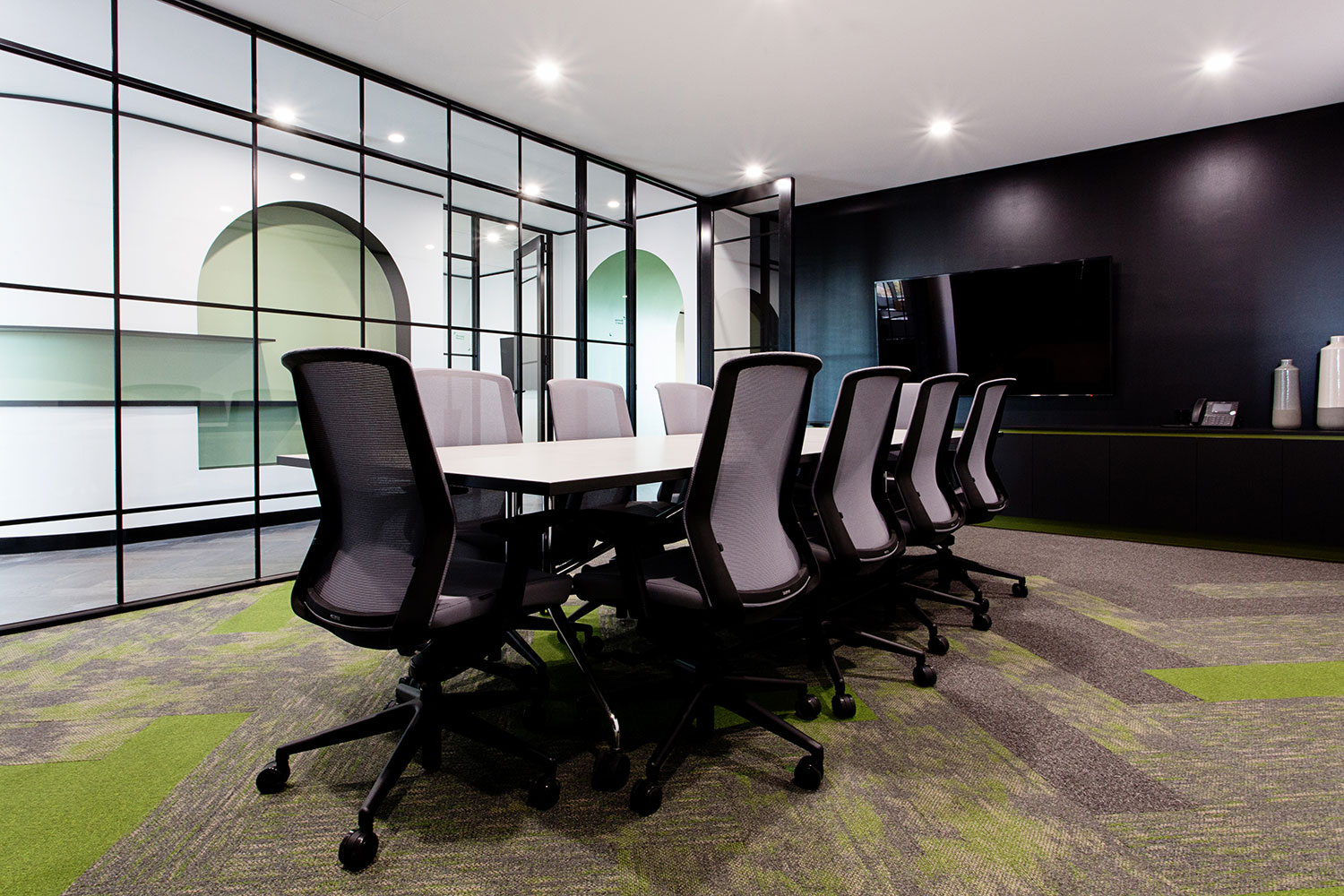
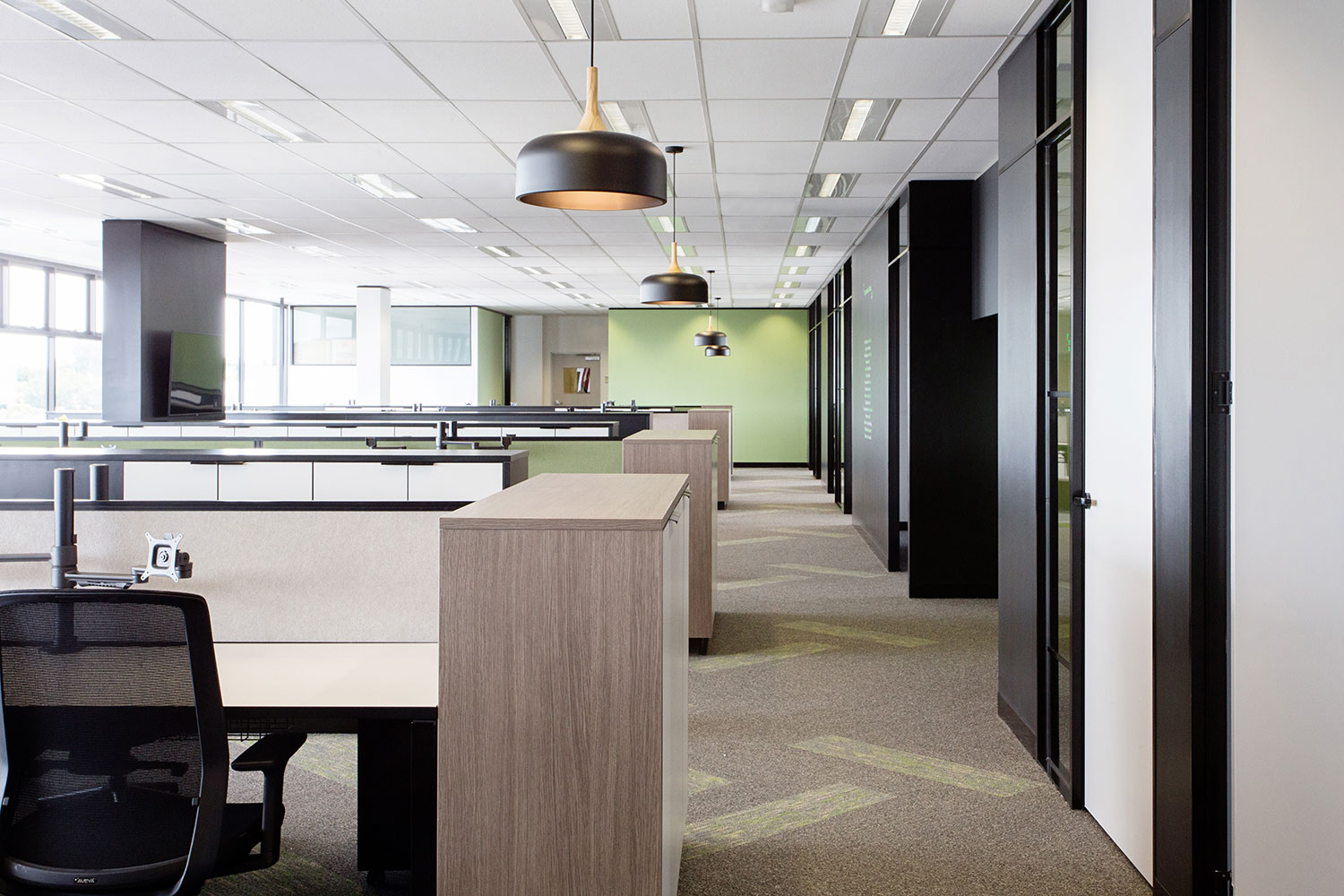
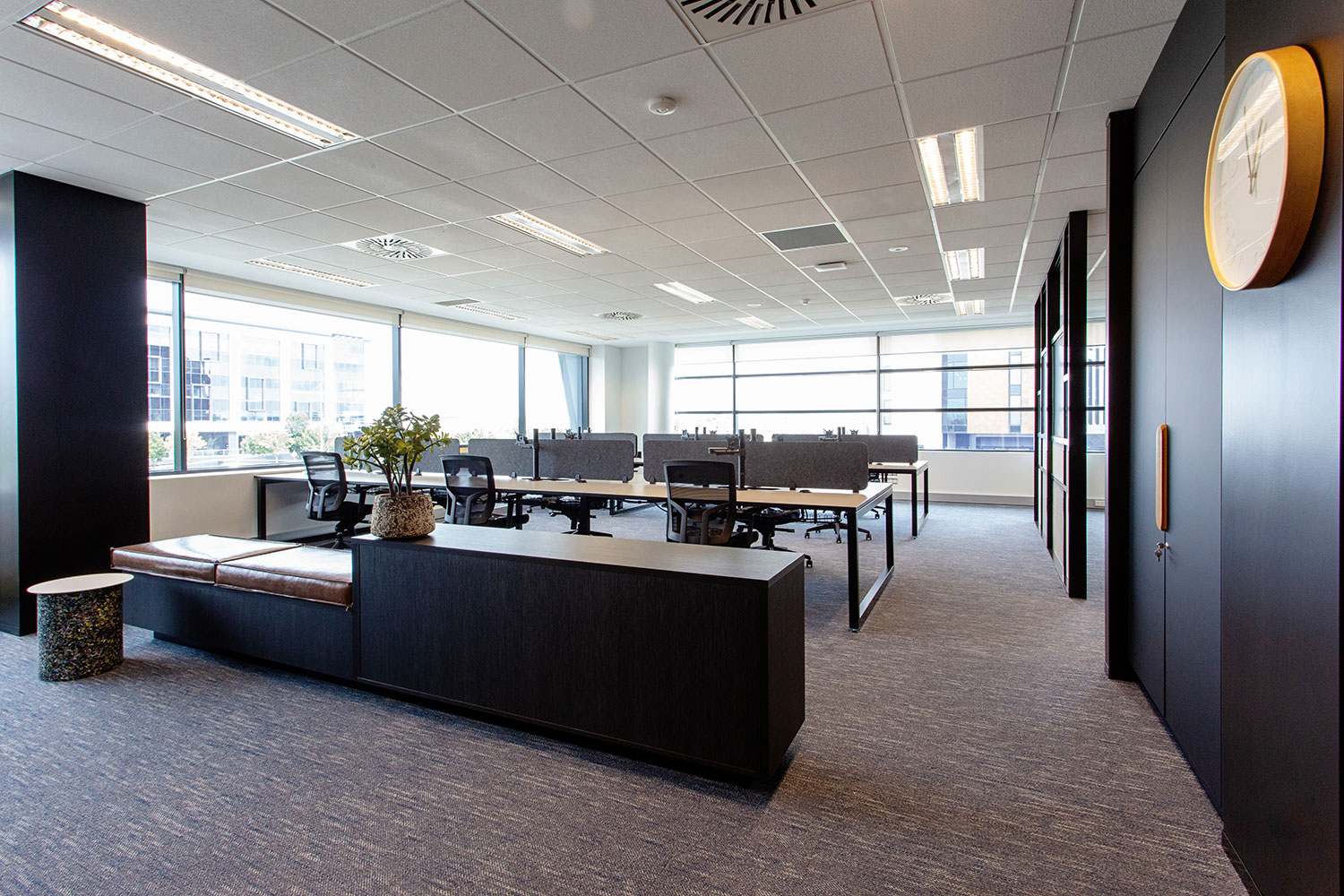
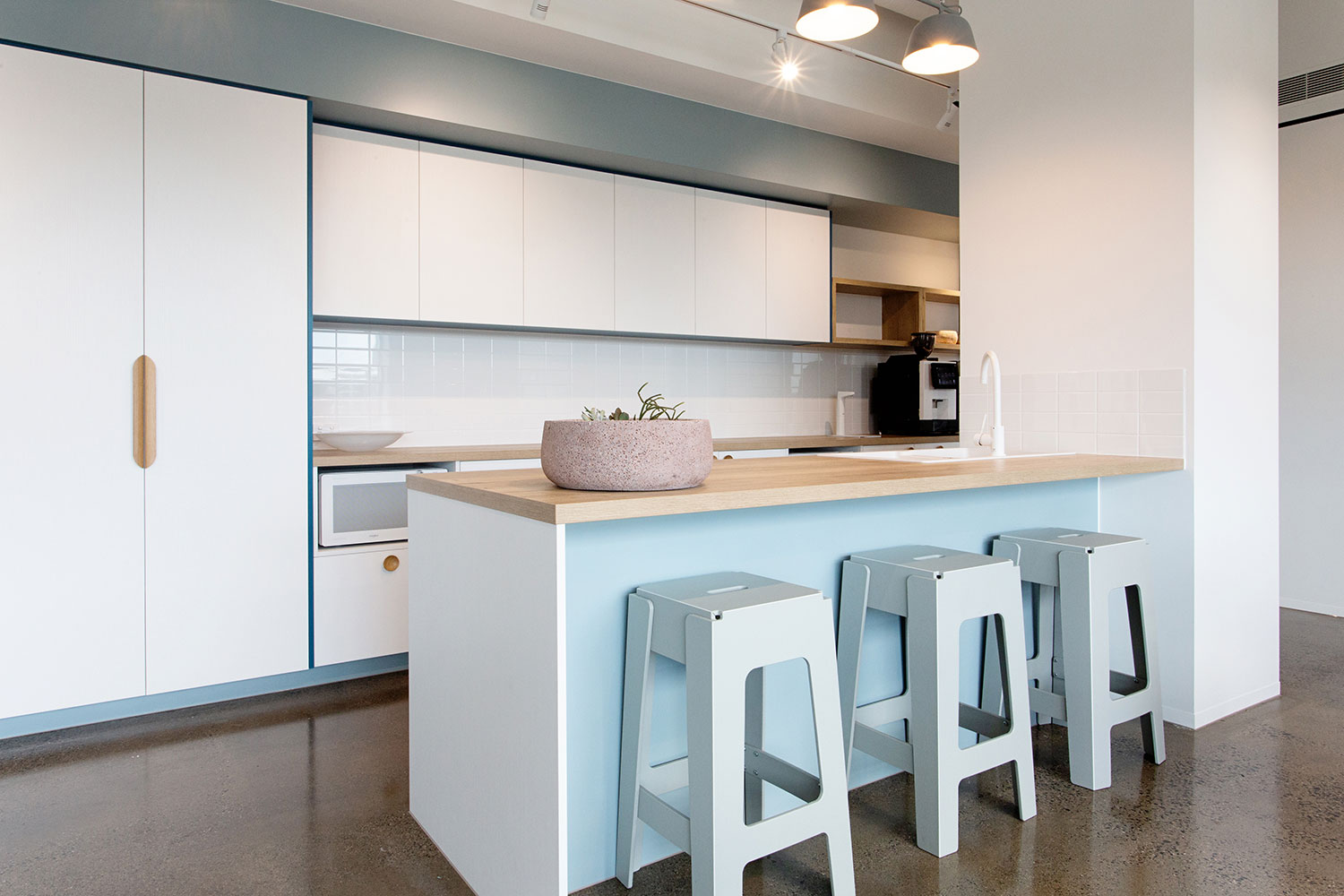
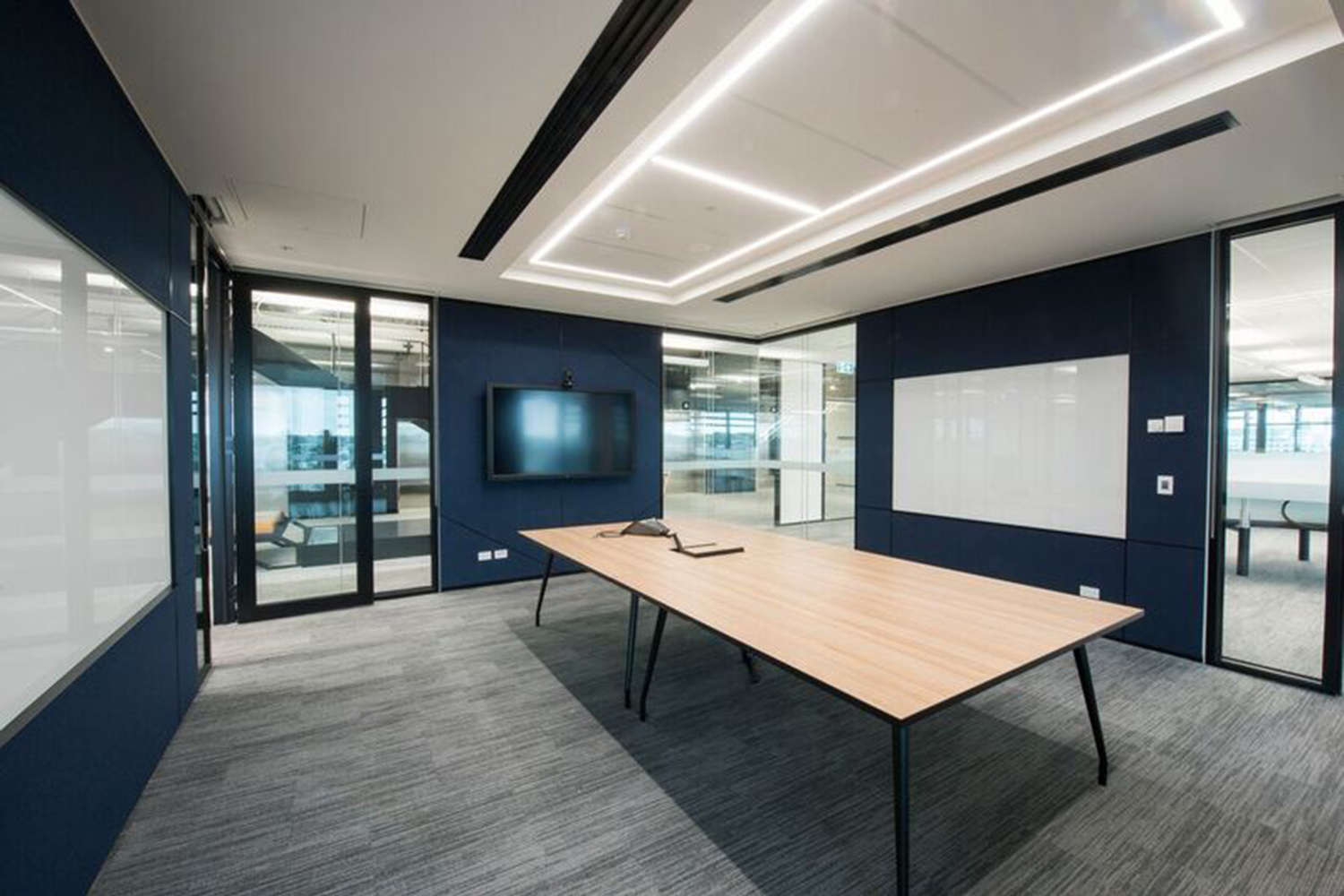
Visy was looking for a flexible, unique and efficient workspace for its new Essendon Fields headquarters. As a global sustainable packaging solutions leader, the new workspace had to reflect the company’s values in creating ‘a better world’ by using sustainably sourced materials and furniture. With a floorplate of over 1000sqm, the architects selected the highest quality and most sustainable materials and furniture solutions from the ground up.

Mount Mulligan Lodge

Dubois

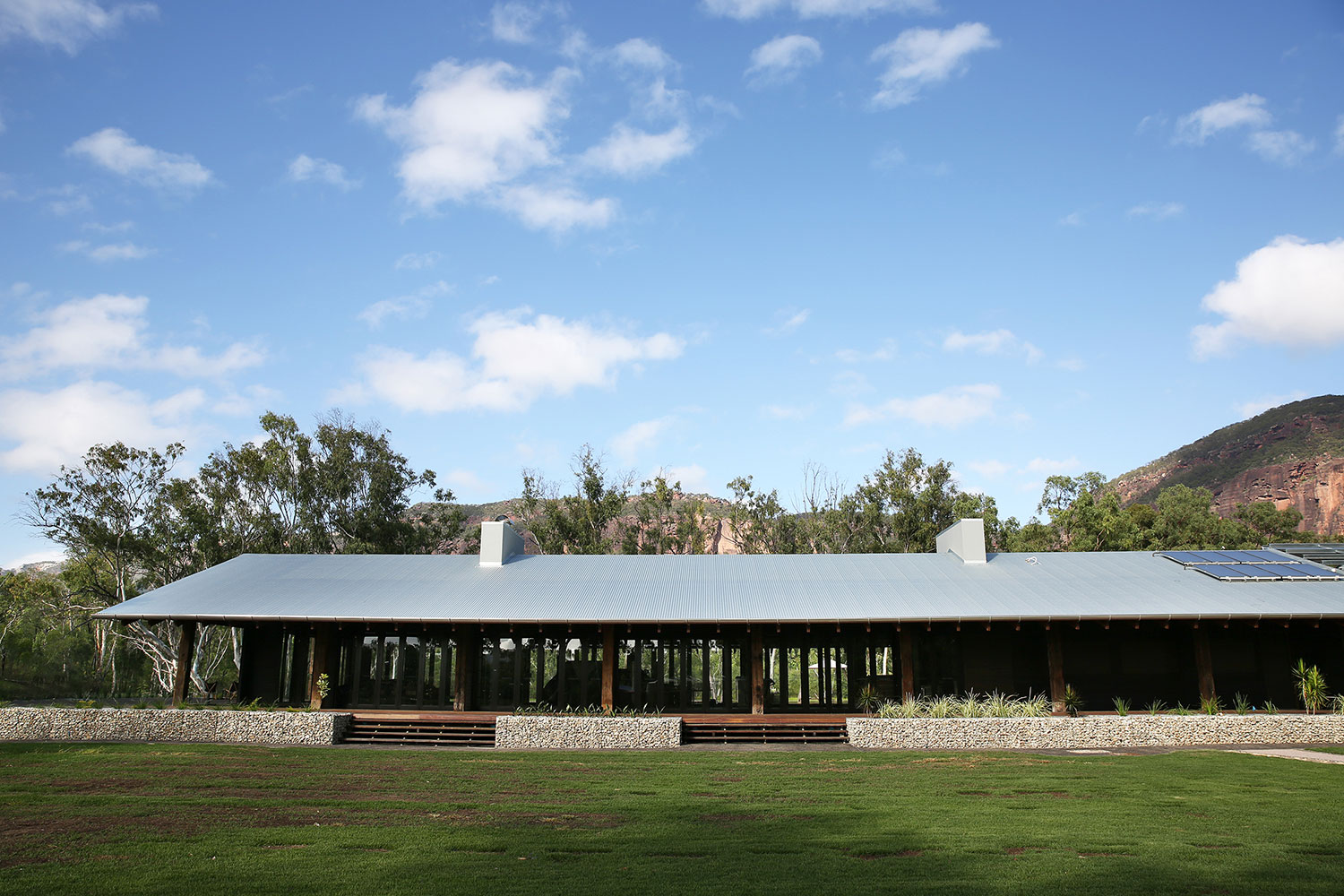
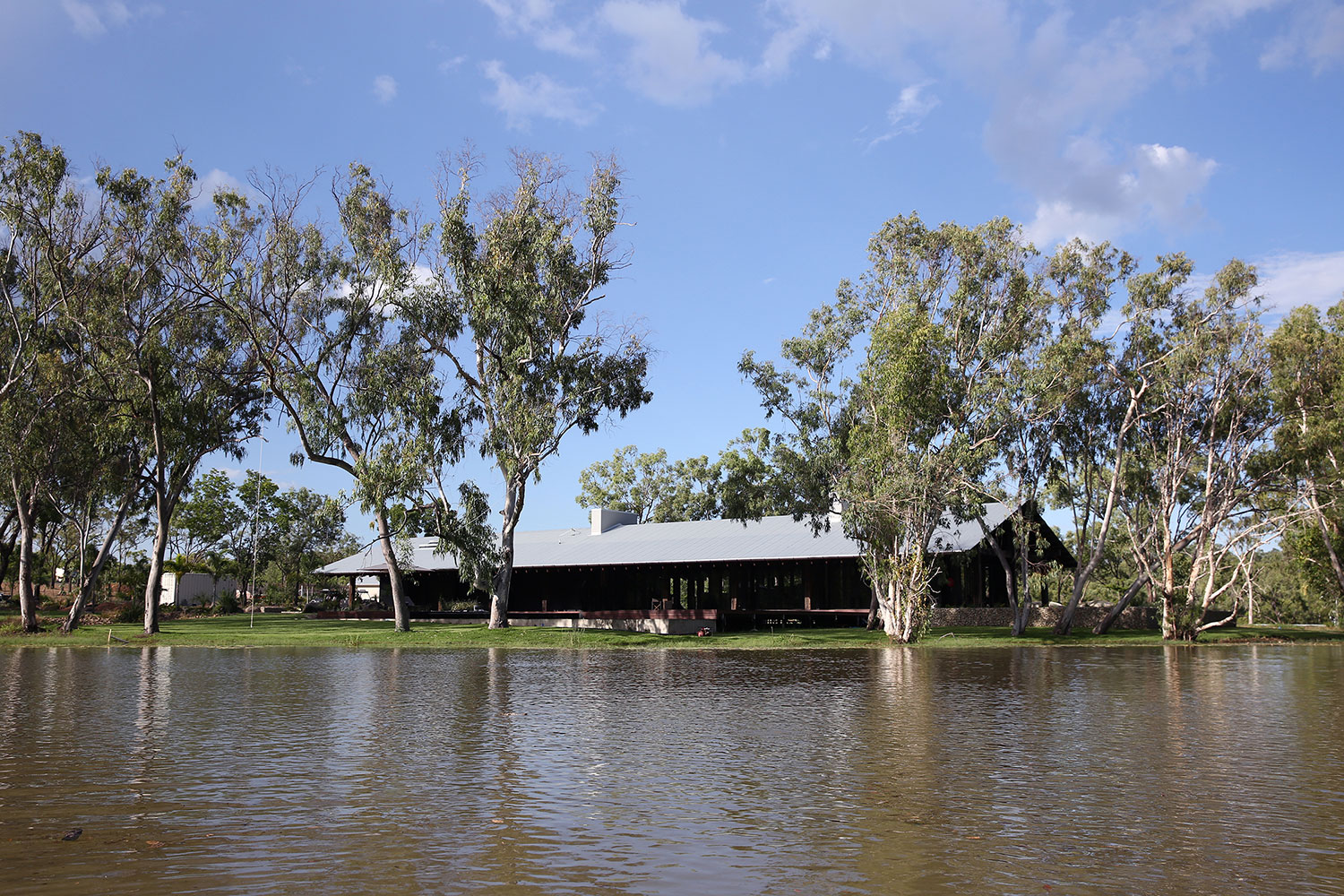
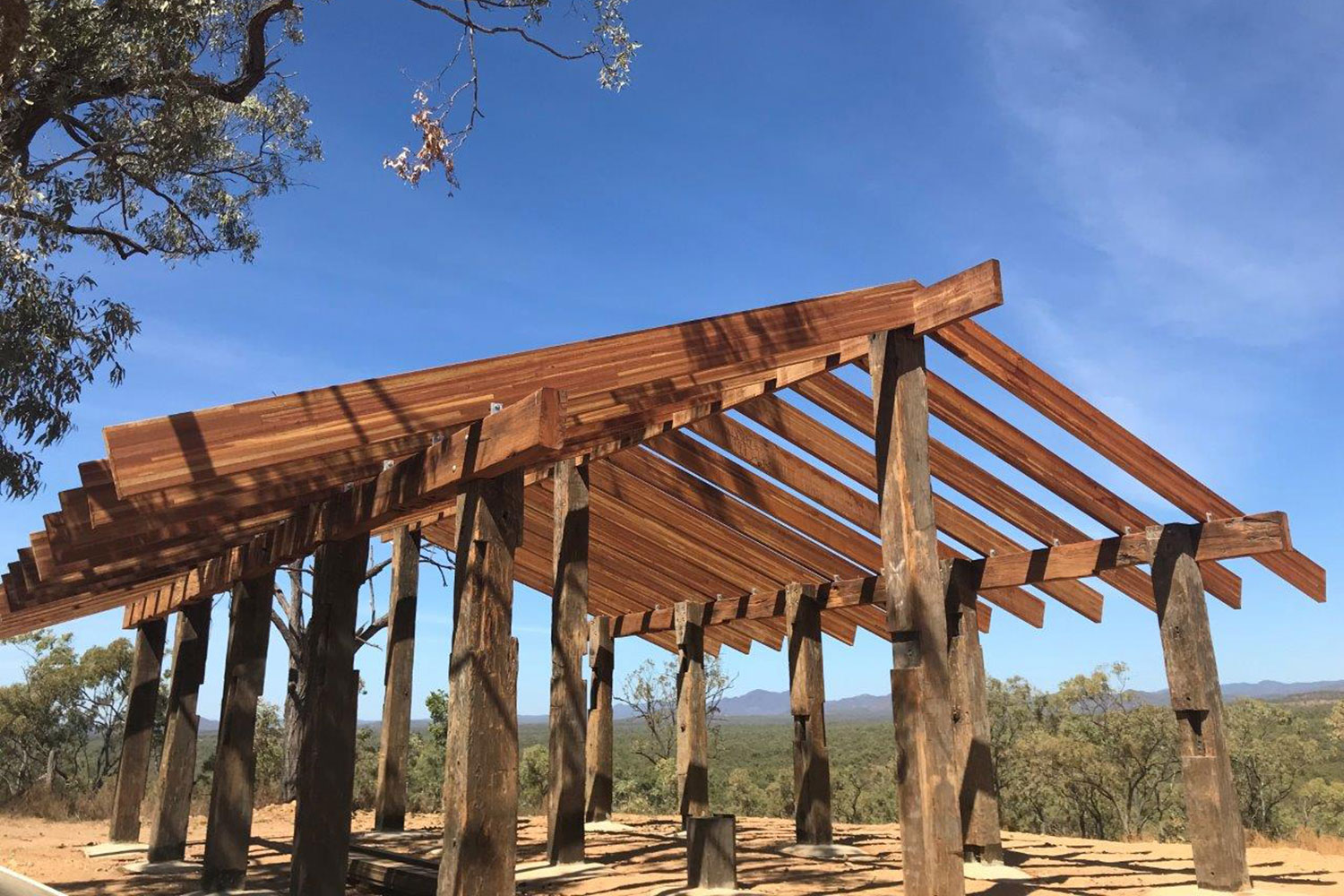
The Lodge is located at the water’s edge of a large manmade weir, created more than 100 years ago by pioneering gold prospectors, who established a town after discovering coal at the base of Mount Mulligan. After a horrific deep mine gas explosion over 70 years ago decimated the town’s population, the town was quickly abandoned and left to ruin. The design of Mount Mulligan Lodge took inspiration from wandering the ruins of the old coal mining township at the base of Mount Mulligan and imagining the humble and honest outback structures that would have been originally built over 100 years ago.

Collaborative Sydney Workspace

Gensler

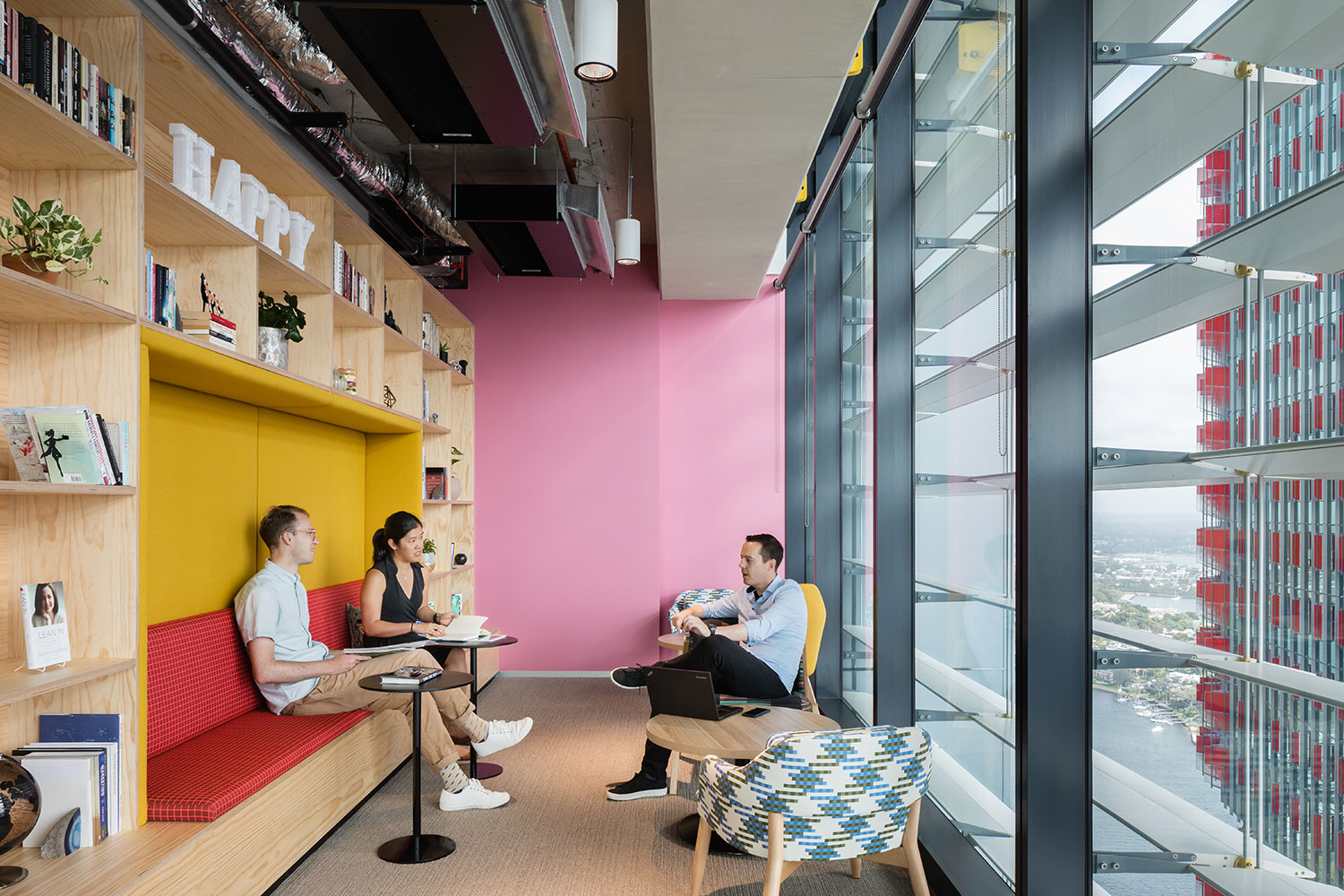
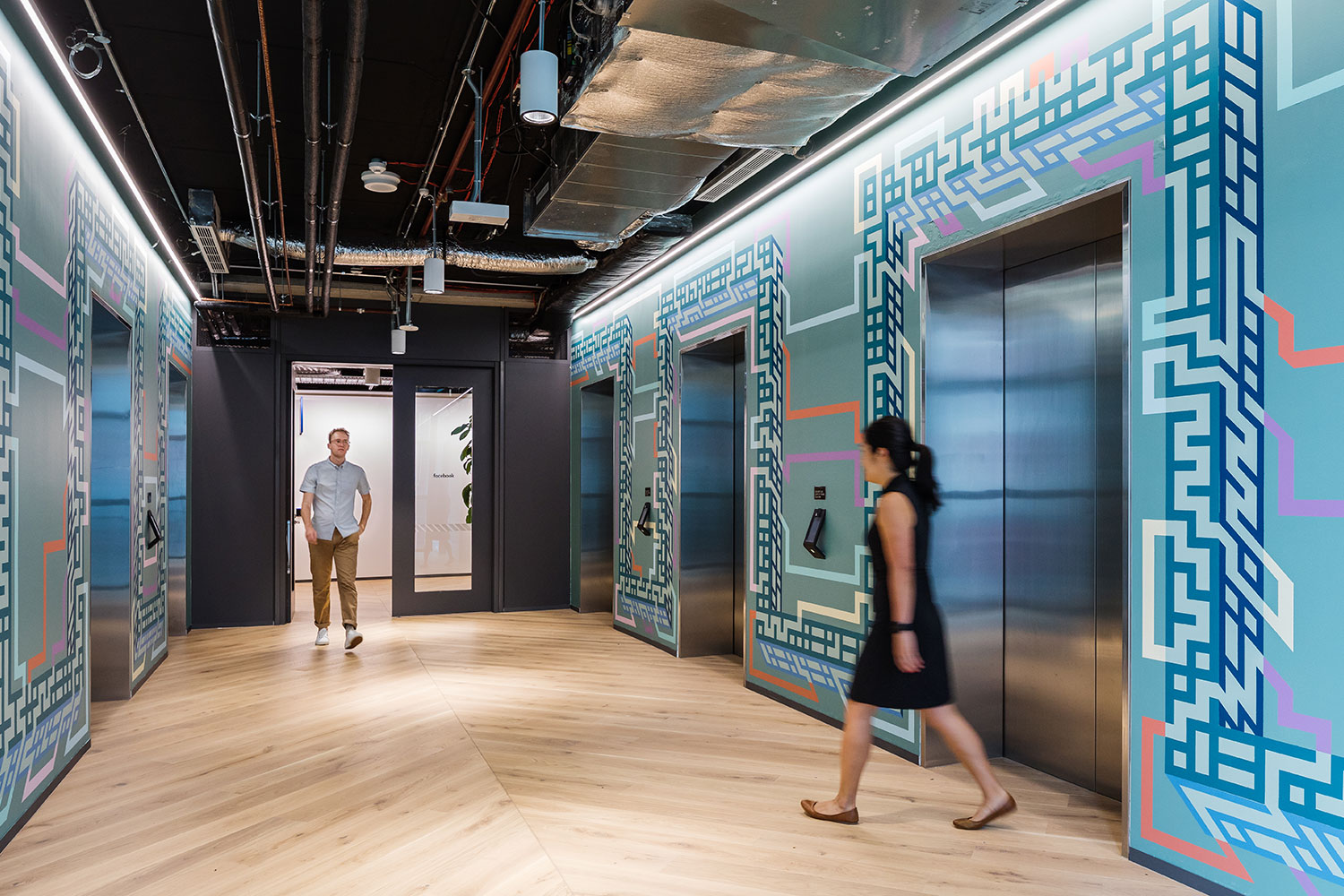
Taking the top four floors of Tower 2 at the International Towers Sydney Barangaroo, the space is designed to encourage interaction and collaboration through a variety of circulation and breakout zones. The open plan layout maximises views and access to natural daylight, with a high level of environmental performance.

Axle at South Eveleigh

Mirvac

Axle sees Mirvac take a significant leap forward in responding to the future of work, designing a space that weaves flexible working and environmental sustainability into a future-proofed office environment. The building is designed to promote continuous learning and development for staff, with spaces that are focused on intellectual exchange and inspiring innovation.

Arup Melbourne Workplace

HASSELL in partnership with Arup

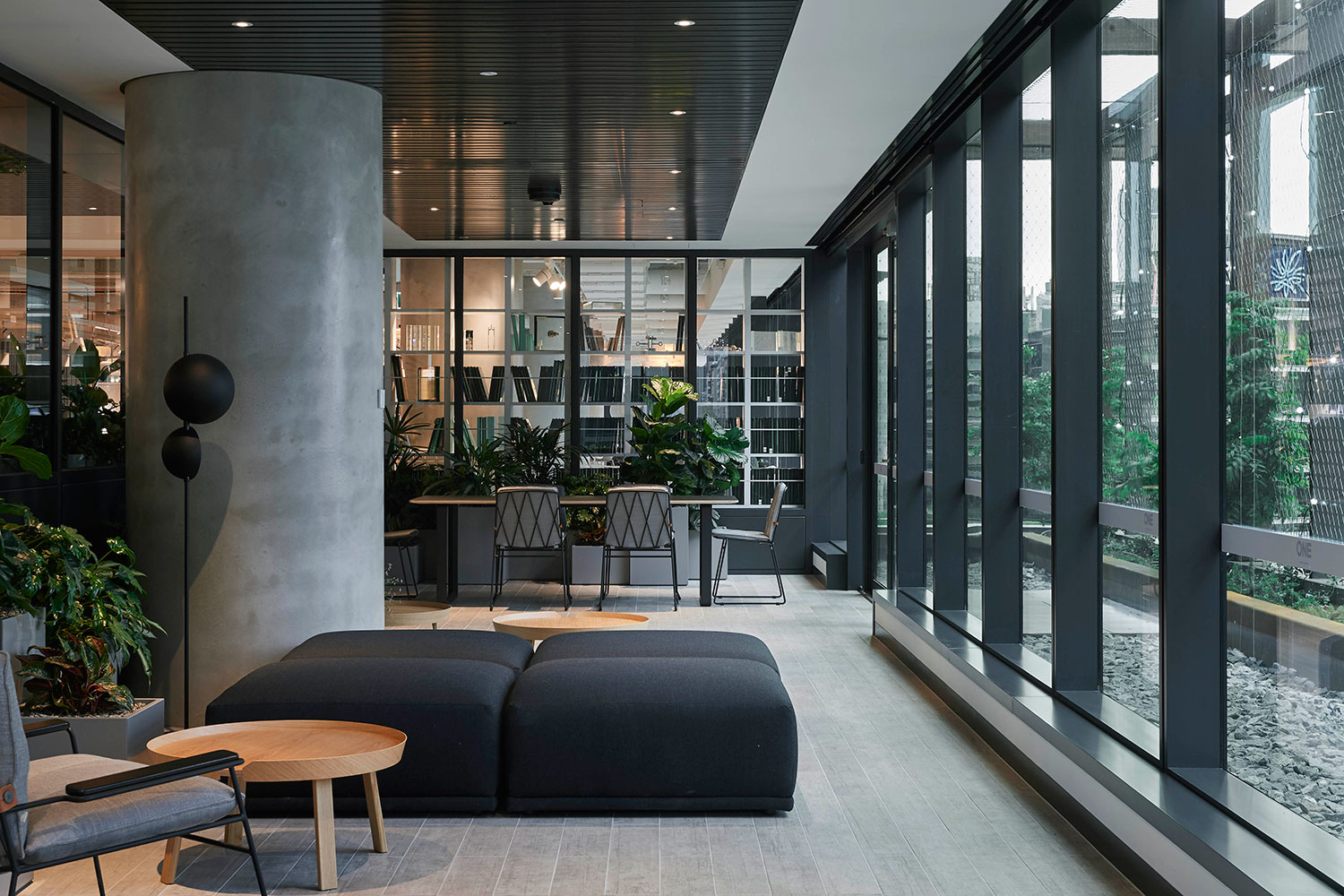
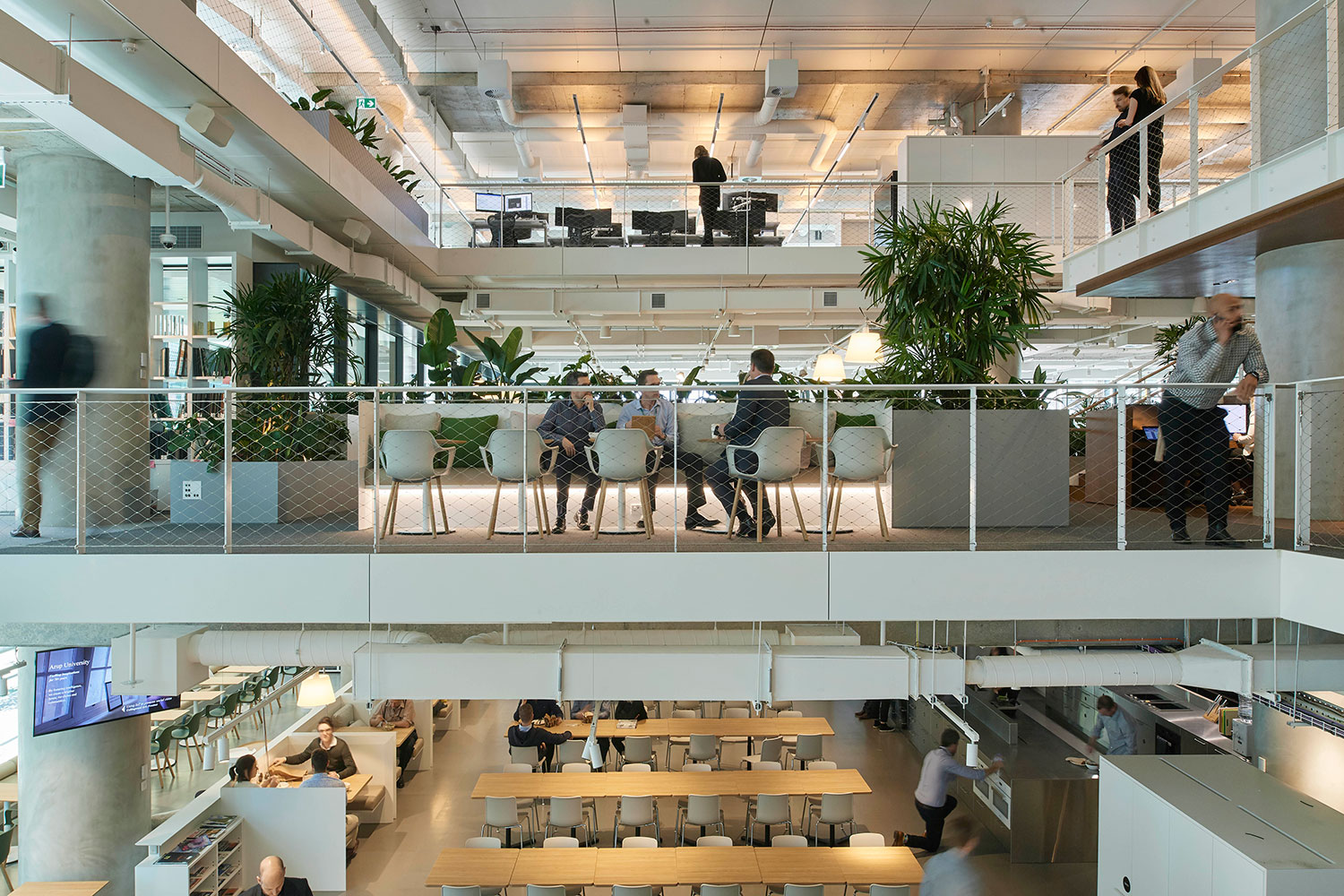
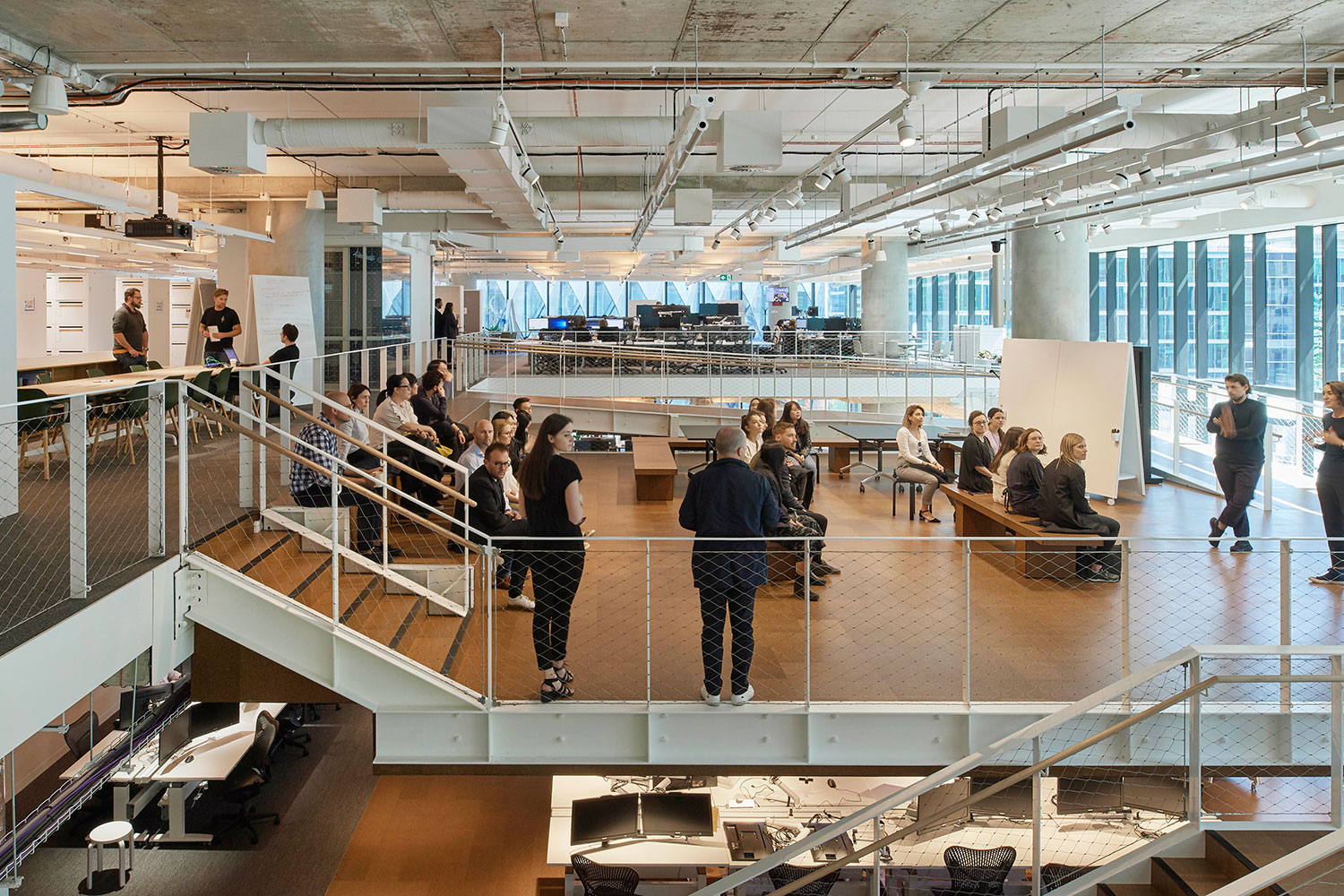
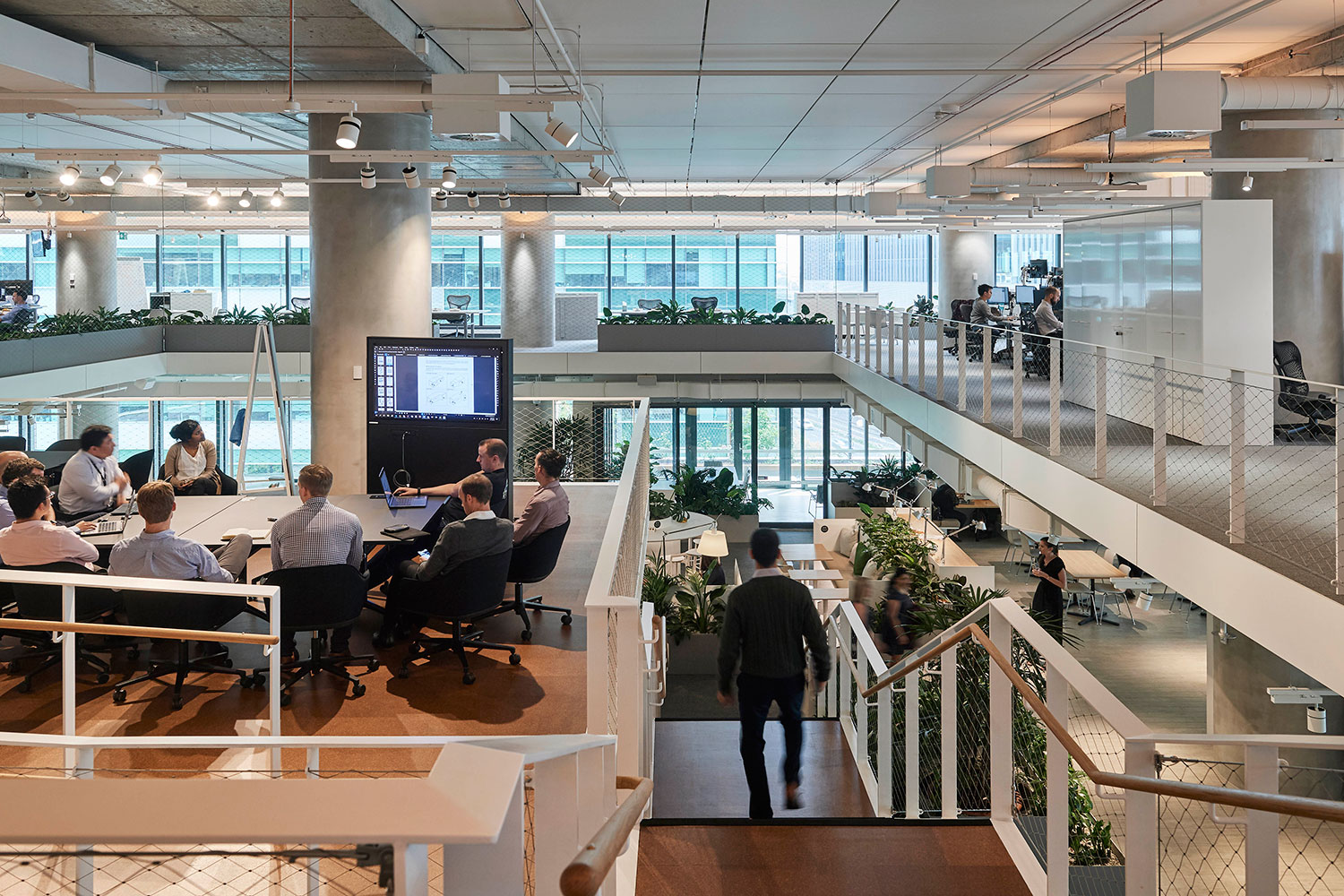
In a long-term collaboration between design and engineering, Hassell partnered with Arup to create a workplace that invites people back, resonates with them, inspires them to reflect on their knowledge and, through increased connectivity, promotes the open sharing of ideas. The resulting workplace has created a new paradigm in flexibility, connectivity, sustainability and wellness.

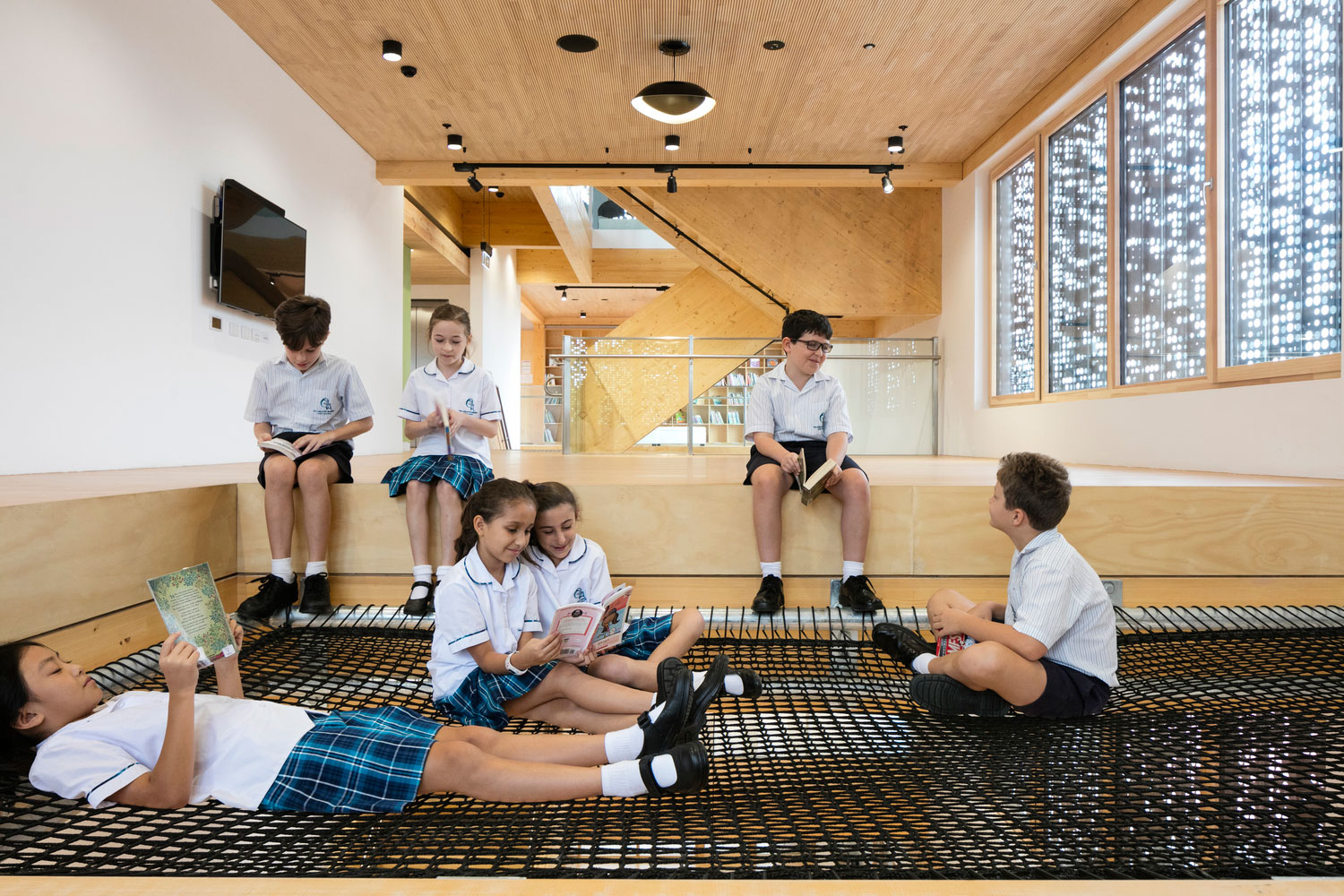
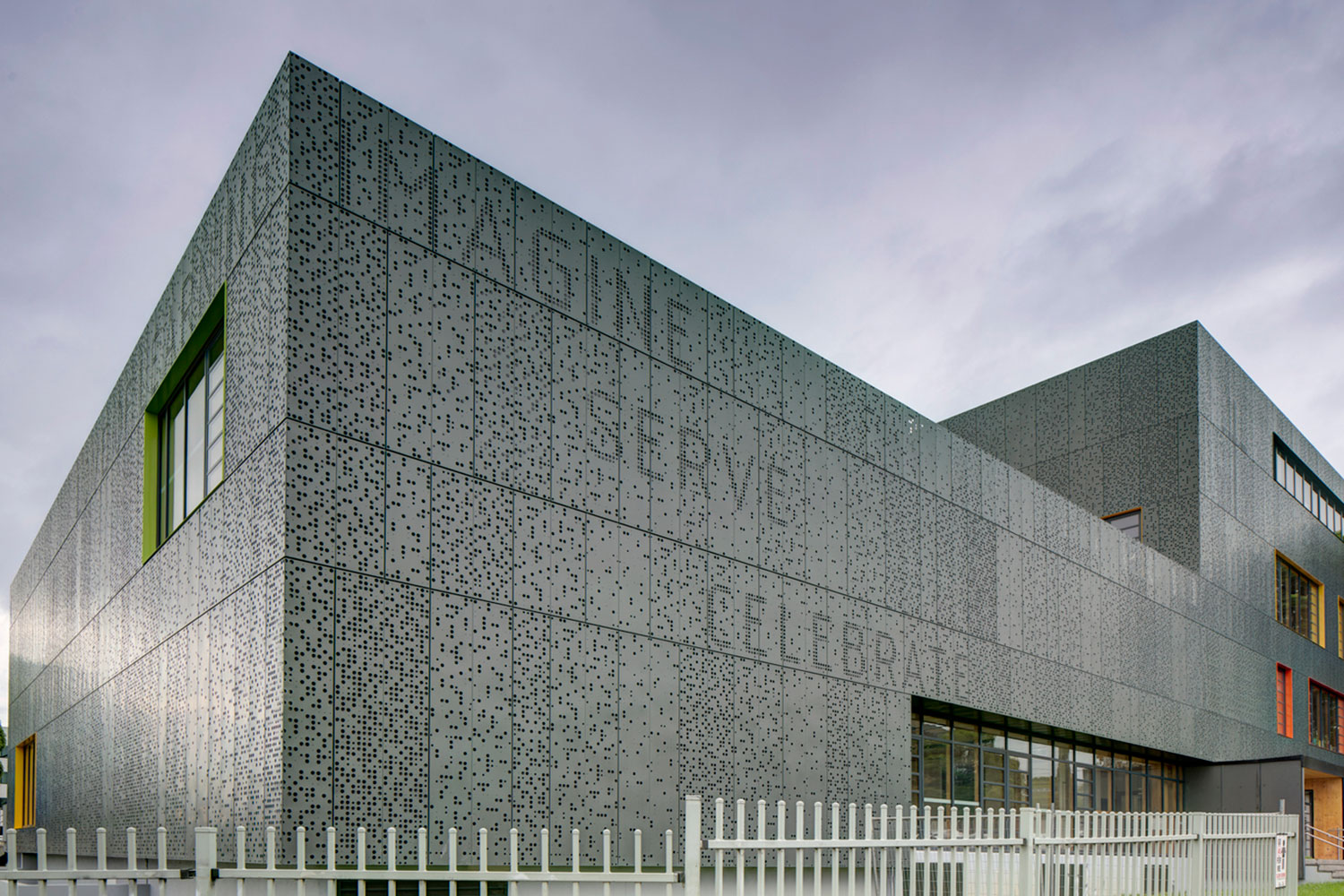
Our Lady of the Assumption Catholic Primary School

BVN

Our Lady of the Assumption Catholic Primary School is a new K-6 school for 420 students in North Strathfield. The design is a realisation of the school’s vision of creating spaces that invite imagination, innovation and support independent learning and student wellbeing. The project reuses a rundown 1970s three storey former Telstra training centre that was a typical institutional example of brutalist concrete architecture of its time. Flexible, open and inviting learning spaces support the school’s vision. To maximise daylight penetration and enable natural ventilation, the external concrete façade of the existing building was replaced by high performance timber framed double glazing.

Kinley Cricket Club

Winter Architecture

The Kinley Cricket Club is the renewal and conversion of an existing cricket club in Lilydale, Melbourne. Winter Architecture, in collaboration with Zunica Design, set out to balance the requirement for a functional sales space between the existing building’s former use as a cricket club and its future use as a community centre. The existing utilitarian structure was a tired and underutilised concrete block clubhouse bunker, complete with the familiar smells, dingy natural light and flickering fluorescent tube glow. The practice questioned the typical, internalised ‘clubhouse’ mentality, deciding to open up the cricket pavilion through a circulation axis. The new design seamlessly connects the internal and external spaces, blurring the ‘clubhouse’ line and facilitating spaces to be enjoyed by the wider community.

The GreenBook

Footprint Company

The GreenBook (TGB) is Australia’s most comprehensive cloud-based embodied carbon information resource for construction materials and assemblies. It is for designers who care about delivering low carbon design excellence. The easiest way to think of TGB is like a “Cordell’s” price book but with carbon as the “rate”.

The GreenBook is a fully-searchable information resource, which is available to users by subscription via the internet.

It is specifically designed to enable designers to make a difference by presenting information in a visual manner which is easily interpreted and actioned. TGB also includes whole building and elemental level carbon benchmarks to inform and guide overall decision making.

It is quality assured and consistent with International Standards, drawing from the highest quality international data sources and inventories. Data is presented cradle to gate (A1-A5) with virgin and recycled permutations and includes many “EPD” products in one place. There are over 1,200 rates in the current edition and to keep current it is updated twice a year.

By presenting both “labelled” and unlabelled materials and assemblies side by side it enables designers to understand which material is the lowest carbon solution irrespective of its “labelled” status.

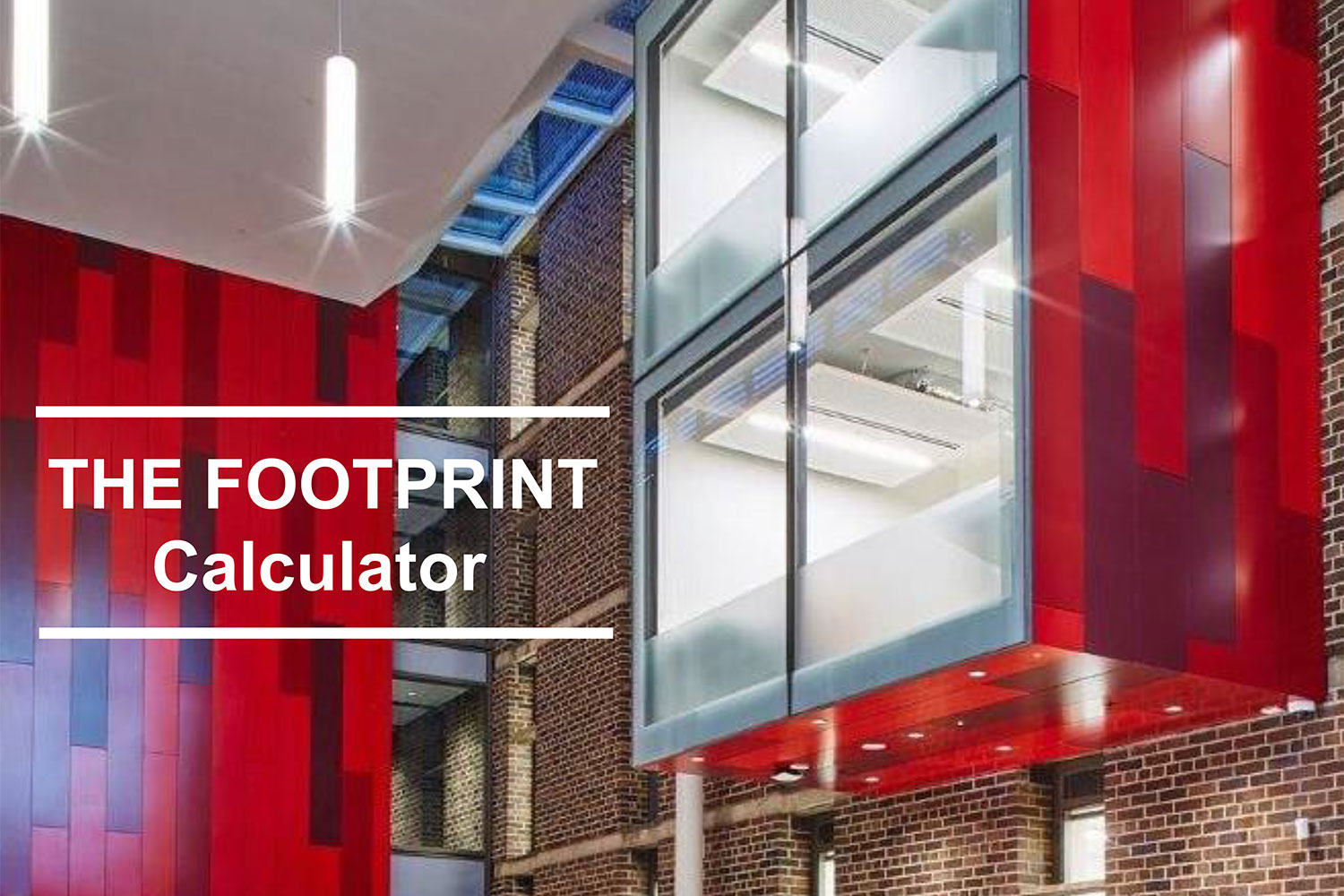
The Footprint Calculator

Footprint Company

The Footprint Calculator is the most sophisticated property specific LCA modelling software available, for use by design professionals who care about delivering low carbon design excellence.

The Footprint Calculator has been designed to help architects take control of the sustainability agenda of their early phase design and set the performance brief quickly and simply. It addresses a critical market gap and supports the LCA at the earliest sketch concept stage, at a speed not possible by other software or current project methodology.

The Footprint Calculator is cloud-based and recognised by its peers as being best-in-class and the only platform available which can deal with city scale to interiors, fully-integrated. The software has been designed to enable architects and planners to set the sustainability agenda, with easy to understand graphics and reference case models generating results in a matter of hours.

Scenario modelling is fast and features the ability to analyse discrete relationships at the earliest stage, such as façade / structure / massing and how they impact the whole of life carbon footprint. These features empower designers to confidently move forward with their concepts – without the need to wait for expensive and time consuming engineering analysis via third party software.

The Footprint Calculator enables cradle to grave analysis of all development scales and life stages for carbon, water, materials, transport and ecological impact. The presentation of results in carbon and Planet equivalent (e.g. akin to your own personal Planet footprint) is a powerful and engaging communication medium, which architects and the community see as a meaningful sustainability indicator.

The Footprint Calculator is quality assured and consistent with International Standards, drawing from the highest quality international data sources and inventories. The user interface is aligned to Australian Measurement standards and aligns to architectural workflow norms for speed and ease of use.

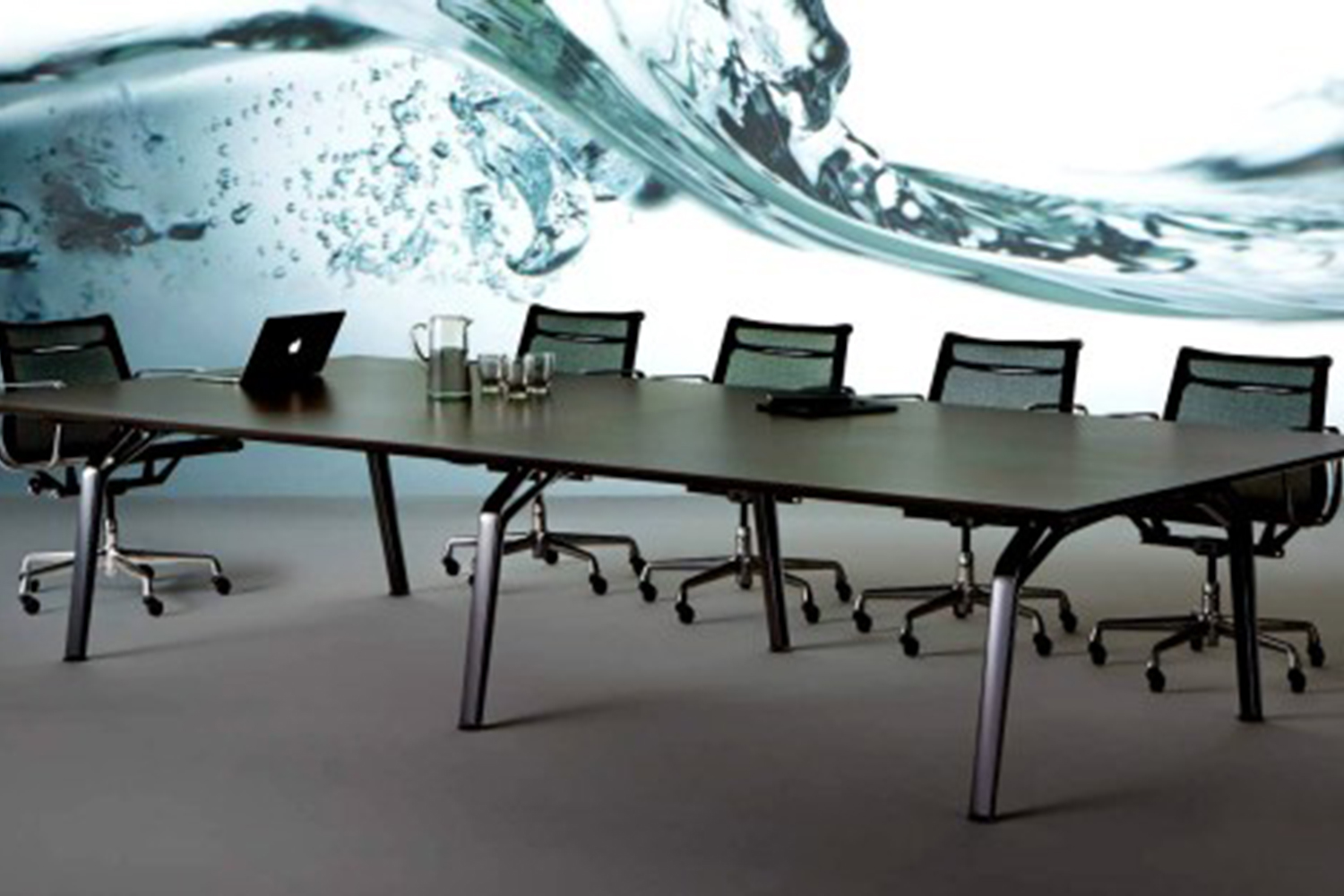
e-Board

Winya

99 percent of all of your office furniture goes straight to landfill.

Enormous effort goes into the selection of new, “green” office furniture, and getting a Greenstar Certification for the office. But the fact that every bit of the old furniture goes straight to the tip makes an absolute farce of this whole process. Every bit of this huge effort is negated.

Winya has changed all of this, creating the most important new building product in Australia: e-Board is 92 percent recycled melamine.

e-Board now makes beautiful office furniture genuinely sustainable.

The Patented process recycles melamine board to produce new board to make new furniture, which stops tens of thousands of tonnes of office furniture going to landfill. Old desks are transformed into new desks. And we’ll do it again and again for 100 years. We keep on recycling the same melamine over and over for “generations” saving millions of tonnes of furniture going to landfill.

But the innovation continues into the completely closed loop supply model that supports the product now and way into the future:

  • Accredited office relocation and strip-out companies now, instead of dumping product, deliver the melamine to the recycling facilities in Western Sydney providing the raw material stock for e-Board
  • This waste recovery is recorded with reporting supplied to the original desk owner to support their environmental reporting; giving now genuine substance to all that work in selecting the new green furniture.
  • e-Board’s life and chain of custody is recorded and mapped. The new desks become part of the next generation. The furniture data and barcoding system record the product life and keep mapping this each time these desks are returned and the melamine is made into new desks allowing users to log on and see where their desk started its journey 30 years ago;
  • The manufacturing process assists this, with the new melamine surface being impregnated with mirco-barcode/QR characters providing its year of manufacture. These are invisible to the eye but a key part of the chain of custody and lifecycle process;
  • And finally, e-Board manufacture is part of Winya’s Indigenous employment program, employing Indigenous trainees and staff in the e-Board factory and the factories making new desks.
    Never again should your office furniture go to landfill!
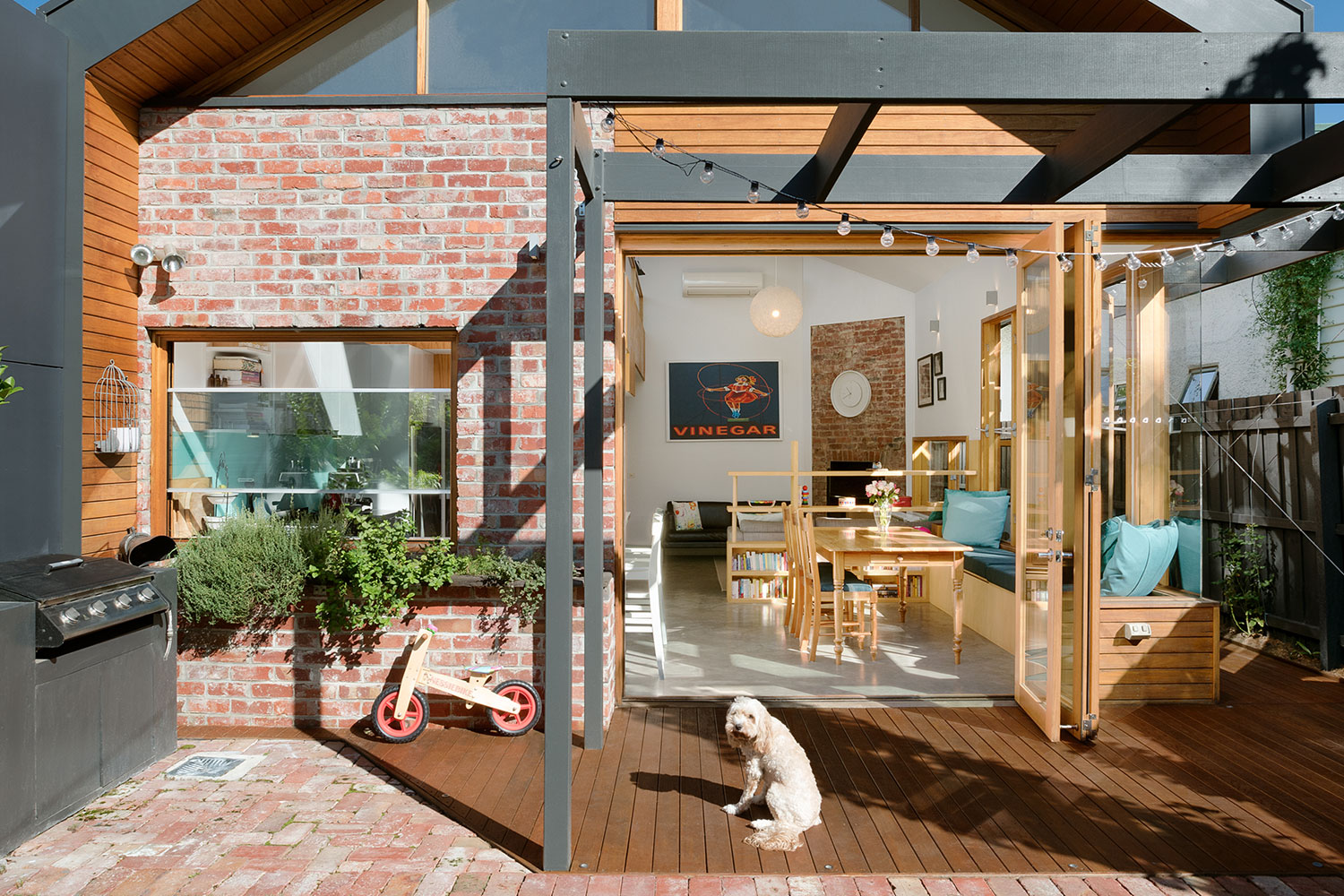
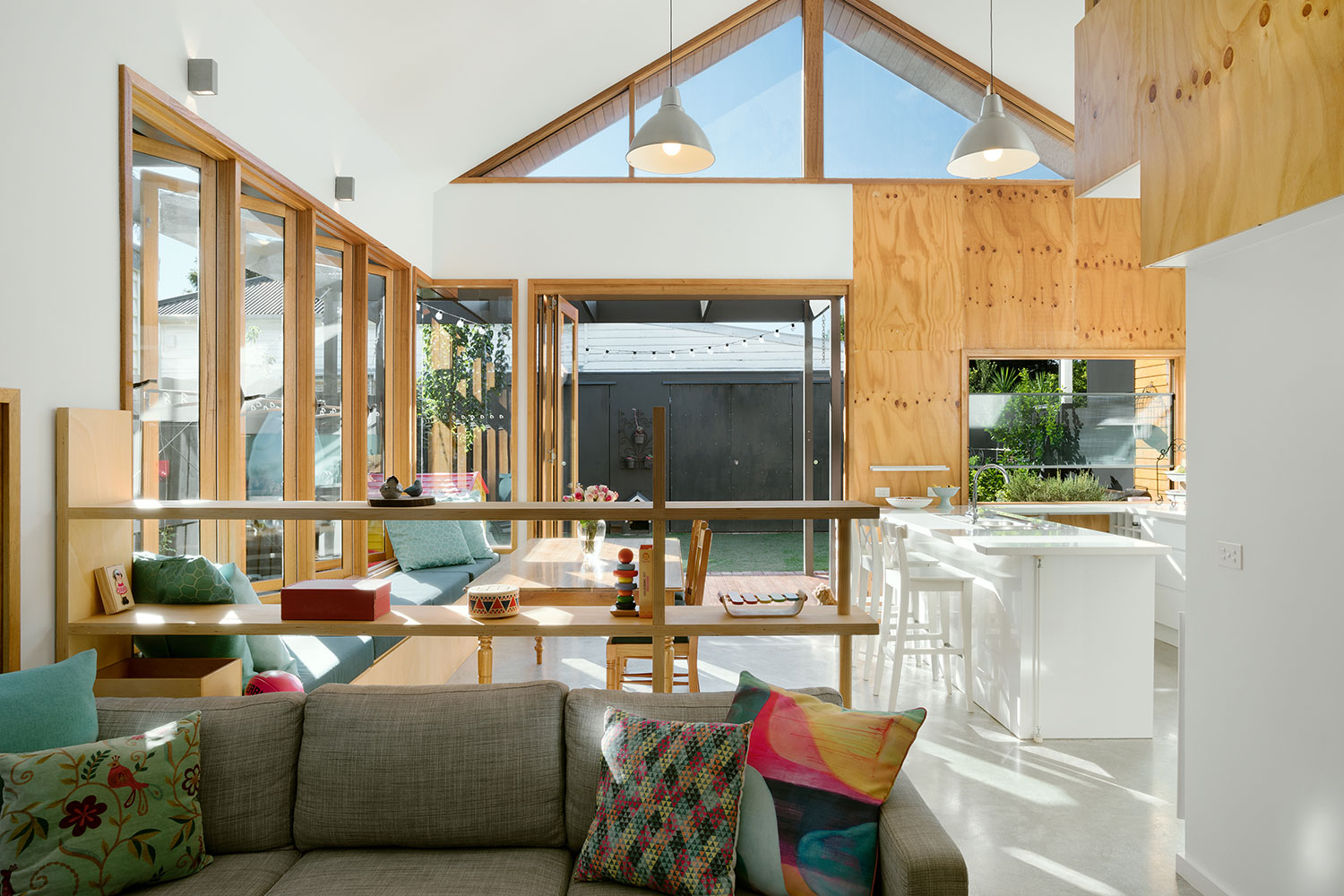
Smart Home

Green Sheep Collective

The Smart Home, like every Green Sheep Collective project, is dedicated to integrating high-level environmentally sustainable design and products to minimise the project’s lifecycle impact. Before construction begins, our documentation specifies a requirement for the builder to minimise waste on site, recycle demolished materials, and ensure appropriate sorting of demolished materials for ease of on-sale or recycling.

When specifying materials we look at end-of-life disposal, product re-use, off-gassing and social justice issues as well as low environmental impact and high thermally efficient materials. Where possible we preference certification schemes – Good Environmental Choice Australia (GECA) and Global GreenTag – and use tools like ecospecifier.com to assess each material on an individual level.

Materials in the Smart Home have been selected to create a home that minimises negative impacts on non-renewable resources, the natural environment and human health, and that create an energy and water efficient and comfortable home.

Melrose Health

Bent Architecture

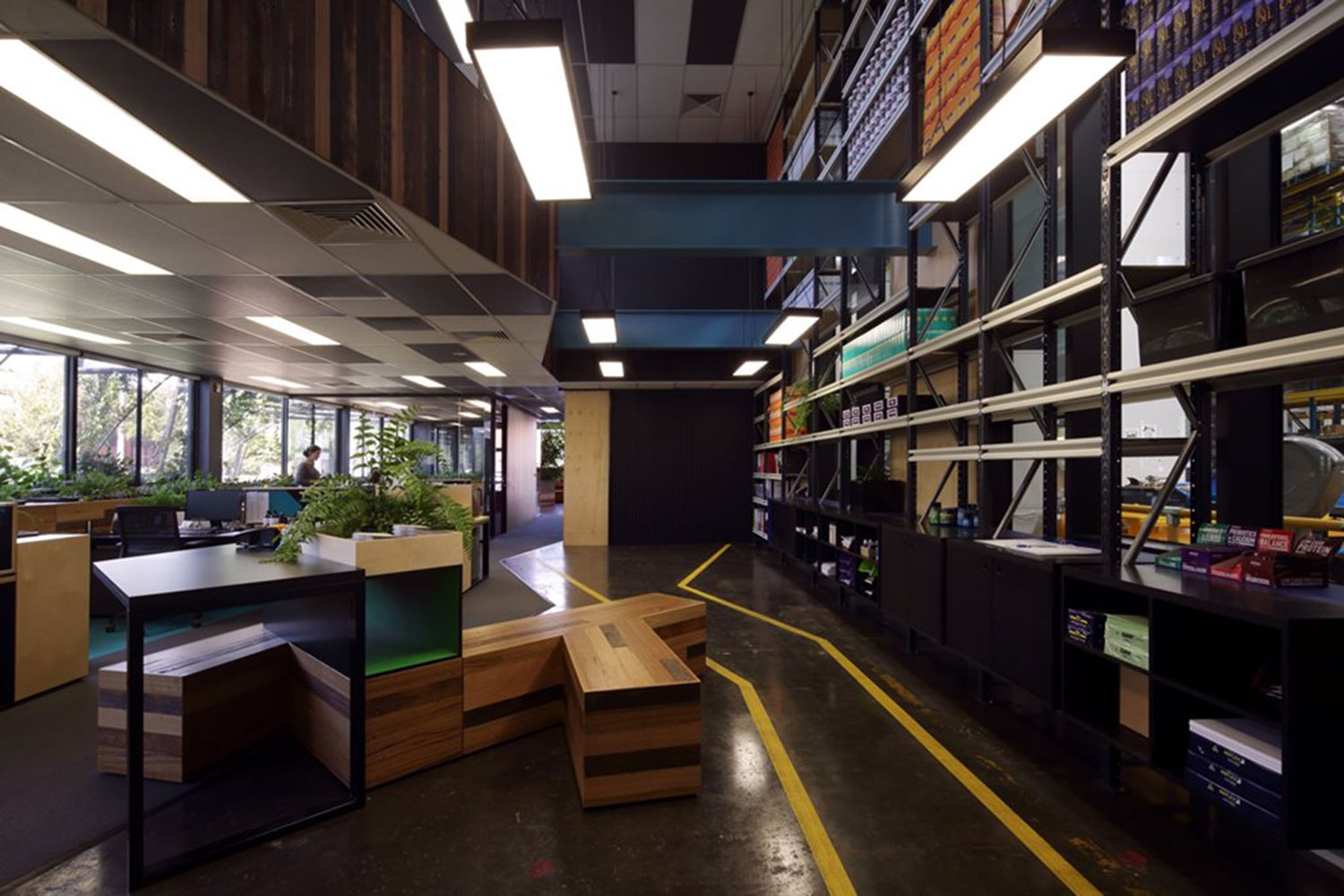
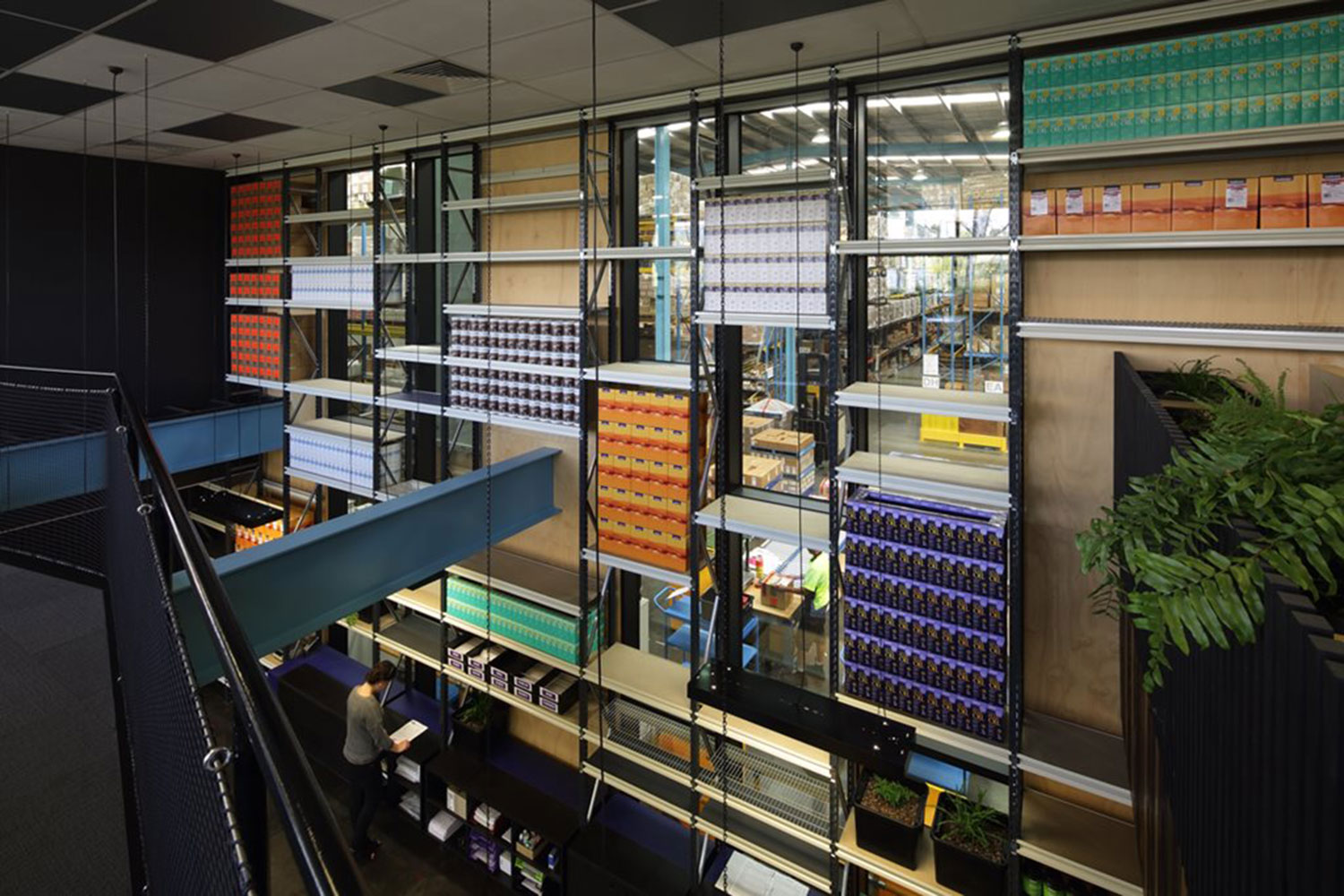
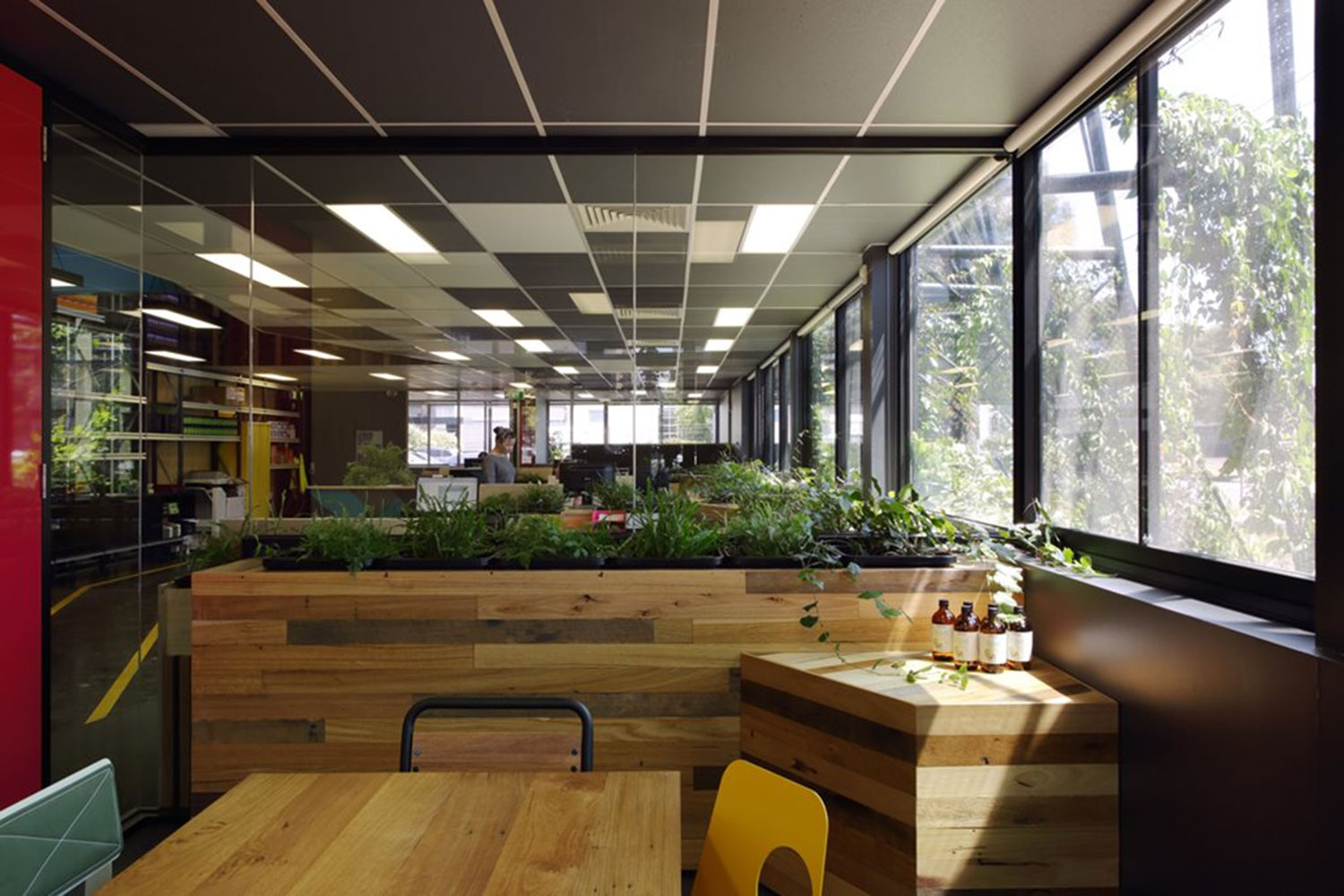
Bent Architecture’s Melrose Health project involved the transformation of a mundane, unresponsive office building into the dynamic new headquarters for Melrose Health, a national health company in Melbourne.

The Melrose brand represents an ideology of whole body health, where nature is harnessed to promote well-being, and they required a workplace that did the same. The existing two storey office was a typically unhealthy, soulless, refrigerated box, disconnected from the outside and from the warehouse and production facility. In Bent’s view, a healthy office is one that is responsive to the natural environment and engaged with the process within.

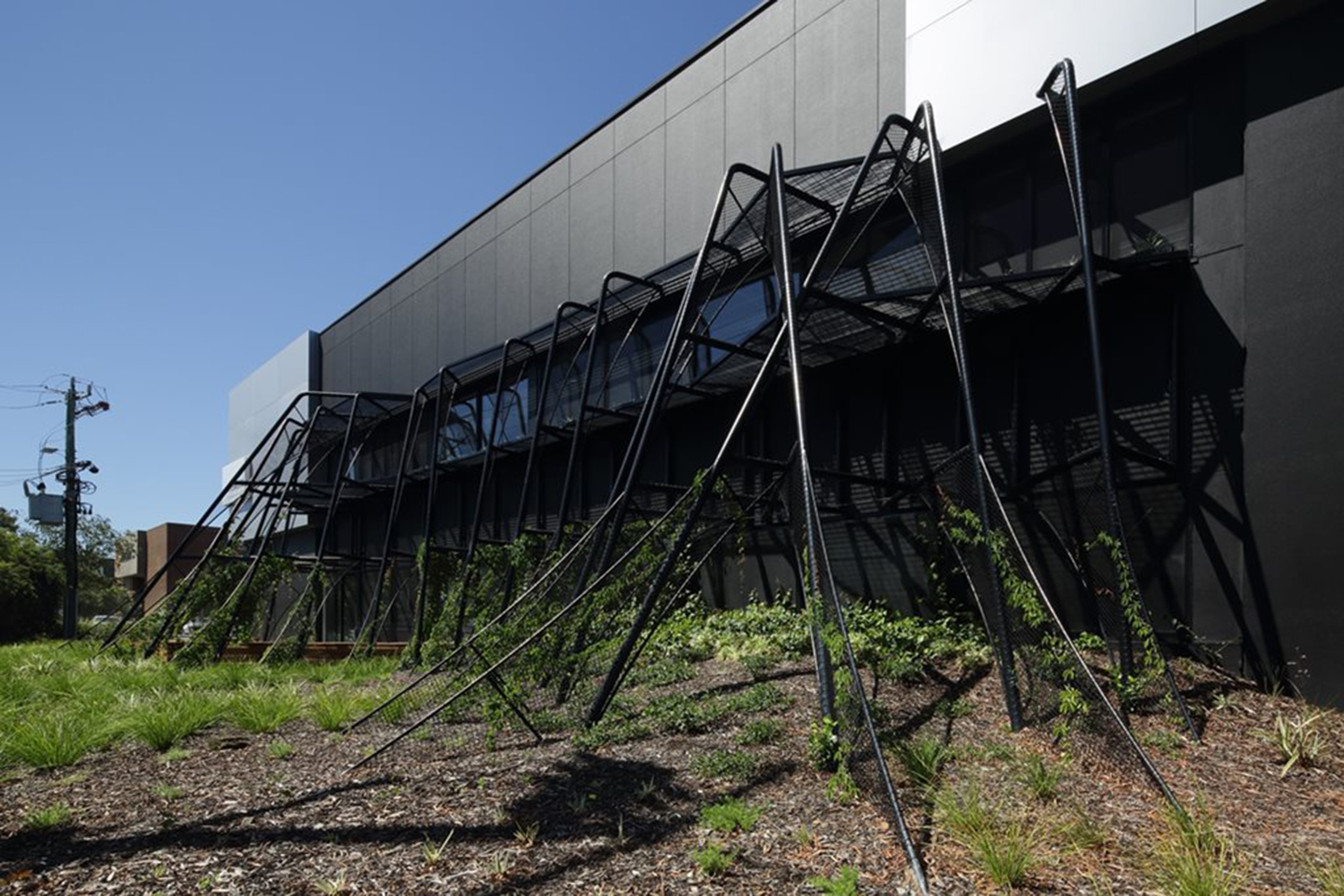
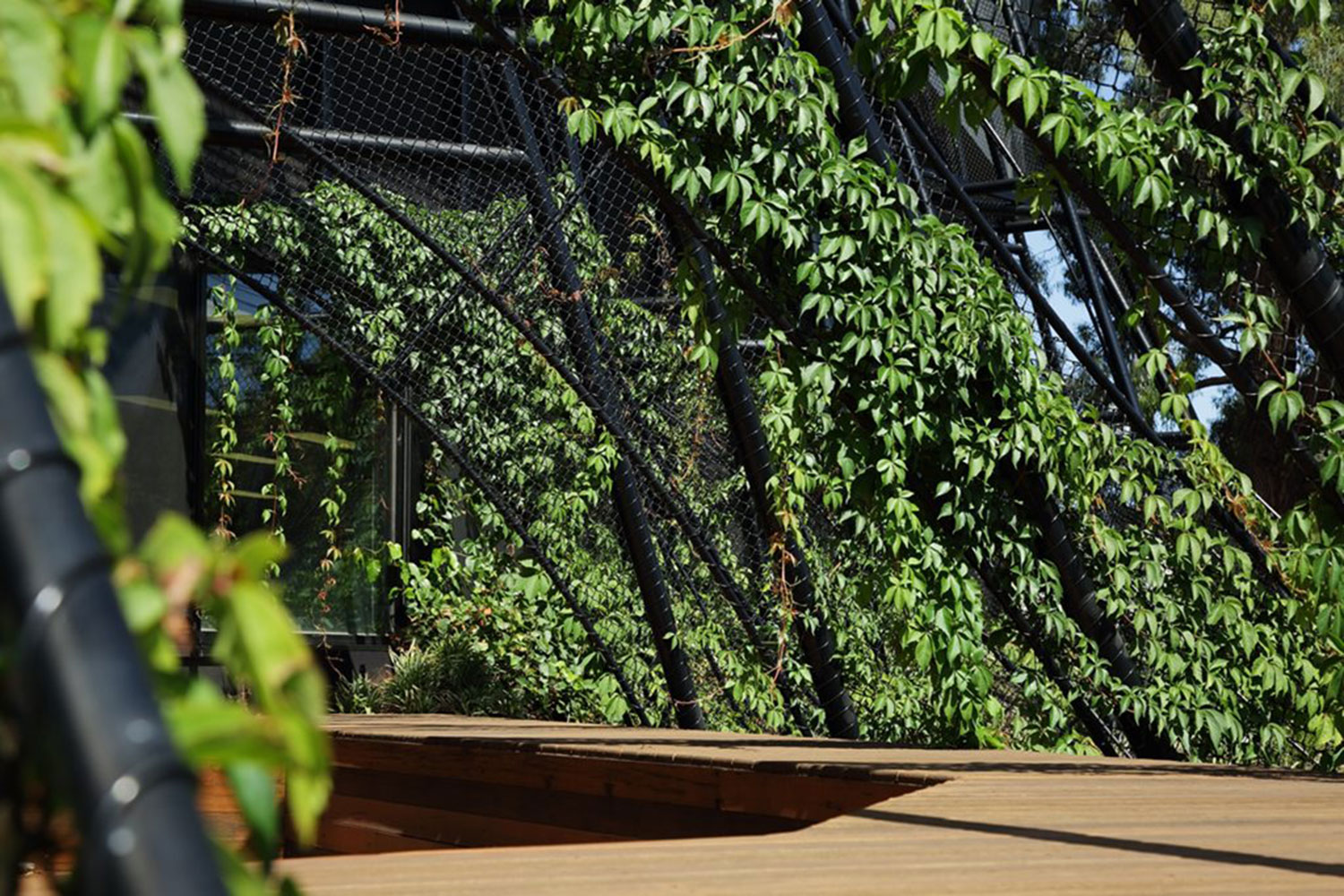
In order to facilitate an immediate and meaningful connection between the office and its surrounds, the north facing street façade was eroded by introducing an organic steel structure that literally connected the site’s landscape to the building fabric.

Part sun-shade and part landscape arbour, the structure supports vines that liberate the existing north facing windows that would otherwise cower from hot summer sun. This, in combination with openable windows that were inserted to allow natural ventilation, reducing the building’s energy dependence supporting a healthier work environment.

This project demonstrated that typically mundane and static office/warehouse buildings (typical in the industrial estates of outer Melbourne) can be successfully transformed into environmentally responsive and engaging workplaces which fuse warehouse, administration and landscape into one cohesive whole.

Sarah Lebner

Light House Architecture and Science

Since joining Light House Architecture & Science (then known as Jigsaw Housing) as a graduate architect in 2013, Sarah’s career trajectory has been stellar. In the years since, she has achieved registration, won several awards, developed the company’s modular system, and risen to the position of the company’s lead architect. She is running a dynamic, effective, and happy design team, and despite her relative youth is respected as a generous and collaborative colleague by all Light House staff and many people from the broader industry.

As a student and graduate architect Sarah was a valued team member in the delivery of notable precinct shaping buildings such as The Avenue, one of the earlier rejuvination projects on Canberra’s gateway avenue, and ‘Dockside’, one of the first buildings to bring residential and mixed use activity to the reclaimed ‘Kingston Foreshore’ precinct.

Sarah was one of the founding members of ‘CanberraLab’; a group of young architects determined to activate the city through ‘ground up’ interventions.
As well as ‘Dear Marion’, a collaboration between CanberraLab and artist Kathryn Scott, brought Walter Burley Griffin back to Canberra in a series of installations throughout the city.

Sarah has shown innovation in leadership by, for example, implementing a mentoring and knowledge-sharing system, inviting other local architects to join us for informal, collaborative sessions. The format varies from of group discussions over lunch, to one-on-one meetings. This successful program has been praised by both the members of the Light House team and the visiting collaborators.

Mathew Hinds

Architect/Director, Taylor and Hinds Architects.

Mathew’s work is characterised by an abiding awareness of Tasmania’s architectural traditions – and seeks to foster deep social and environmental connections, through a high level of quality in architectural ideation and execution.

Mathew says that he considers buildings as an extension of the landscape condition, and seeks conceptual rigour in resolving ideas from poetic abstraction toward the reality of everyday needs. Since establishment, the practice he has twice received the Tasmanian Chapter’s Esmond Dorney Award for Residential Architecture – Houses (New) (2015 & 2017), and the 2017 Edith Emery Award for Residential Architecture Houses (Alterations and Additions), as well as a number of other national industry awards.

Since graduating in 2006, Mathew has maintained a teaching and lecturing presence within the Masters of Architecture program. In conjunction with practice, he has held Associate Lecturer and Honorary Research positions at the School of Architecture and Design at UTAS, and in 2017, he was an External Examiner for the Masters of Architecture Program.

Mathew has also taught as a Guest Lecturer at Bond University (2016), and at the L’Ecole d’Architecture de l’Université Internationale de Rabat, in Morocco (2012).

Jean Graham

Director, Winter Architecture

Just over two years ago, Jean Graham established Winter Architecture. Jean considers herself secondary to the practice, straying away from the fulfillment of a self-titled practice. Instead, Jean has elected to translate the quiet, introspective, site-specific qualities of Winter – the season – into an Architectural dictum.

With varied budgets and a range of client backgrounds, Winter Architecture has opened up the possibility of architecture to a number of clients who did not feel architecture was accessible to them, due to low budgets, difficult site restrictions and the desire to build themselves.

The Winter Architecture team are from a multi-disciplinary background with many of its staff collaborating from a distance, located all across Australia. This unique arrangement of a design studio evokes a diverse appreciation and approach to design. The practice has adopted an online mode of working, in order to engage and collaborate with each other remotely. This approach enables the practice to directly engage with a range of localities and to not be bound by the fixed nature of a traditional studio.

Barwon Water HQ

GHD Woodhead

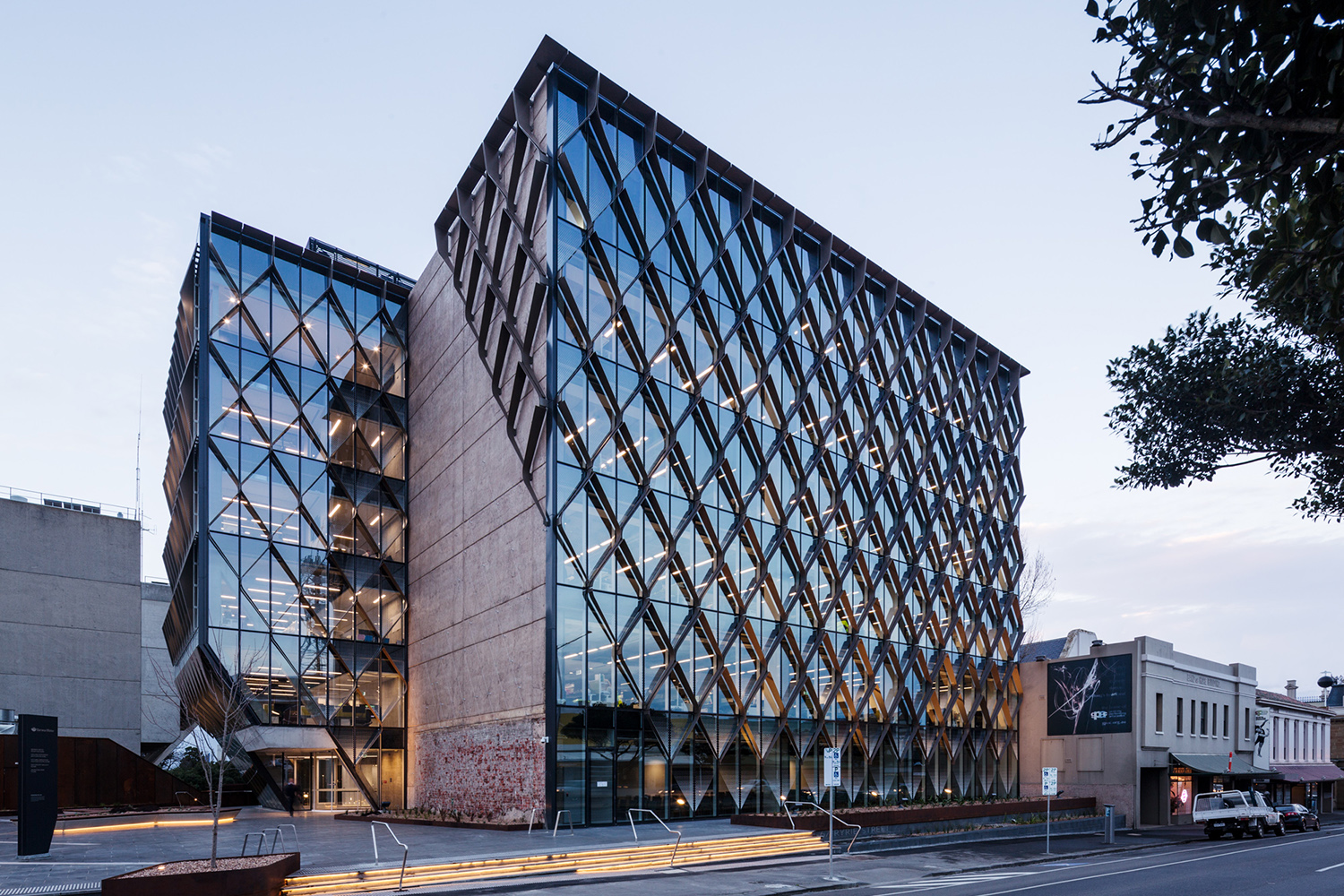
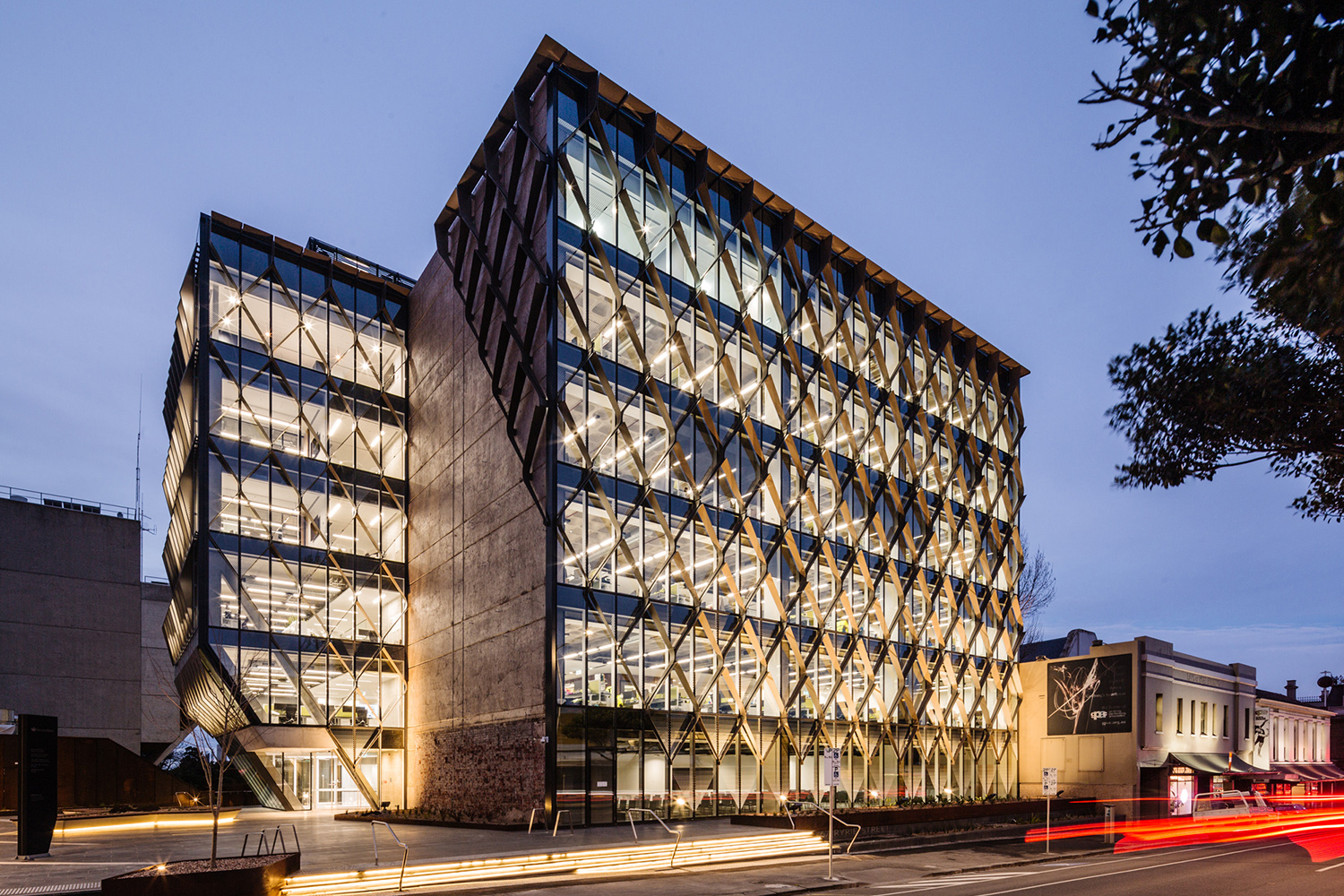
GHD Woodhead recently refurbished Barwon Water’s 50-year old Geelong office, transforming it into the greenest office in Geelong – Ryrie HQ. The upgrade transformed the building from 0.5 Star Green Star equivalent to 5 Star Green Star, and is an exemplar of how sustainable outcomes can be achieved through building redesign and refurbishment.

Historically Barwon Water’s Geelong staff were split across two major office locations located three kilometres apart. The physical separation of 300 staff was a challenge to staff effectiveness, efficiency and collaboration, as well as an inefficient use of resources.

The consolidation of office spaces presented an excellent opportunity to build an iconic, state-of-the-art sustainable building and contribute to the revitalisation of Geelong.

The result is a modern office building with outstanding sustainability credentials and staff health and wellbeing features. Ryrie HQ will be 80% more energy efficient than the previous buildings combined.

It features a high performance façade that eliminates 95% of direct sun penetration and has a state of the art heating, ventilation and cooling system. The building has spectacular north facing views over Corio Bay and a 300 square metre roof garden that provides urban greening and an exceptional outdoor space for staff. Other key green infrastructure features include two green walls and a rain garden at street level providing water treatment and aquatic biodiversity. The building will re-use rainwater for toilet flushing and irrigating the rain garden and green roof and walls.

The building also reconnects all ability access between Ryrie Street and the Arts and Library hub in Little Malop Street. Staff wellbeing has been greatly enhanced through open plan office layout, extensive natural lighting and views, multiple private and communal break out and meeting spaces, extensive bike parking and end of trip facilities.

The Beehive

Raffaelo Rosselli / Luigi Rosselli Architects

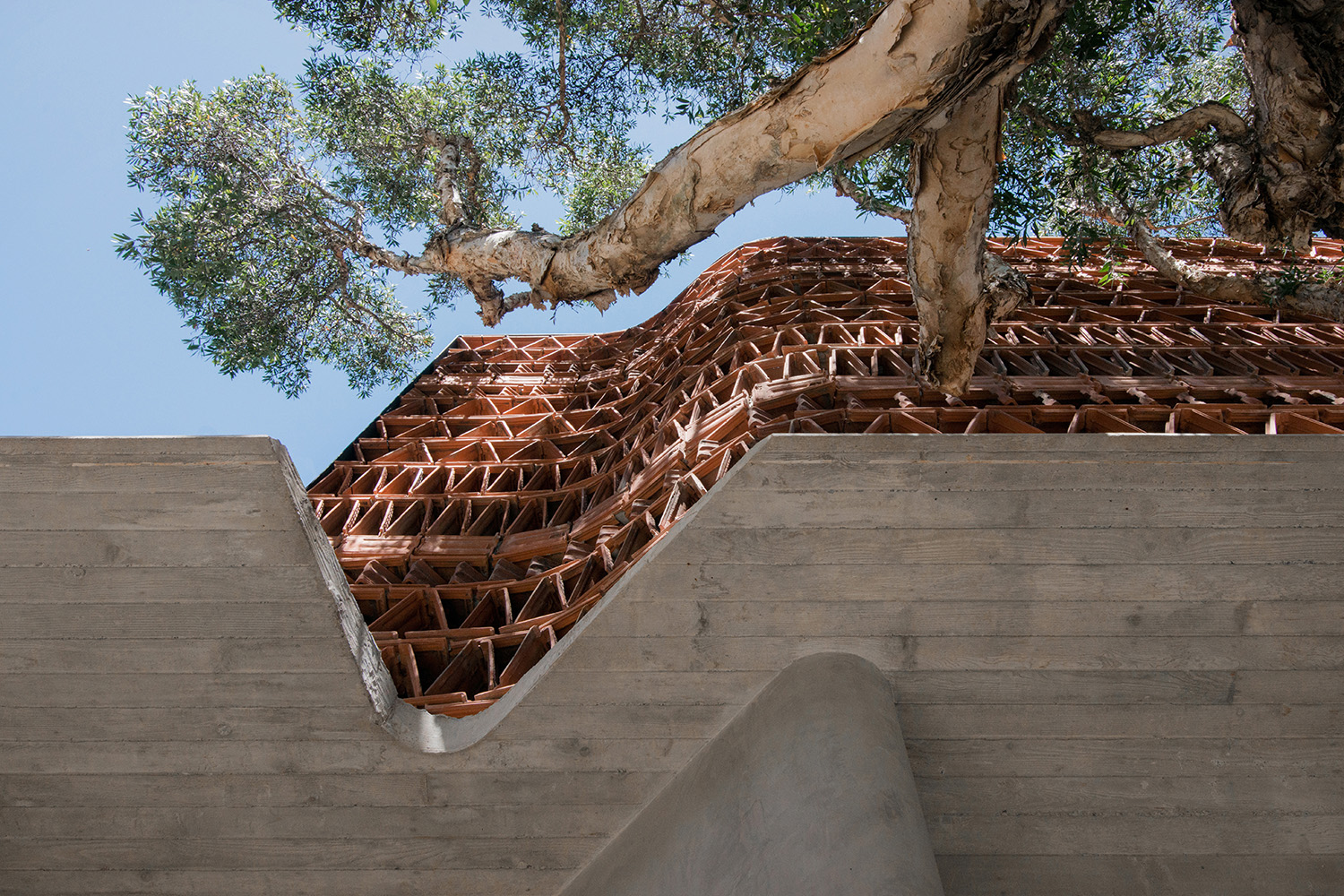
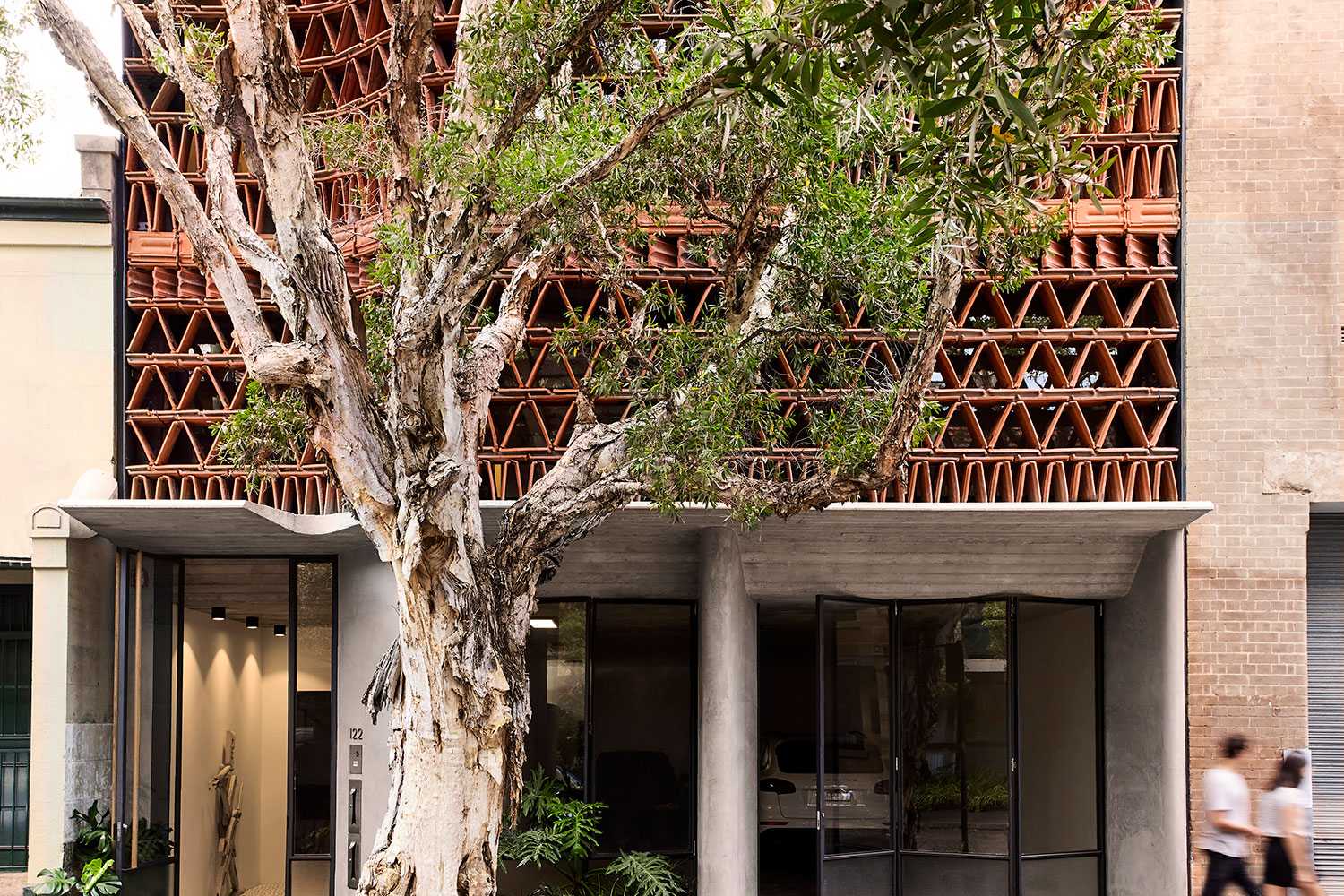
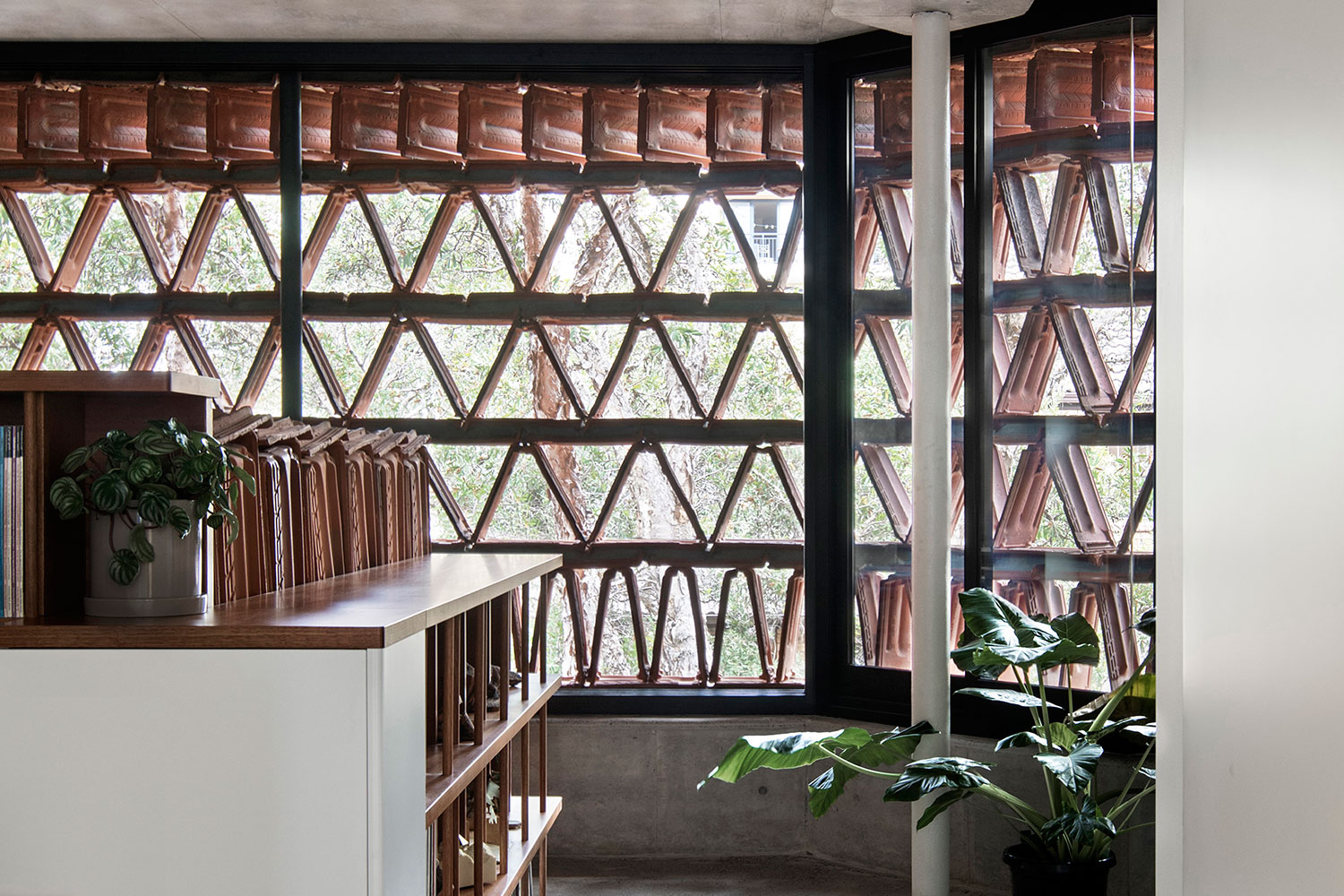
The beehive explores how an undervalued waste product, like the ubiquitous terracotta roof tile can be redefined and revalued.

This exploration of waste as a material stems from the knowledge that construction creates up to 50 percent of Australia’s waste output; and that a buildings energy footprint is largely based on the materials embodied energy. Material reuse solves both these environmental impacts and is by far the most efficient form of building.

Raffaello Rosselli collaborated with Luigi Rosselli architects to design their new office building.

Through experimenting with waste material reuse on its own studio it aims to be a role model for future projects.

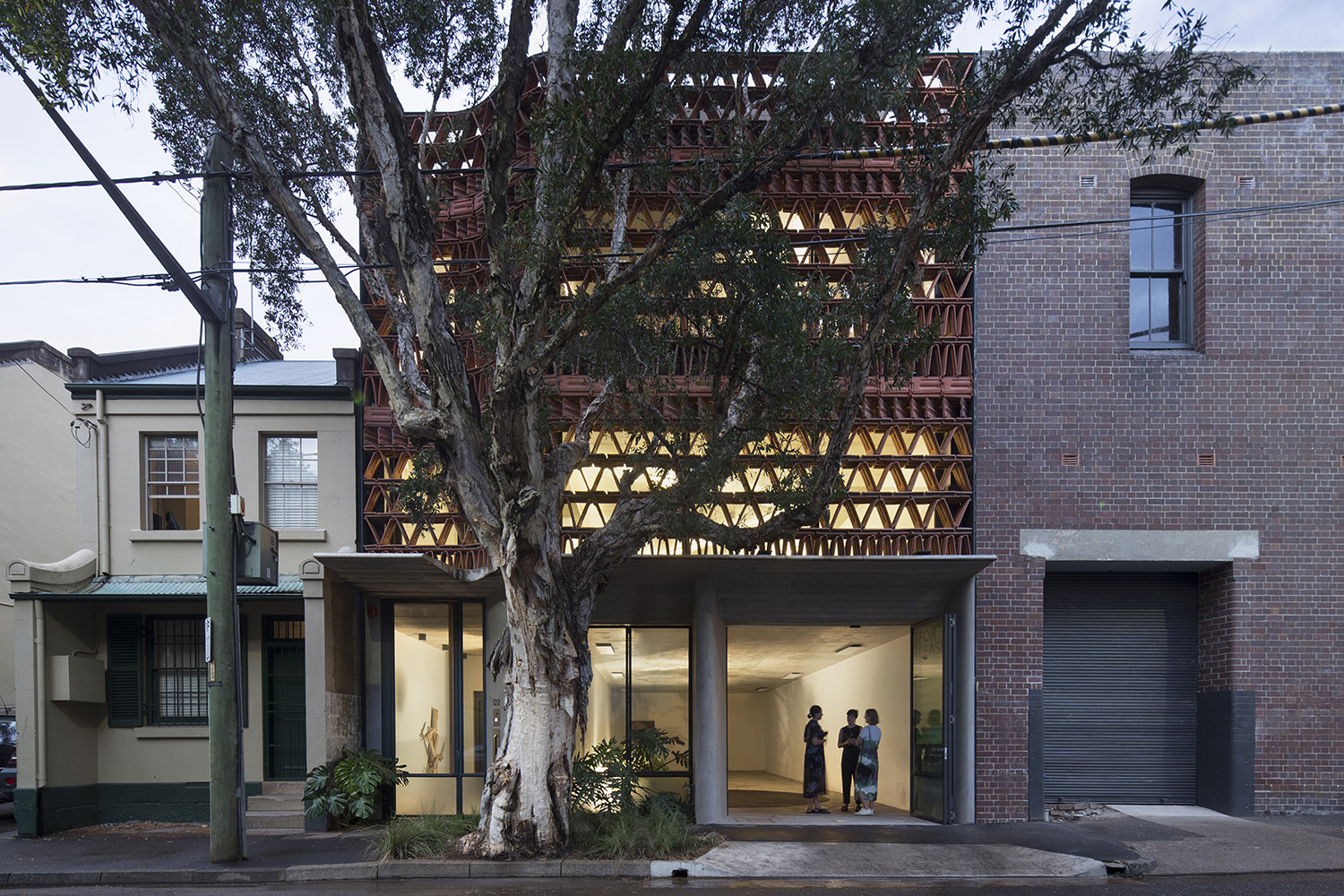
Inserted between a century old brick warehouse and a row of Victorian terrace houses on what was once a small carpark, the Beehive refuses an immediate reading at first sight. Upon approach, the use of stacked terracotta tiles in the façade is revealed, reconfigured into a rhythmic Brise-soleil.

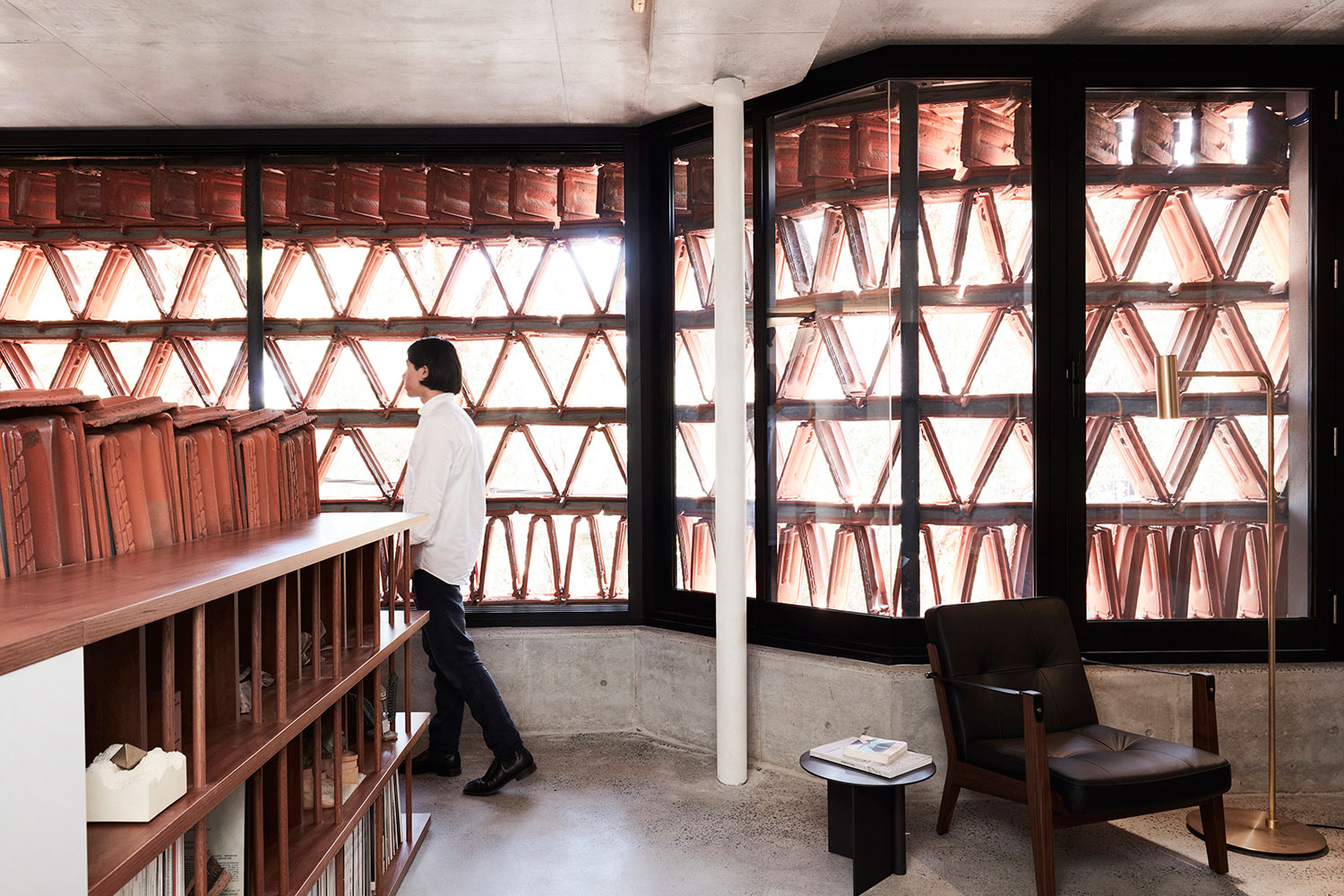
The project explores the perceived limitations of terracotta tiles and celebrates the layers of filigree and geometric complexity that can be found in the overlooked terracotta tile.

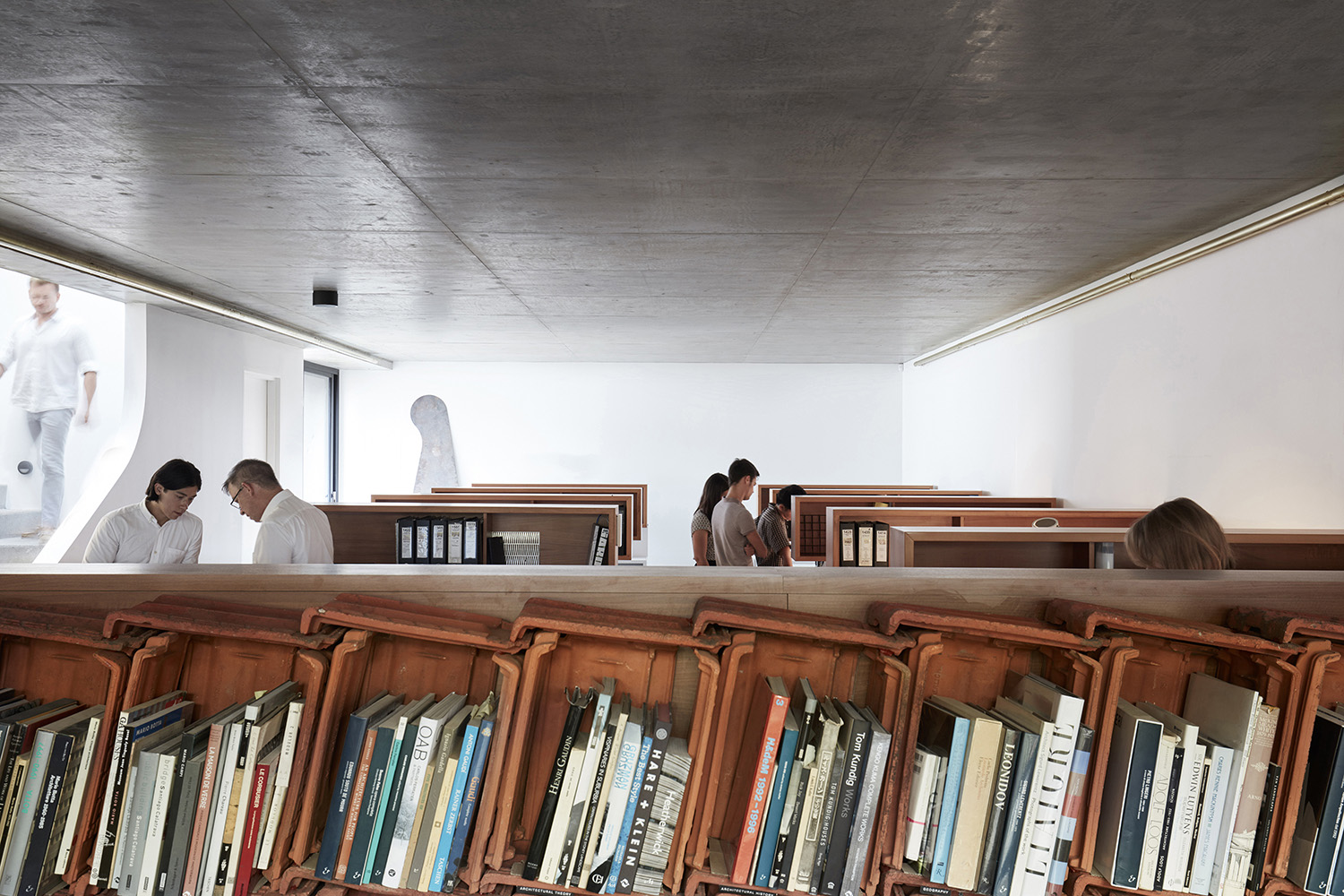
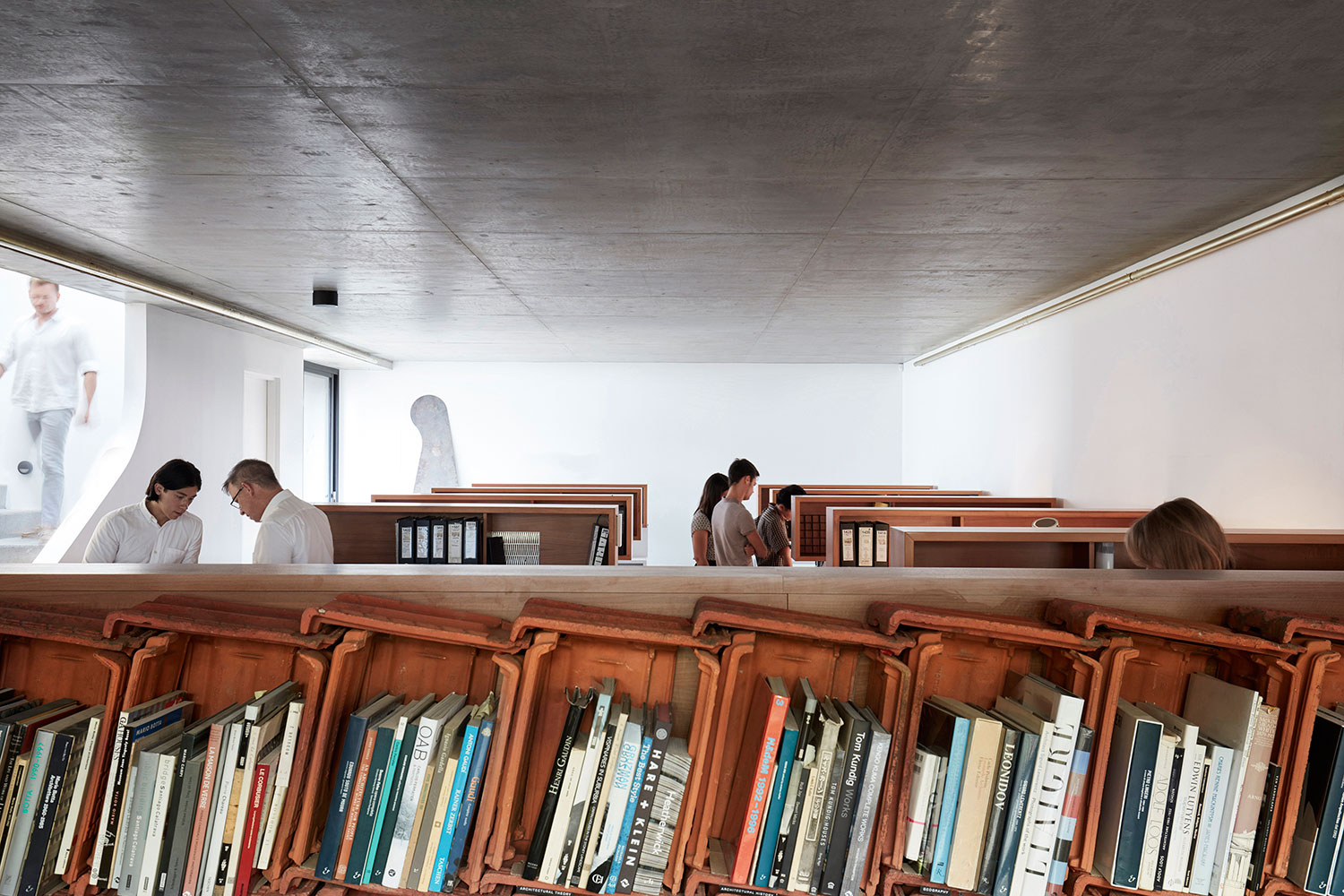
Utilising recycled materials from the start rather than an afterthought, the terracotta tile was chosen as it is a ubiquitous material without an established reuse market.

The project is a celebration of the immediacy and the unpredictability of creation using what is discarded or found rather than new materials, by creating a new bricolage that demonstrate how waste products can be reimagined and reused with minimal energy.

One Malop Street

AURECON

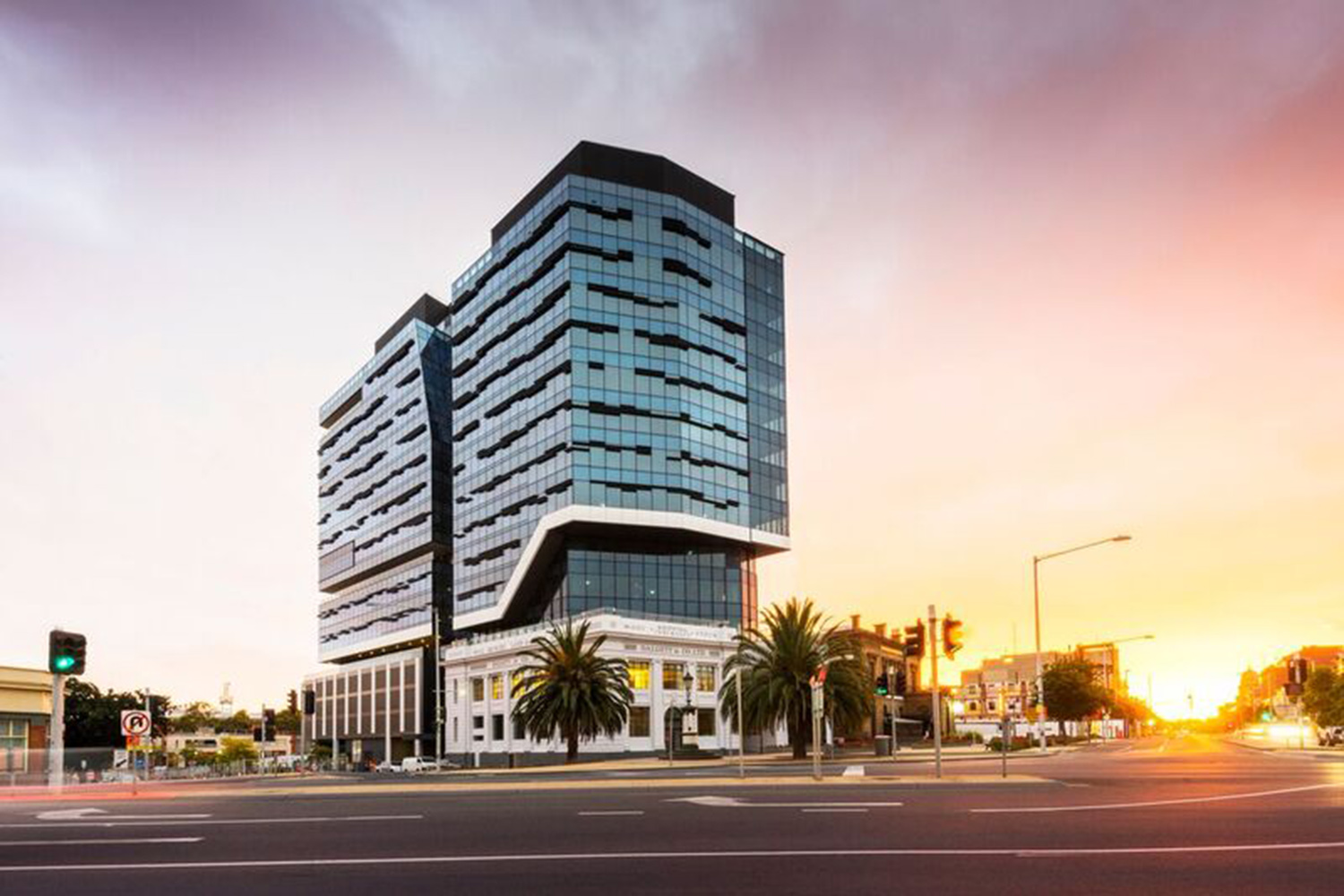
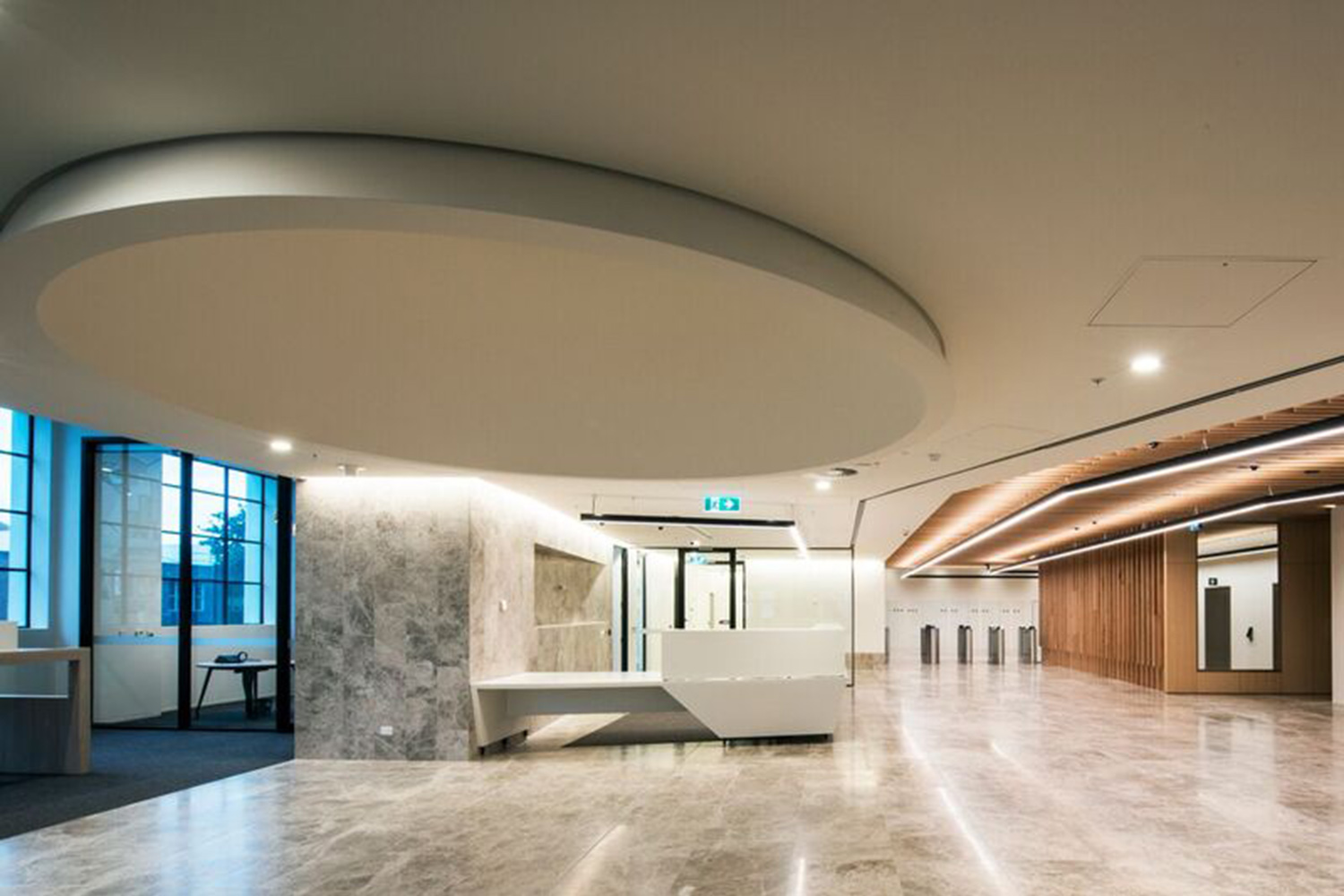
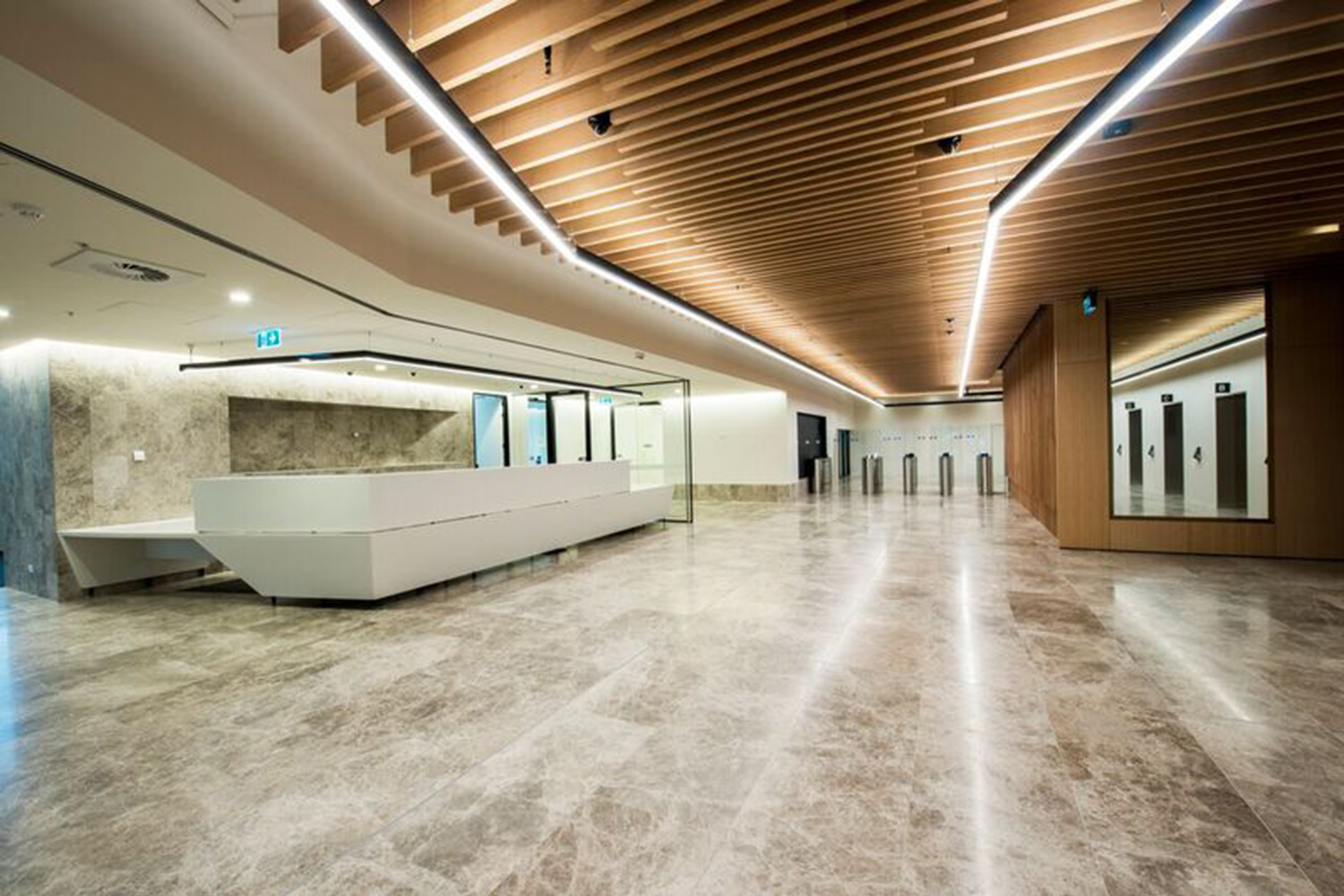
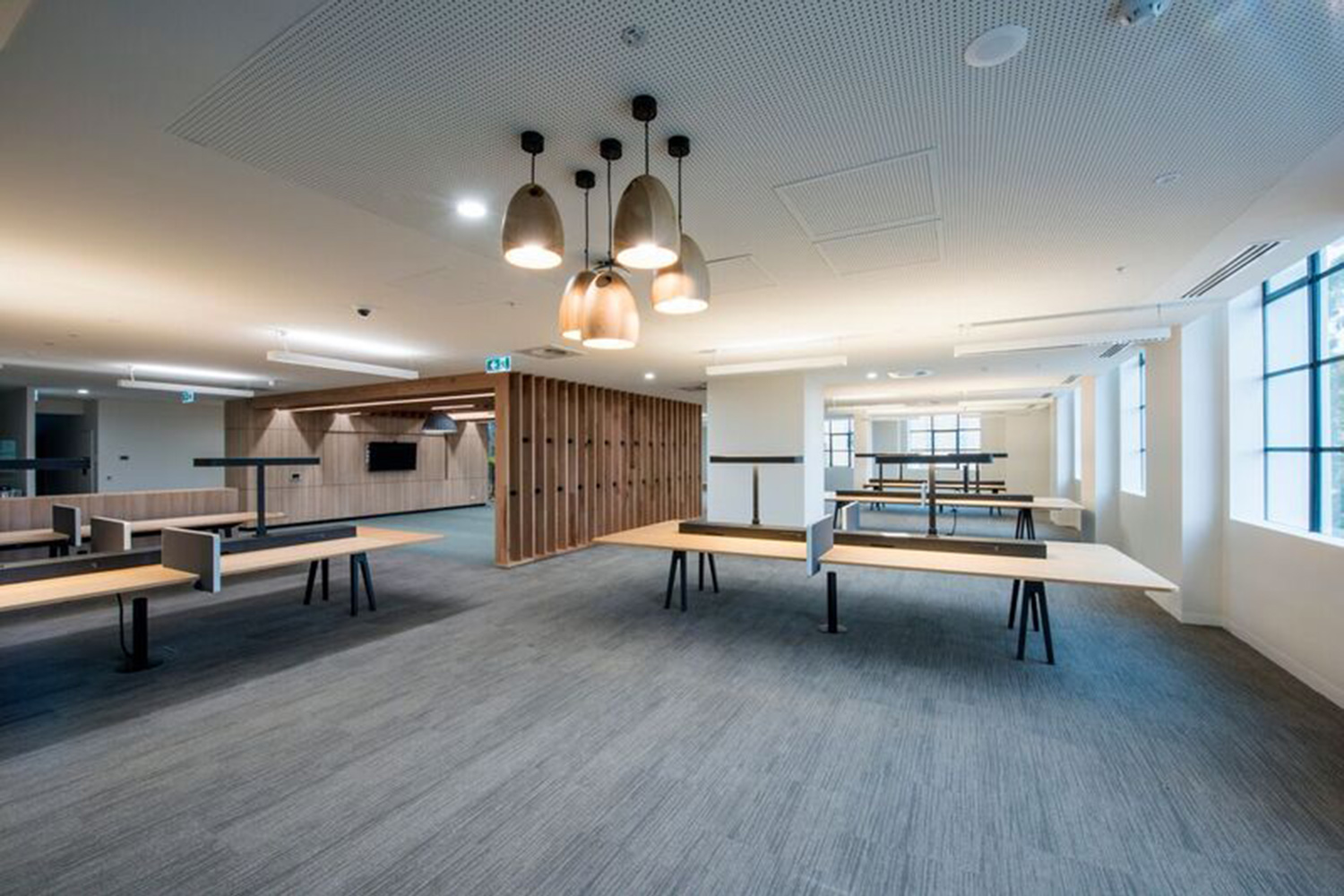
Sustainability and occupant wellbeing have been prioritised at One Malop Street, Geelong, WorkSafe Victoria’s new headquarters, consisting of fifteen levels of A-Grade commercial office facilities, and incorporating the historic Dalgety & Co. façade. Housing some 800 office workers, the building represents the pinnacle of design for tenant wellness, with the targeted achievement of ambitious sustainable building ratings.

WorkSafe Victoria selected developer Quintessential Equity (QE), along with a world class team of engineers (Aurecon), architects (Peck von Hartel) and builders (Built), to deliver the innovative, fit-for-purpose and long-term accommodation. Key imperatives were that the development would support WorkSafe’s values of: Health and Wellbeing, Sustainability, Innovation, Flexibility and Adaptability, and Safety and Inclusiveness.

Aurecon has driven the agenda to provide a sustainable building for the future. Design improvements to achieve these outcomes were facilitated by financing of $68m from the Clean Energy Finance Corporation (CEFC). This is the largest commercial office project to be funded by the CEFC and the first multi-storey Victorian commercial office building outside Melbourne’s CBD set to achieve such high energy ratings.

Sustainable House

Carter Williamson

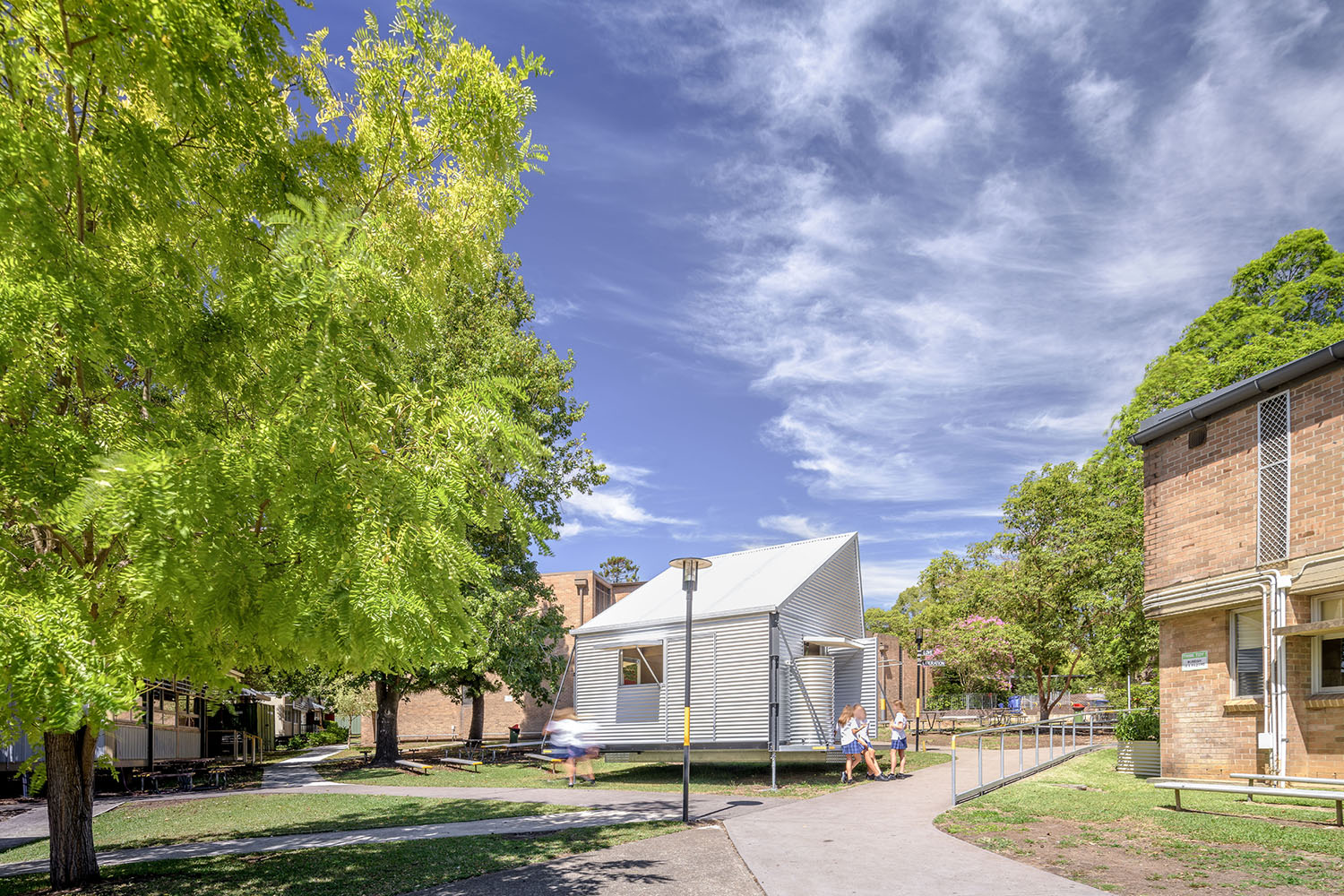
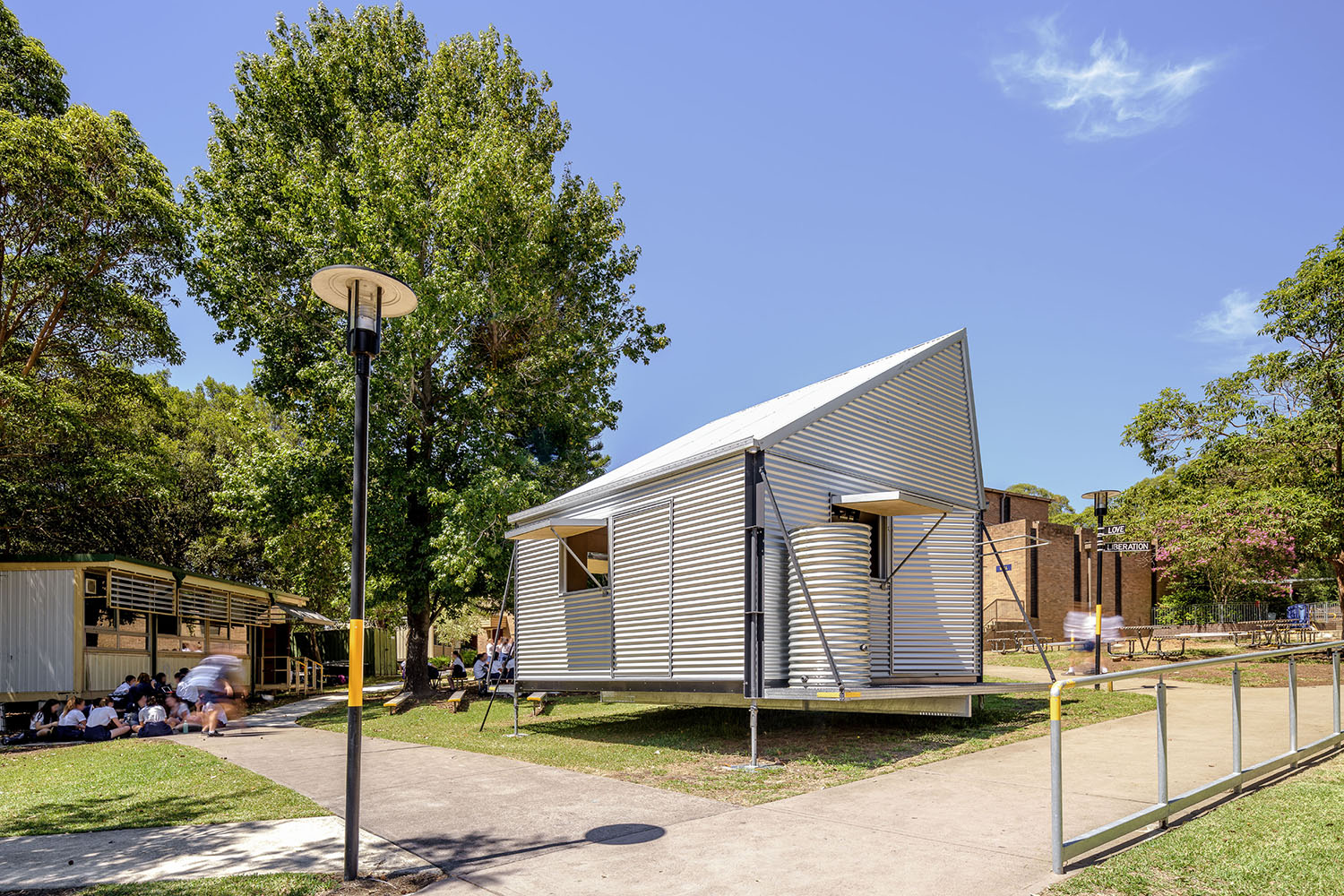
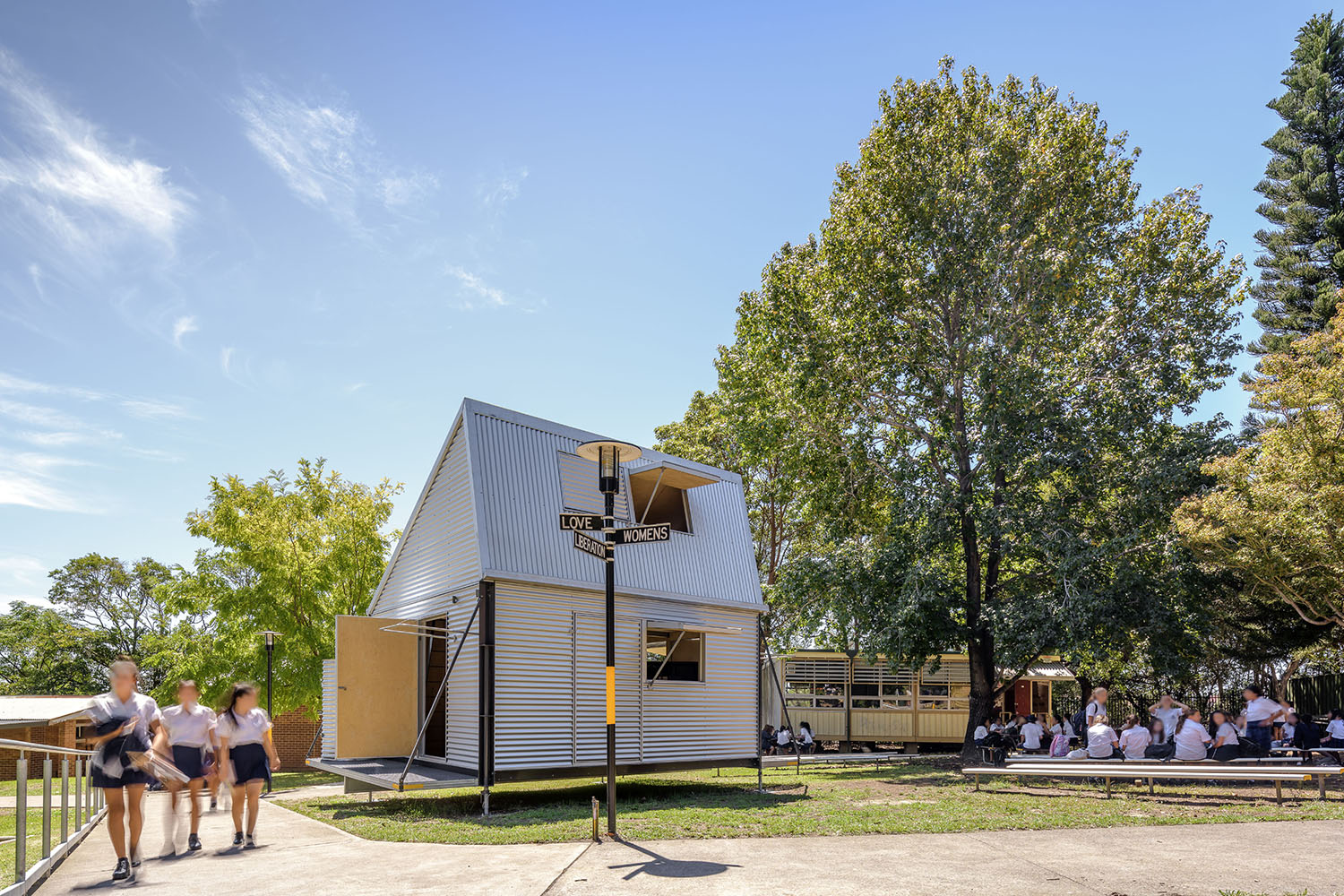
Carter Williamson was involved in the tutoring and judging of sustainable house designs and models produced by the students as part of the STEM program.

This relationship led to the installation of an Educational Model of GRID, our pre-fabricated sustainable housing solution, in the school to deepen the students understanding of what it means to be sustainable.

In this application, GRID was known to the students as ‘Sustainable House’.

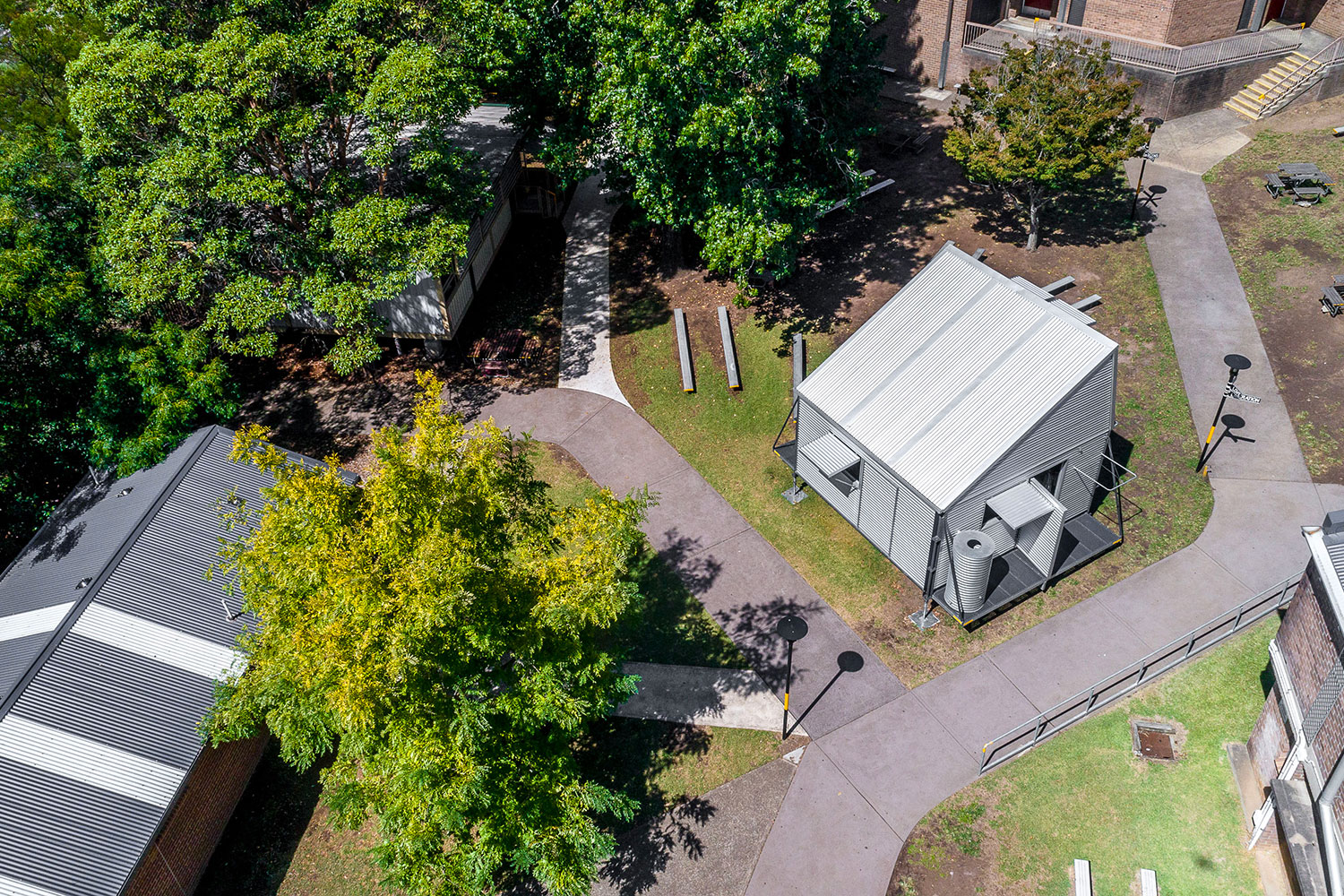
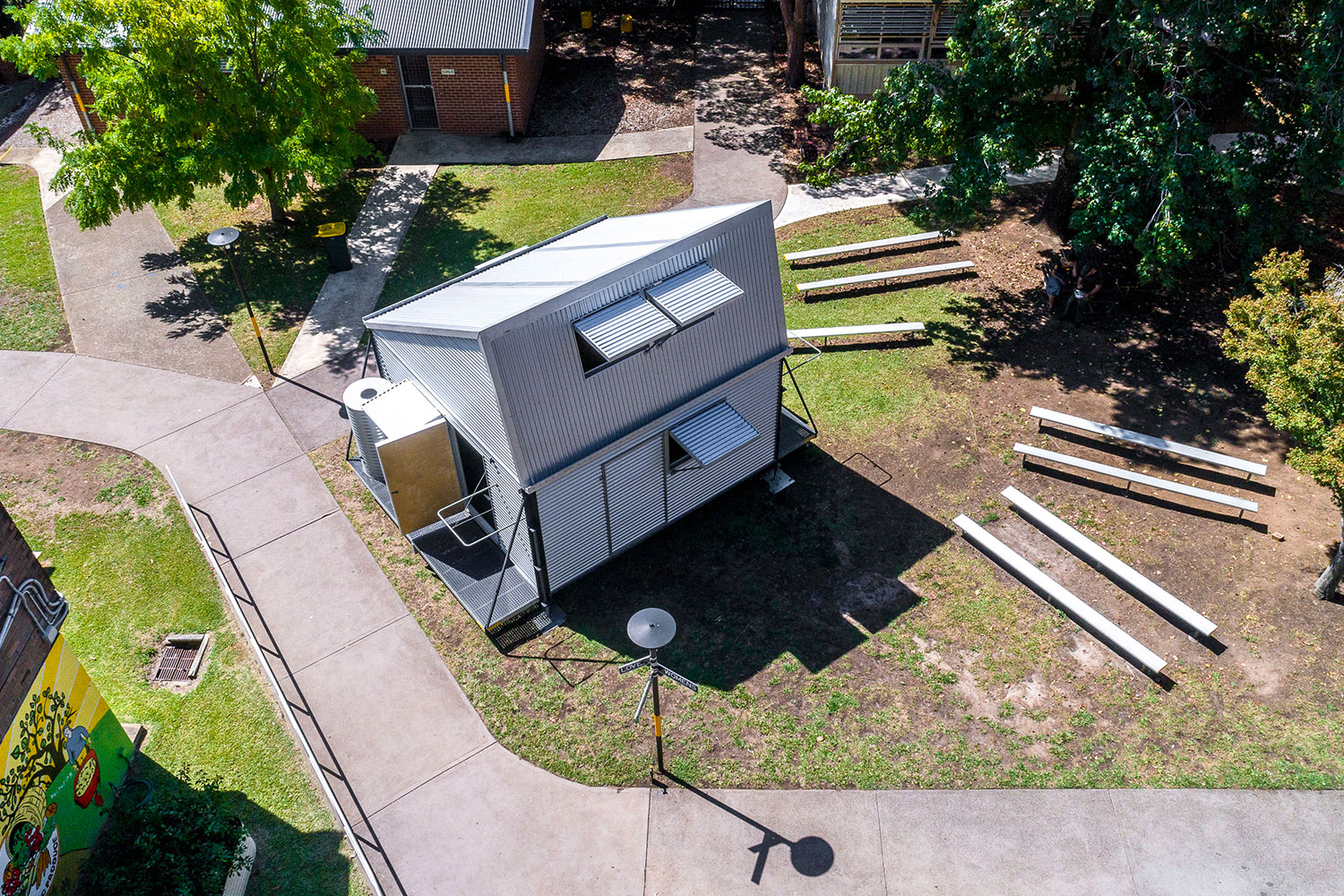
GRID is not a shipping container, or refrigeration panels. It has material and spatial quality that separate it from other prefabricated buildings on the school grounds. Above all GRID is joy. It is our hope that this will inspire the students, encourage them to think more sustainably, and lead to a demand for better pre-fabricated classrooms.

GRID Sustainable House was installed one Saturday morning, and will be formally opened by the school with a special event where the schools string quartet will play. Sustainable House will be used as part of the STEM program to engage the students in sustainability, and challenge the typical notion of home, as well as a classroom.

GRID offers a tangible 1:1 model, which the students can engage with to supplement current sustainability principles taught in the curriculum.

In a world increasingly challenged by man-made and natural disasters, GRID was initially developed as a sustainable housing prototype, which can be assembled quickly and transported cheaply and easily to diverse and remote locations. This same methodology has been applied here in an education setting where quick and efficient construction reduces the impact on students and school grounds.

True to its claims, the prototype, gradually refined was recently assembled on site in one Saturday morning (repeat). In community contexts, GRID can be arrayed in different configurations to respond to the specific contextual and administrative requirements of family, culture or work.
Synergy, CSIRO

BVN

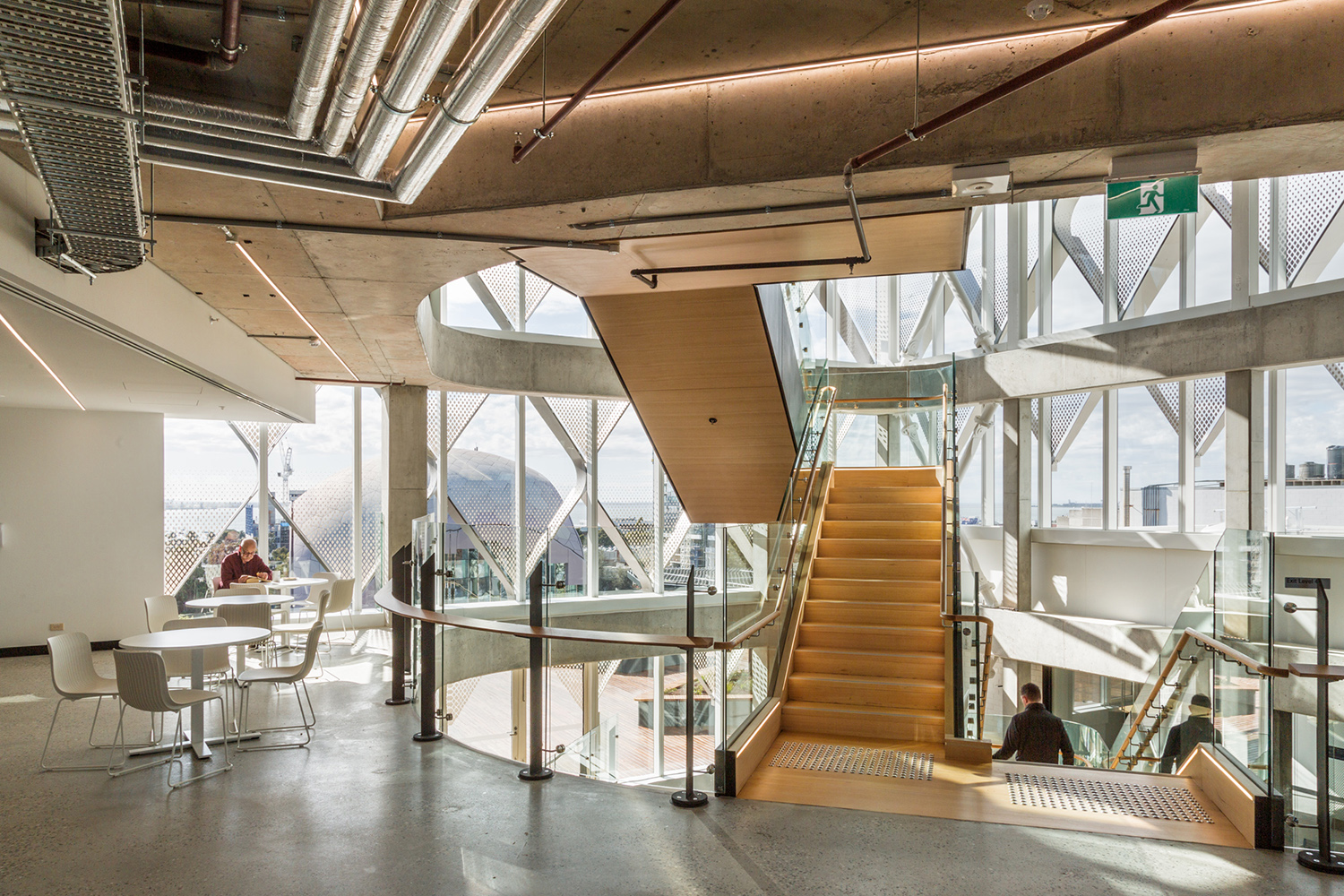
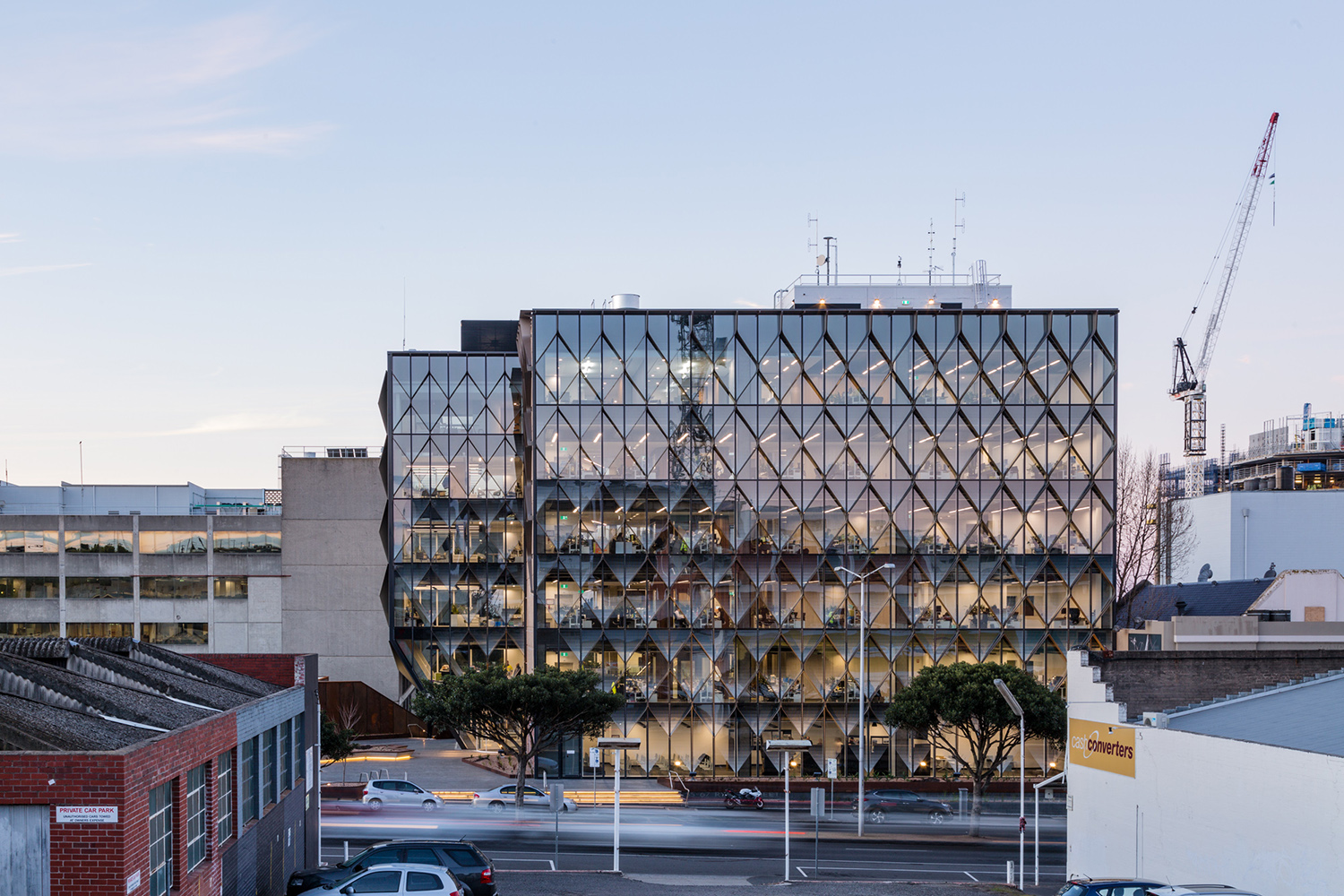
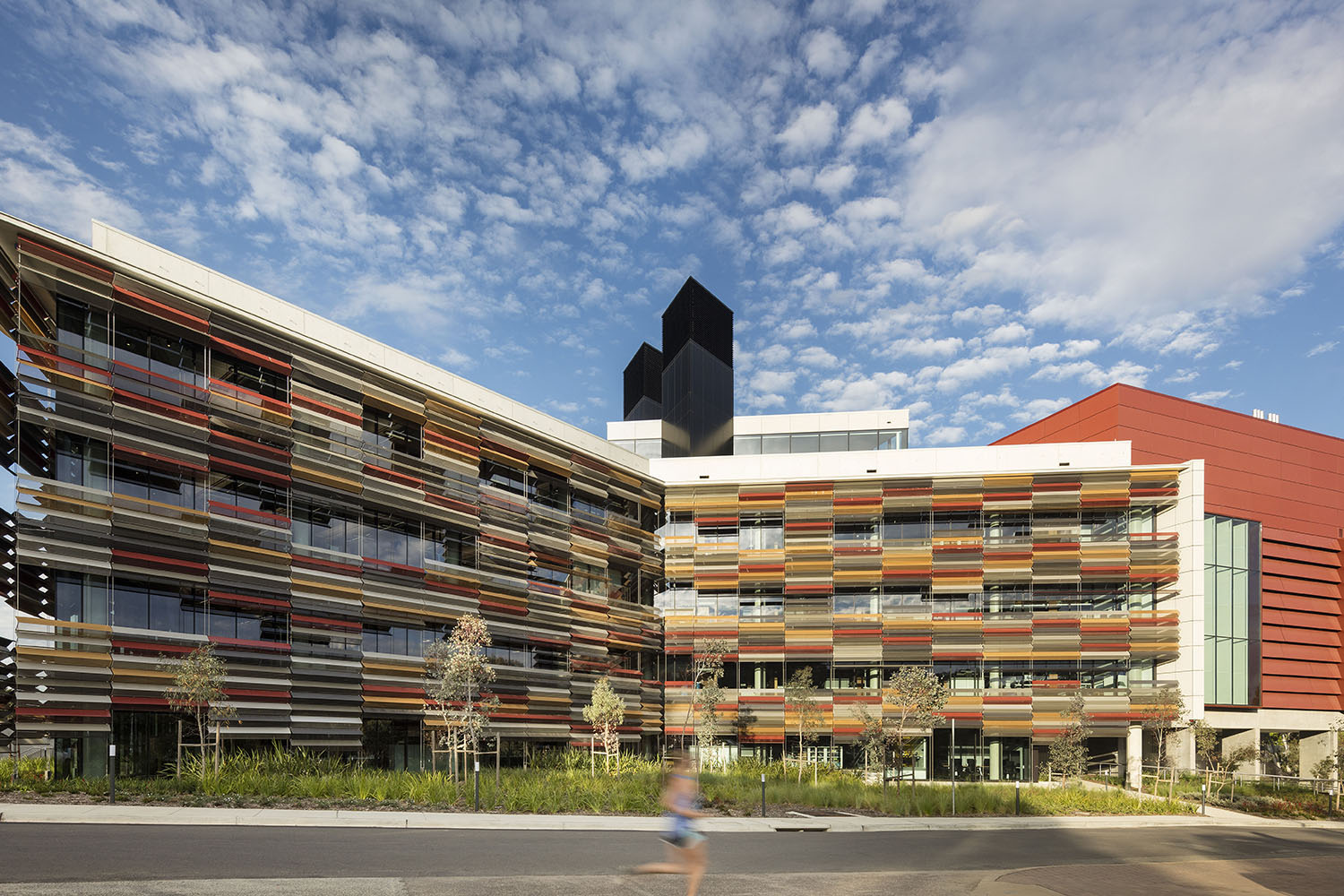
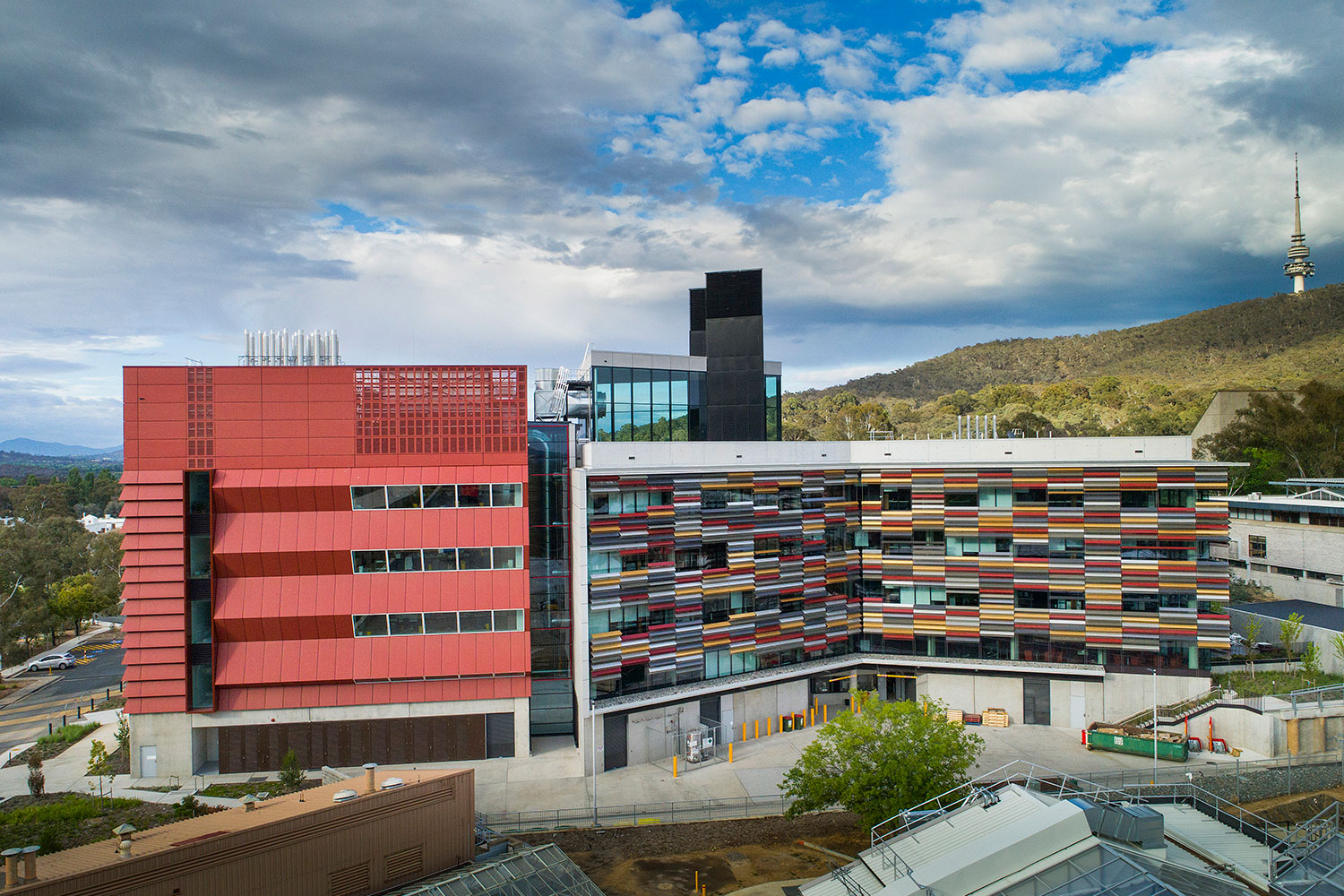
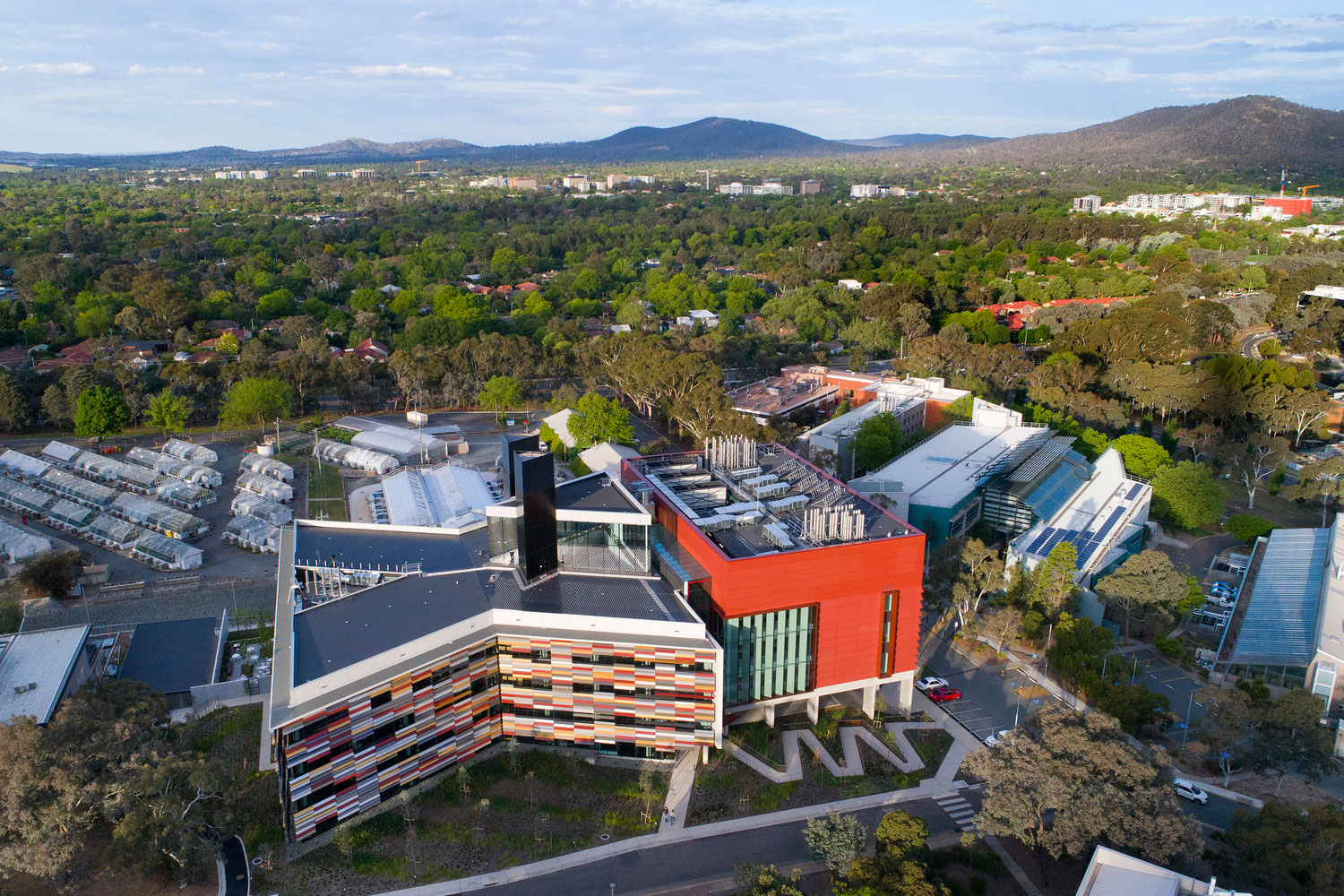
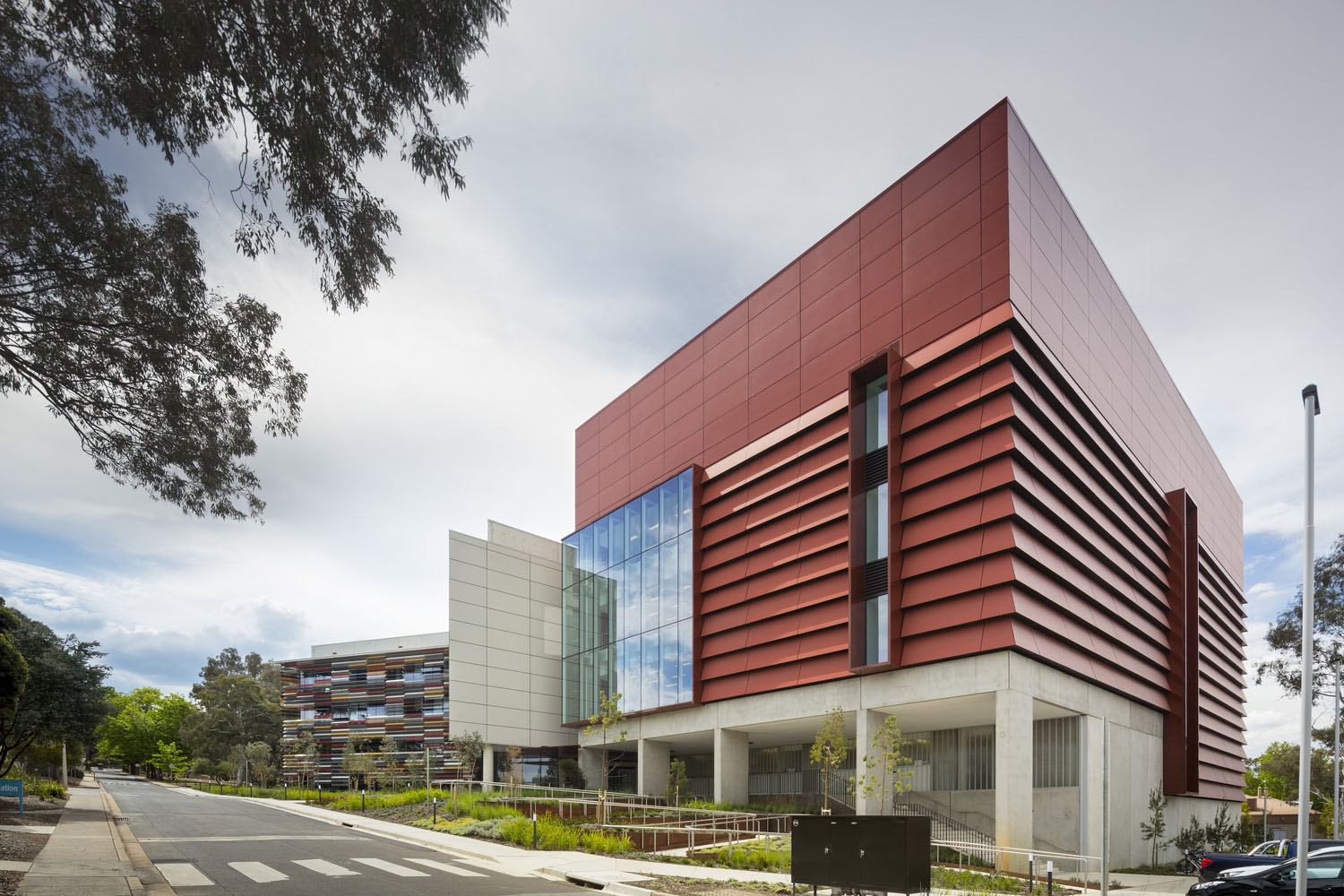
Synergy redefines scientific workplaces enterprise wide and creates a highly imagamatic architecture. To enable this, a bespoke workplace strategy determined the form and architecture internally; and externally created a solution that is truly designed from the inside out resulting in an integrated highly deterministic workplace building bespoke to its “place”.
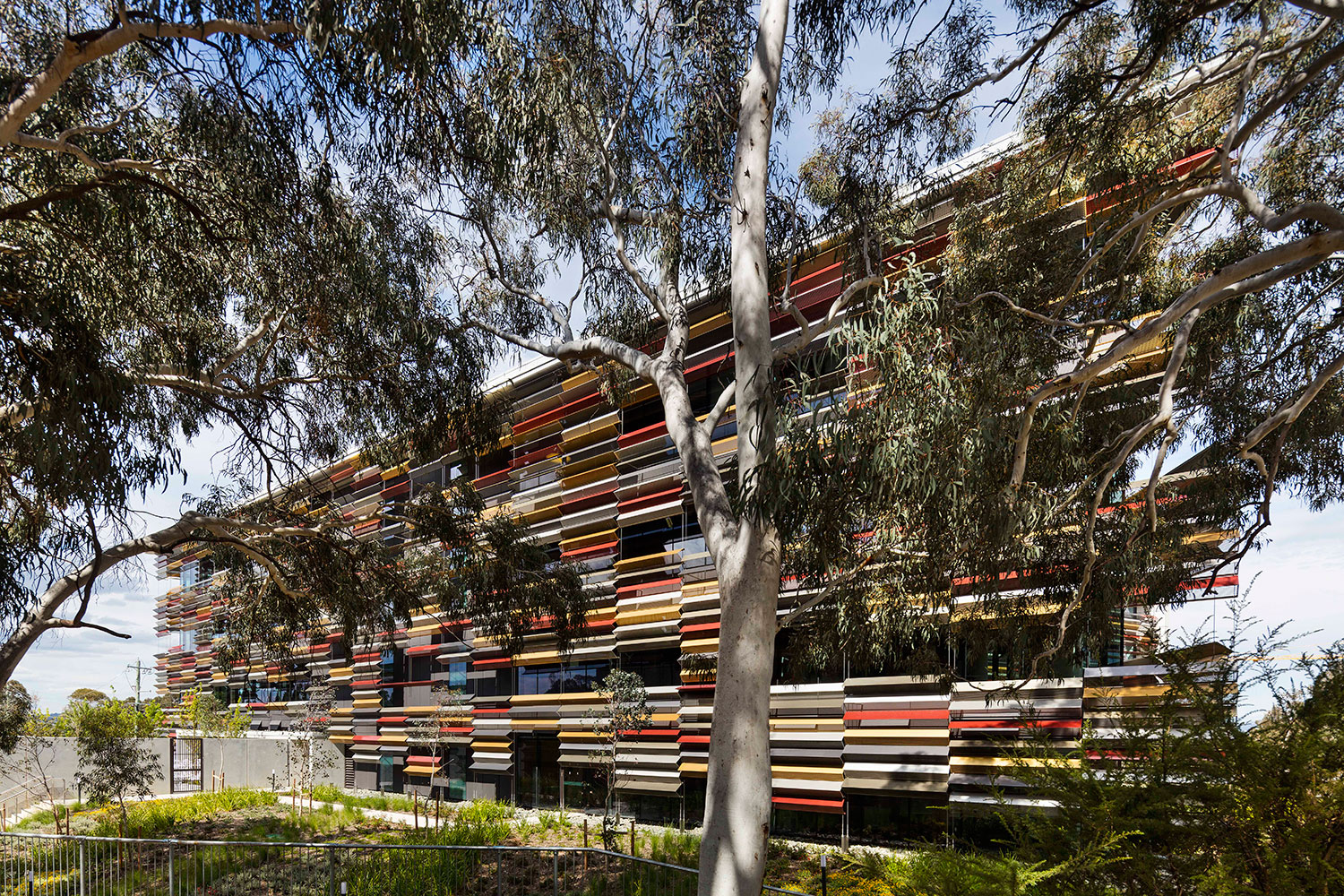
The Black Mountain forest provides fertile material for developing the manifestation of site specificity – the extraordinary colour and tactile range of barks, plants and leaves enabled the development of the ephemera of the building – the enveloping sunscreen – to bring a visual complexity, ambiguity and diversity to the whole.

The very different functional performance of the two components – workplace and laboratories – required different daylight and sun control solutions; maximising diffuse daylight in the workspace and ensuring no direct sunlight in the laboratories.

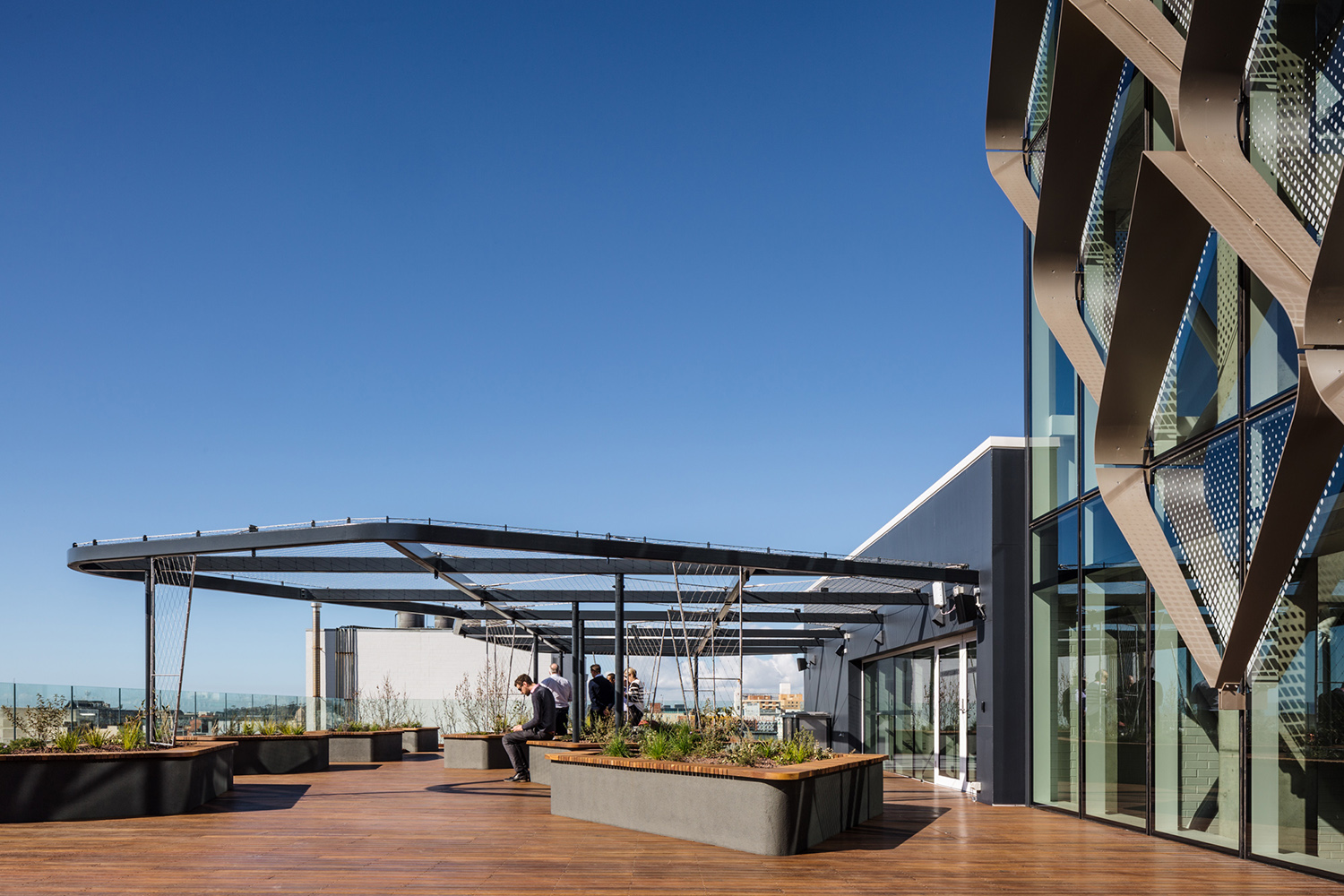
This resulted in the abstraction of those leaves, barks and colours in a multi-coloured and multi-shaped suspended sunscreen over the facade of the workplace (the upper plane of each triangulated aluminium plank acts as a sunscreen and the lower plane enables viewing out to the landscape and down to the ground plane). This screen is highly porous from inside the workplace connecting people inside the building with the landscape which in many cases is the subject of their research.

A unique workplace environment has been created – the brief for contemplative workspace has been fulfilled by bespoke workstations designed to enable concentrated work whilst being part of the openness of the plan.

CSIRO was interested in bringing sustainable initiatives to the building – depending on cost and effectiveness. The collaboration between the client scientific group, Steensen Varming, Aurecon and BVN resulted in two primary sustainable directions – ventilation and daylight.

Macquarie University Incubator

Architectus

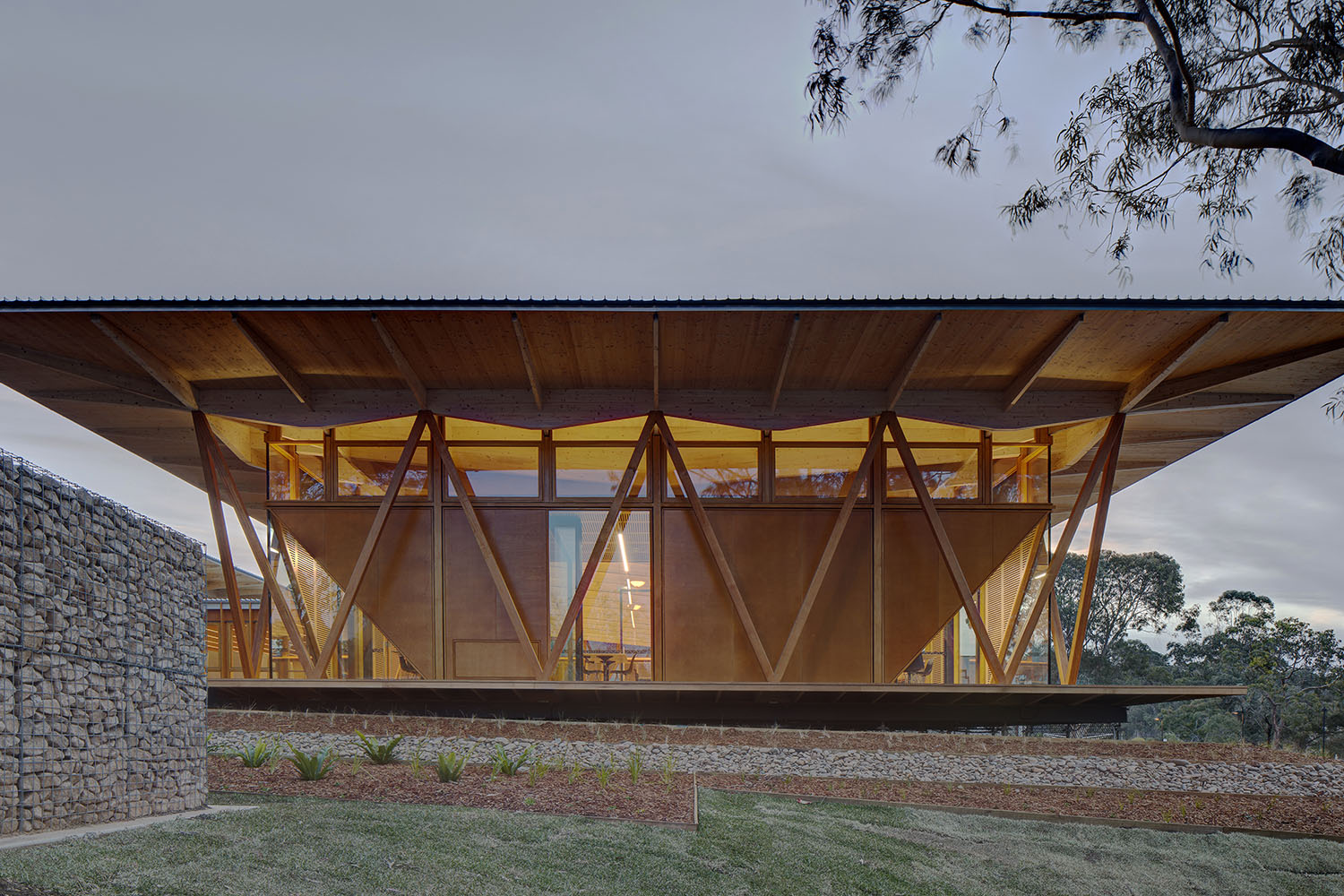
The Macquarie University Incubator aims to amplify and imbue deep thinking around innovation, bringing together entrepreneurial spirit, ingenuity and collaboration.

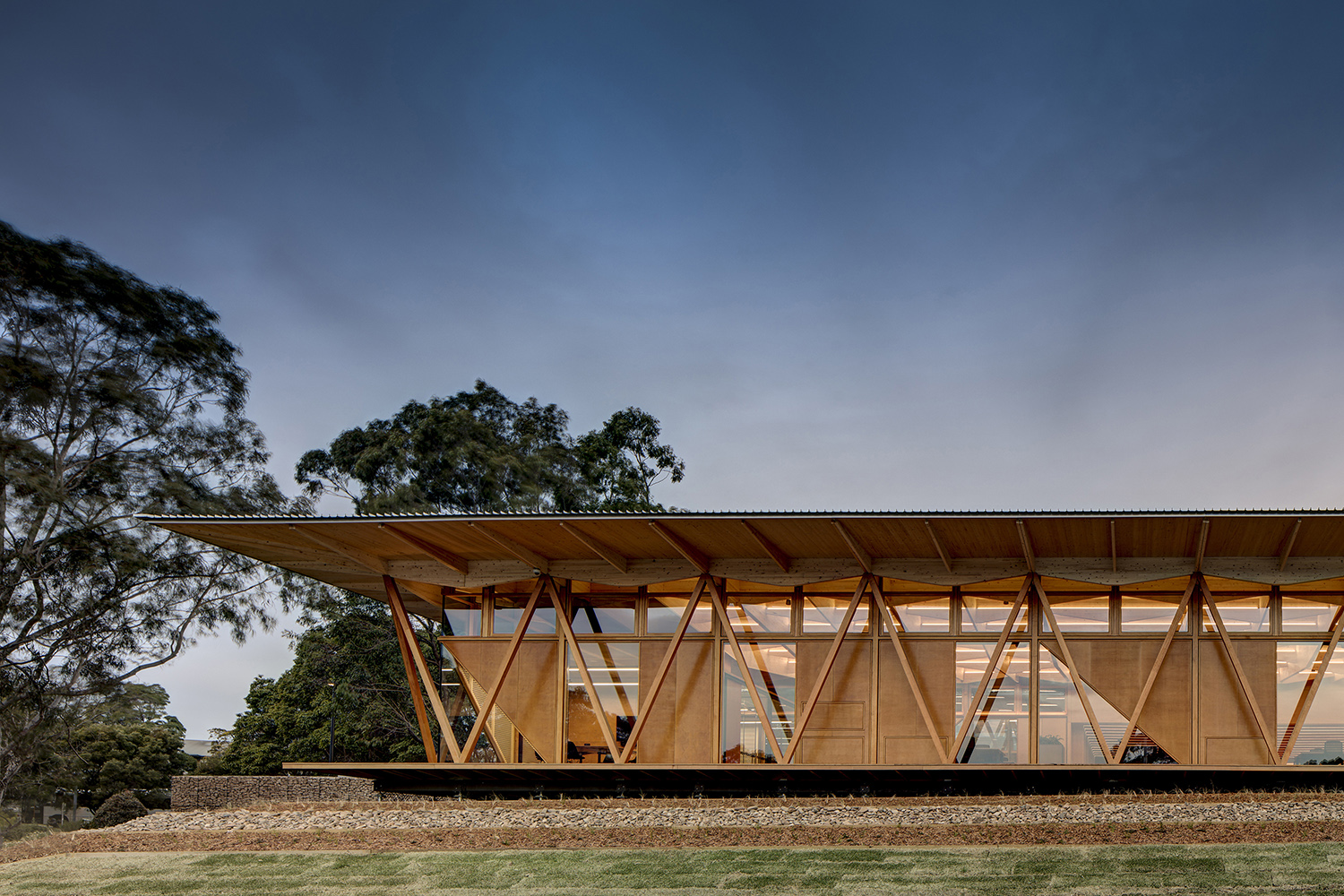
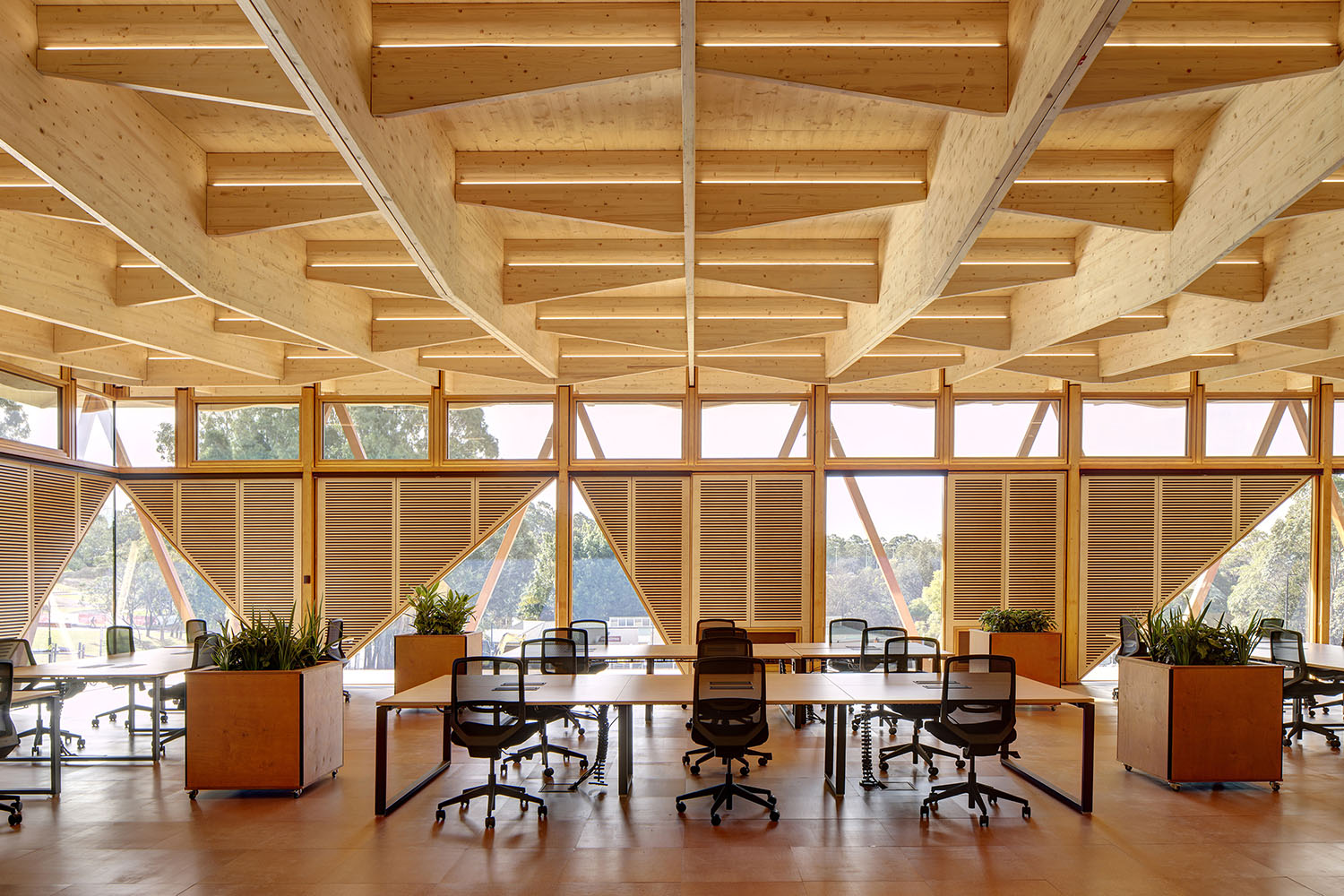
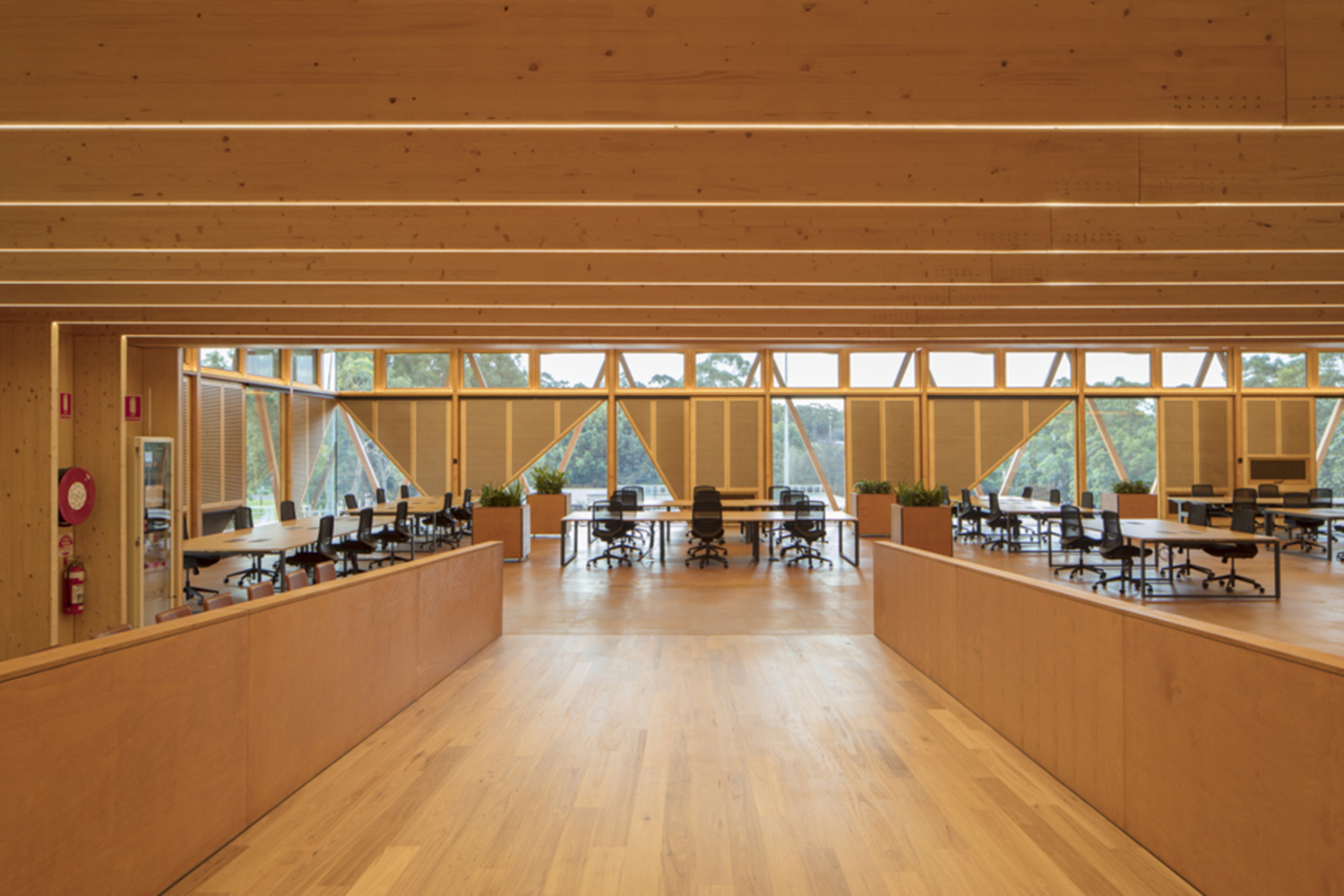
The Incubator was conceived as a pair of pavilions, each with flexible layouts that lend themselves to future adaptations and functions with the facilitation of collaboration being the underlying principle.

The architecture is designed to be both a light touch and memorable, responding to the shallow falling site, the beautiful wooded context and Macquarie University’s aspiration to create a building that represents and encourages innovation.

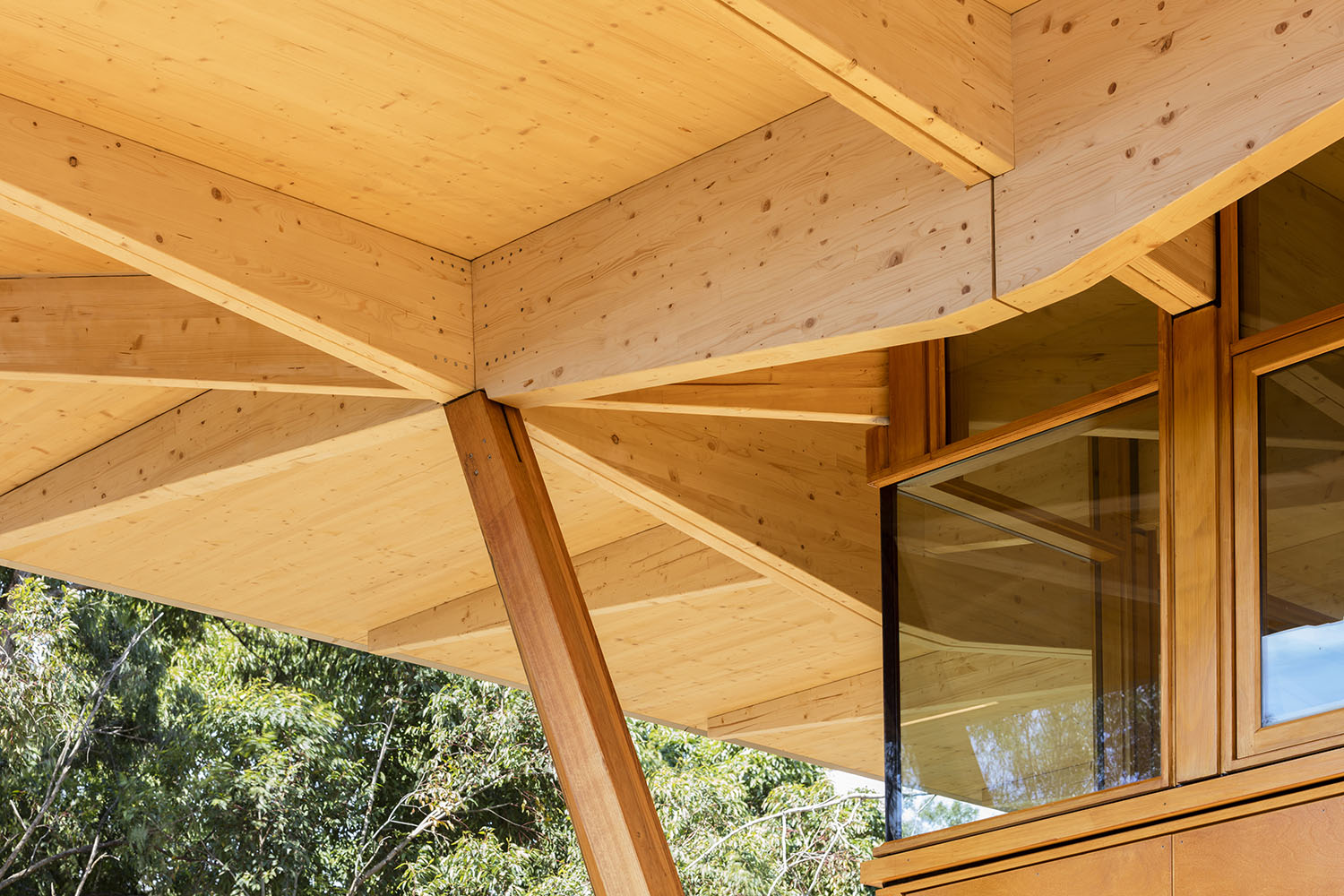
The Incubator was designed to be 100 percent reusable therefore, sustainability was key to the design approach; selection of materials; fabrication of modular timber cassettes; installation of the timber structural system and strategy for services. The concept centred on a prefabricated timber structure that was designed to enable rapid assembly and the potential for future dis-assembly, relocation and reassembly. Project deadlines necessitated fast-tracked construction which the team achieved through the design of prefabricated and modular timber componentry.

The Incubator is a demonstration that Macquarie University is facilitating societal and sustainable advancement through partnerships, through research, through invention and through high quality architectural design.

The Burcham

Stable Innovations / AJ+C Architects

“The Burcham” project re-birthed a beautiful old building, the Wrigley Chewing Gum Factory, regarded 100 years ago as “…the most advanced factory building in the Southern Hemisphere.” One of the first examples of a steel reinforced concrete buildings in NSW and also one of the first to engage the use of structural mushroom capital columns – the most modern of construction technologies immediately after the First World War.

Receiving a Heritage Listing after the purchase in 2015, the developers, Stable Innovations Rosebery, were committed to retaining the entire building, making good the structural integrity and converting the old building into modern, smart and sustainable apartments.

In addition to the heritage building, which would accommodate 44 luxury apartments, there were two new buildings to be built with 55 distinctly different, modern contemporary apartments, which would have simple connections to the heritage building via elevated bridges.

The sustainable features include:

  • Embedded Electricity Network : 52 Kw Solar array generating approx’ 70,000 kwh per annum, selling electricity to owners and tenants at 20% below the lowest retail price in the market = effective zero cost to run the base building’s electricity
  • Re-birthed historic water tower = non potable water for toilet flushing in all apartments & gardens
  • Electric Vehicle charging bays in the basement for owners and tenants to use – solar power during the day
  • Smart home Automation: Apartment Energy Management, Geo Fencing, Remote ON/OFF functions, Voice Control
  • Biometric finger print access
  • Voice Control
  • Hydronic in-slab heating
  • Number Plate Recognition car park access
  • Edible gardens
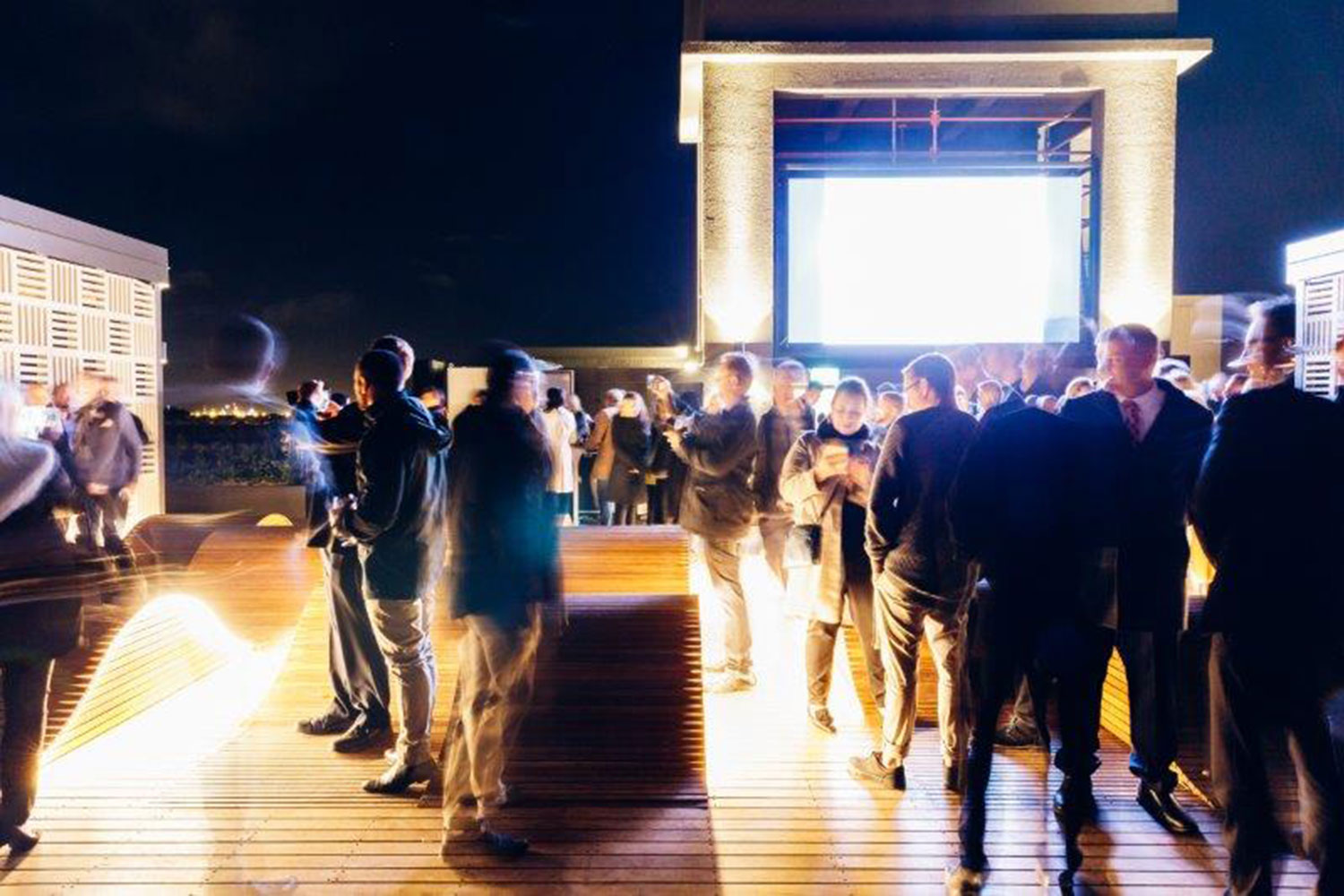
  • Roof top cinema
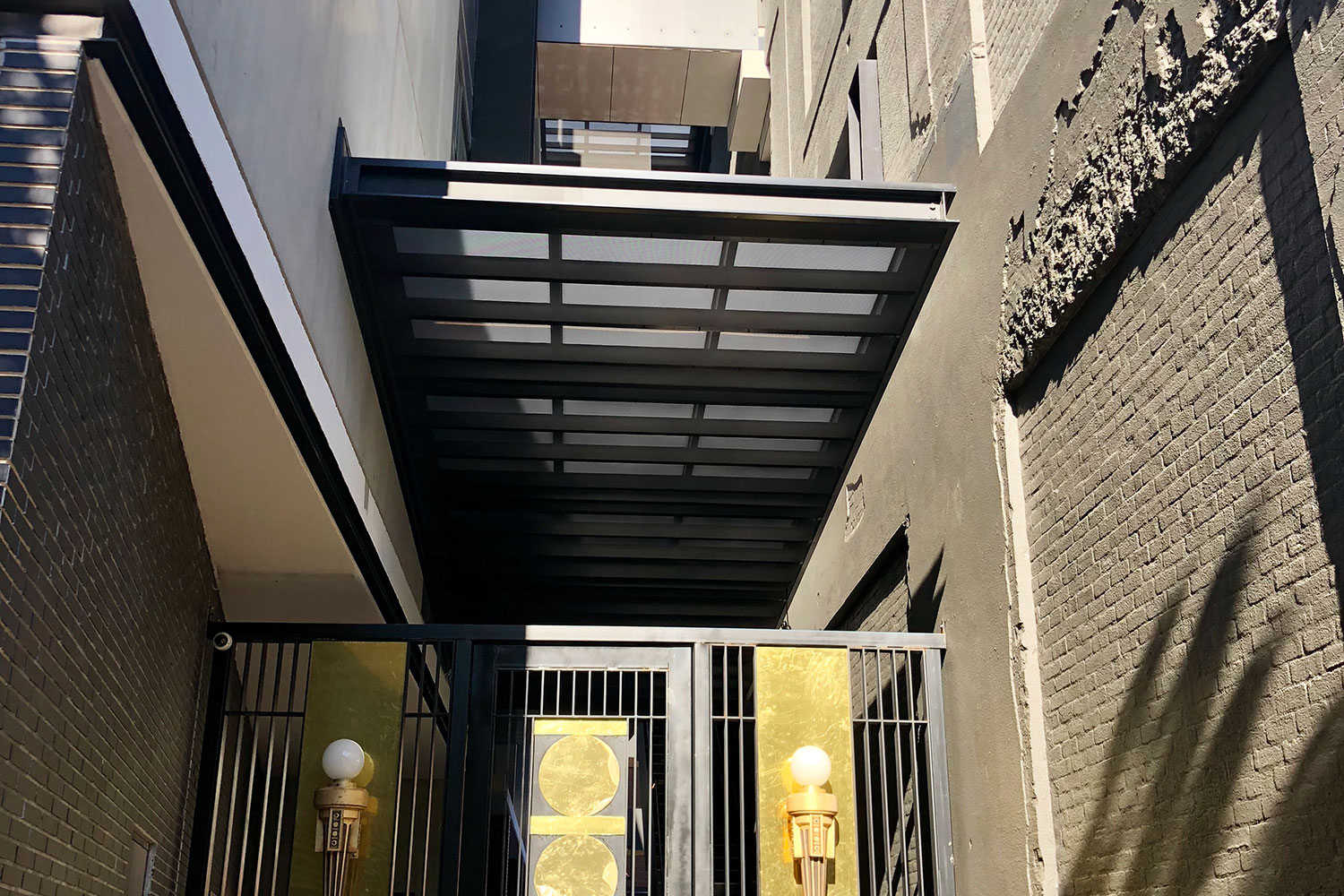
  • 2 outdoor community rooftop kitchens
  • Spotted gum flooring in the new buildings (each apartment Certified that two new trees were planted as an acknowledgement
The Beehive

Raffaelo Rosselli / Luigi Rosselli Architects

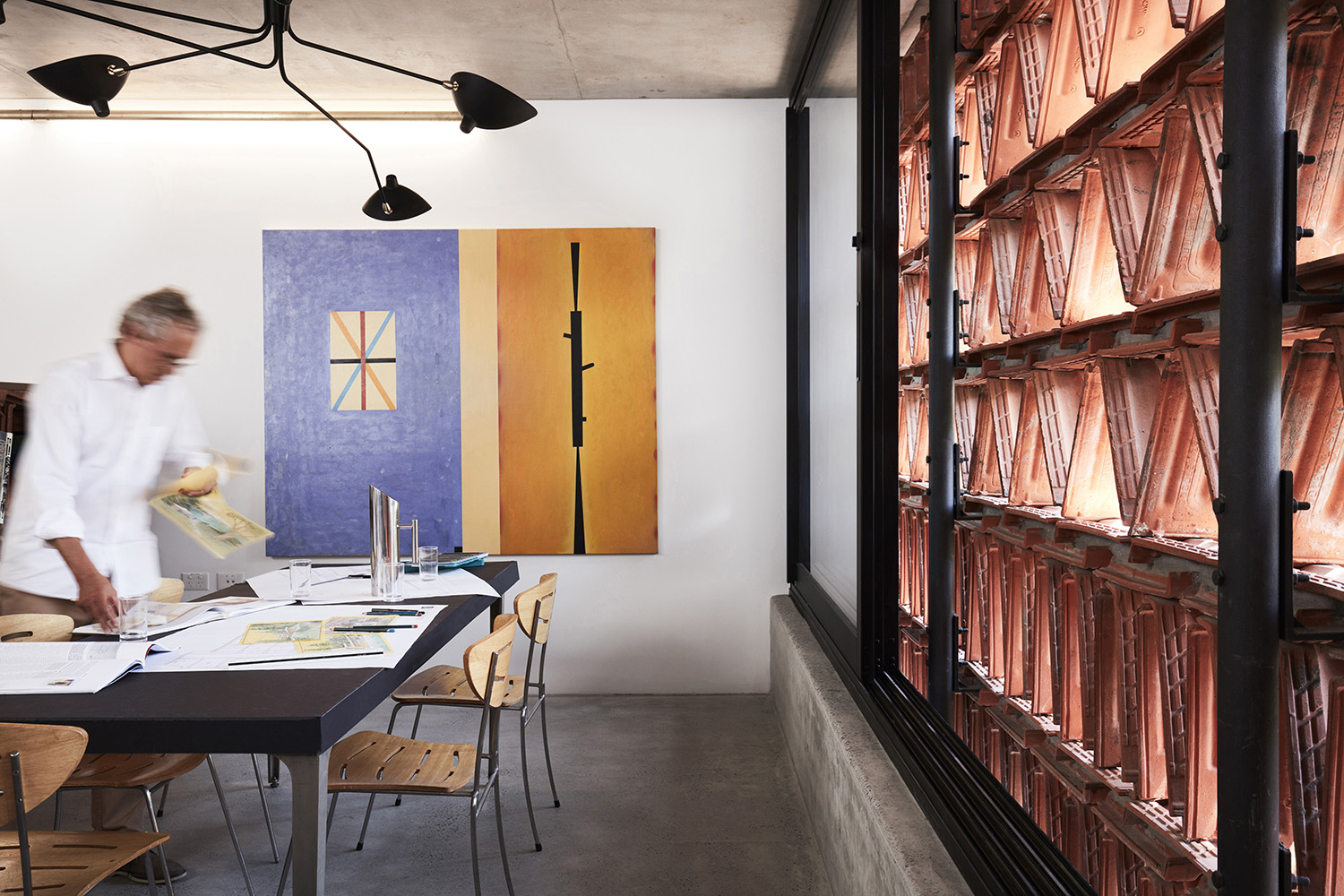
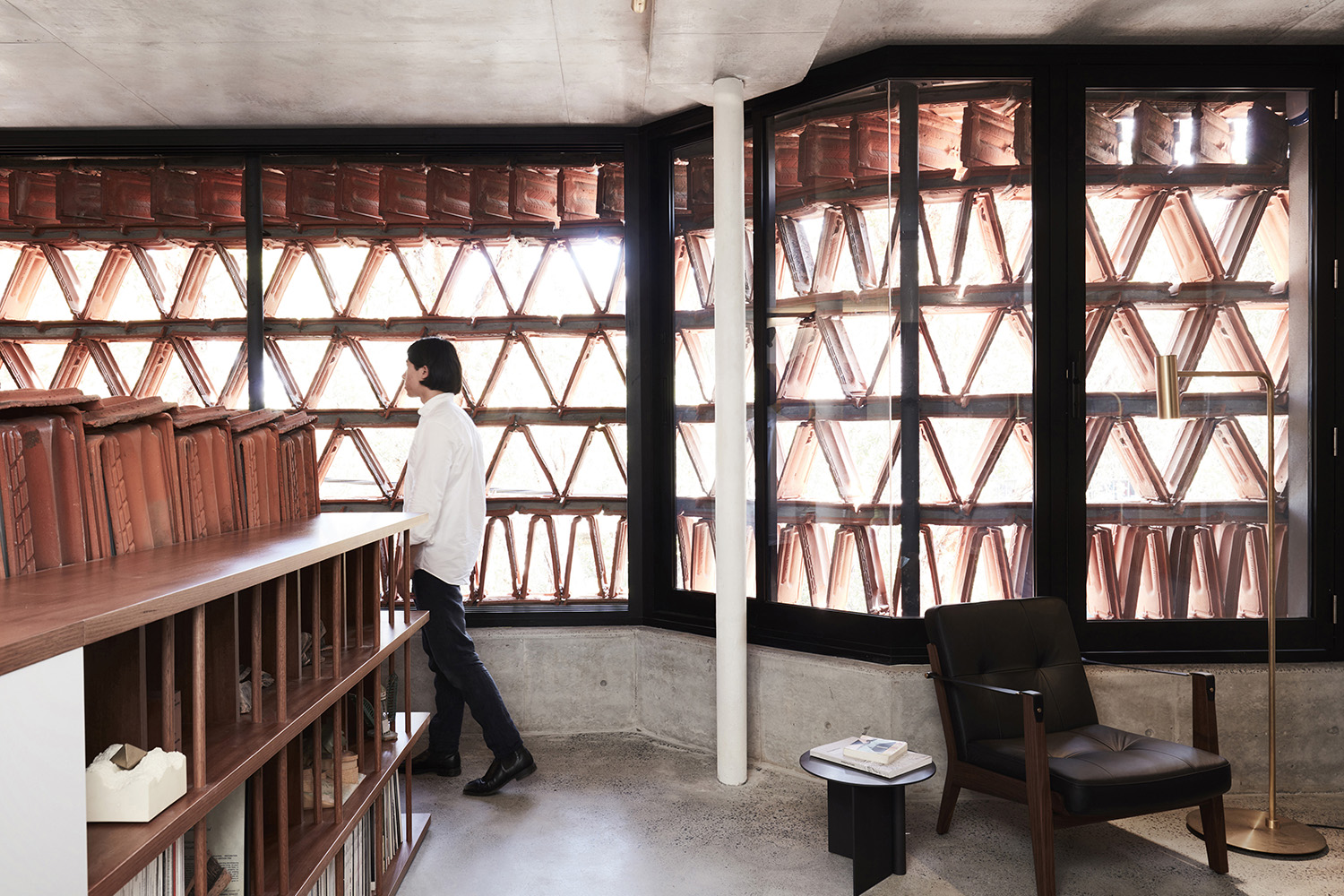
A general principal adopted throughout the design process was to use natural elemental materials. The façade is made of a terracotta screen, which allows natural ventilation without tempering the breeze and promotes airflow throughout the day.

The main structure is made of concrete, which is very stable once set. Minimal glues were used in the building and repurposed joinery is utilised for the interior fit-out. Porters natural paint used internally and externally, while concrete is low VOC.
Existing joinery was reused materials – kept raw and without finishing. It is generally naturally ventilated and the recycled terracotta façade could be disassembled and reused.

Doors and windows could be reused and approximately 50 percent of the building is from waste material or recycled materials.

Interior fitout is made of robust, raw and elemental materials such as steel, brass, marble and timber veneer, which could be easily disassembled and reused, and indoor planting was used.

The Prince’s Terrace Adelaide

Defence Housing Australia

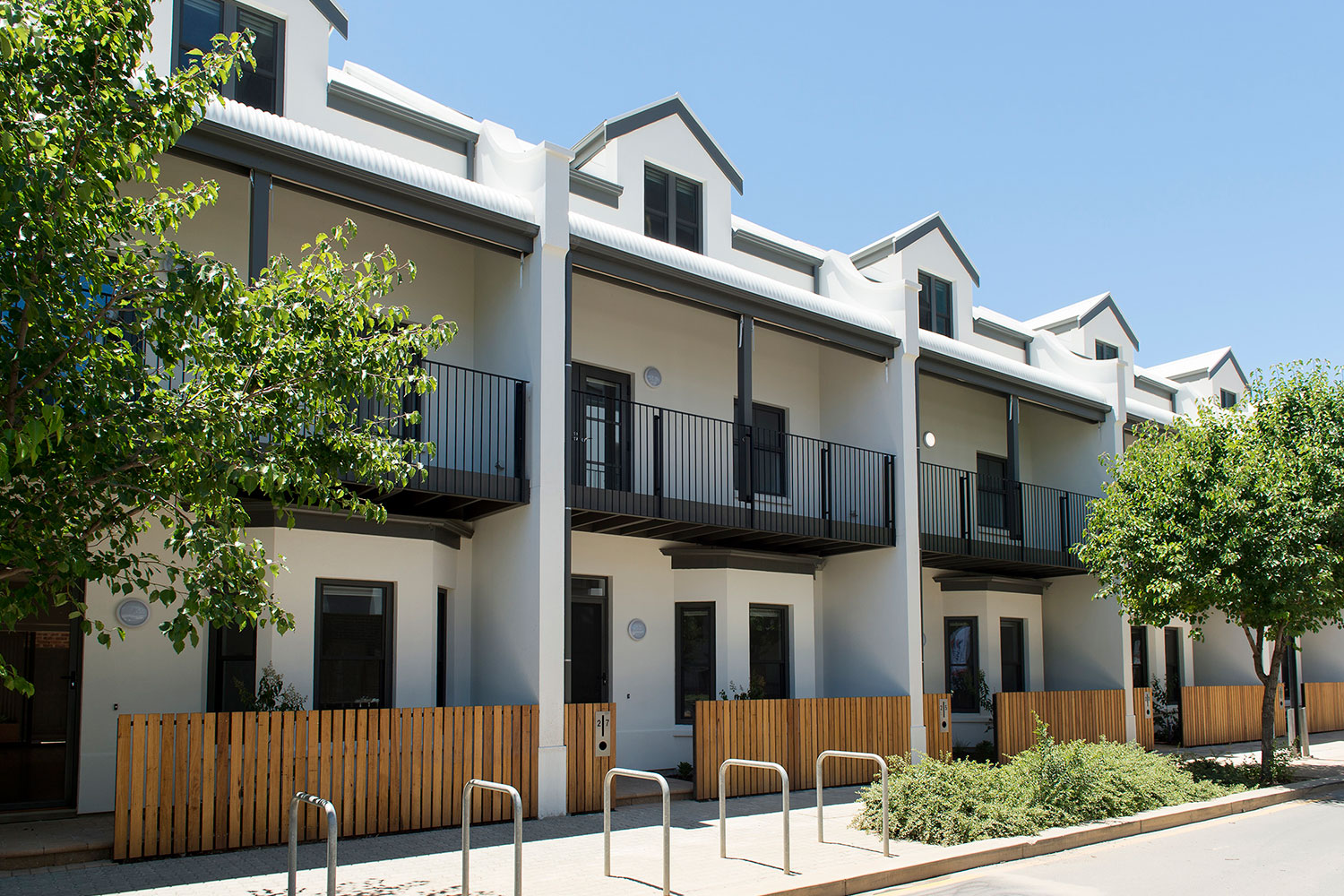
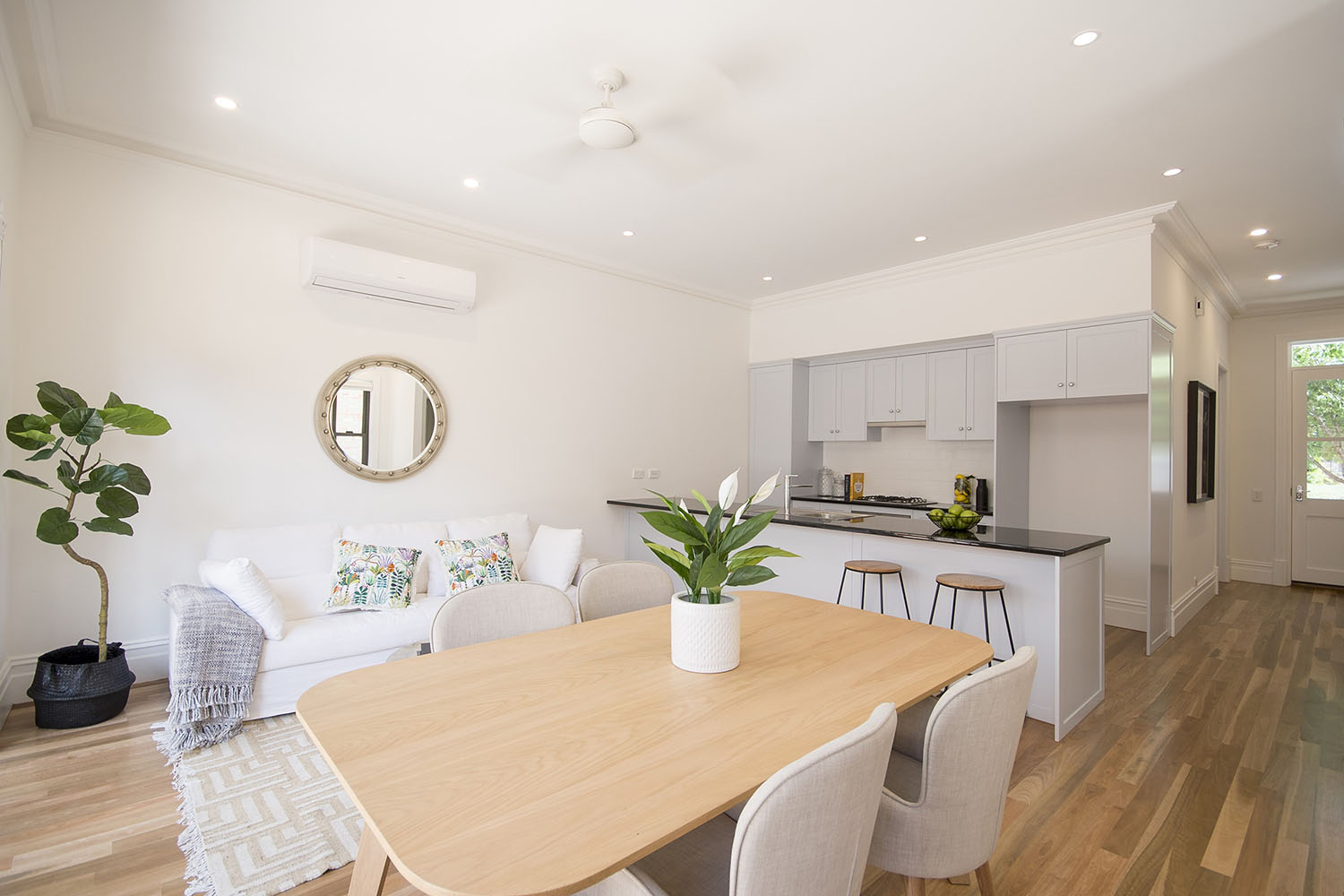
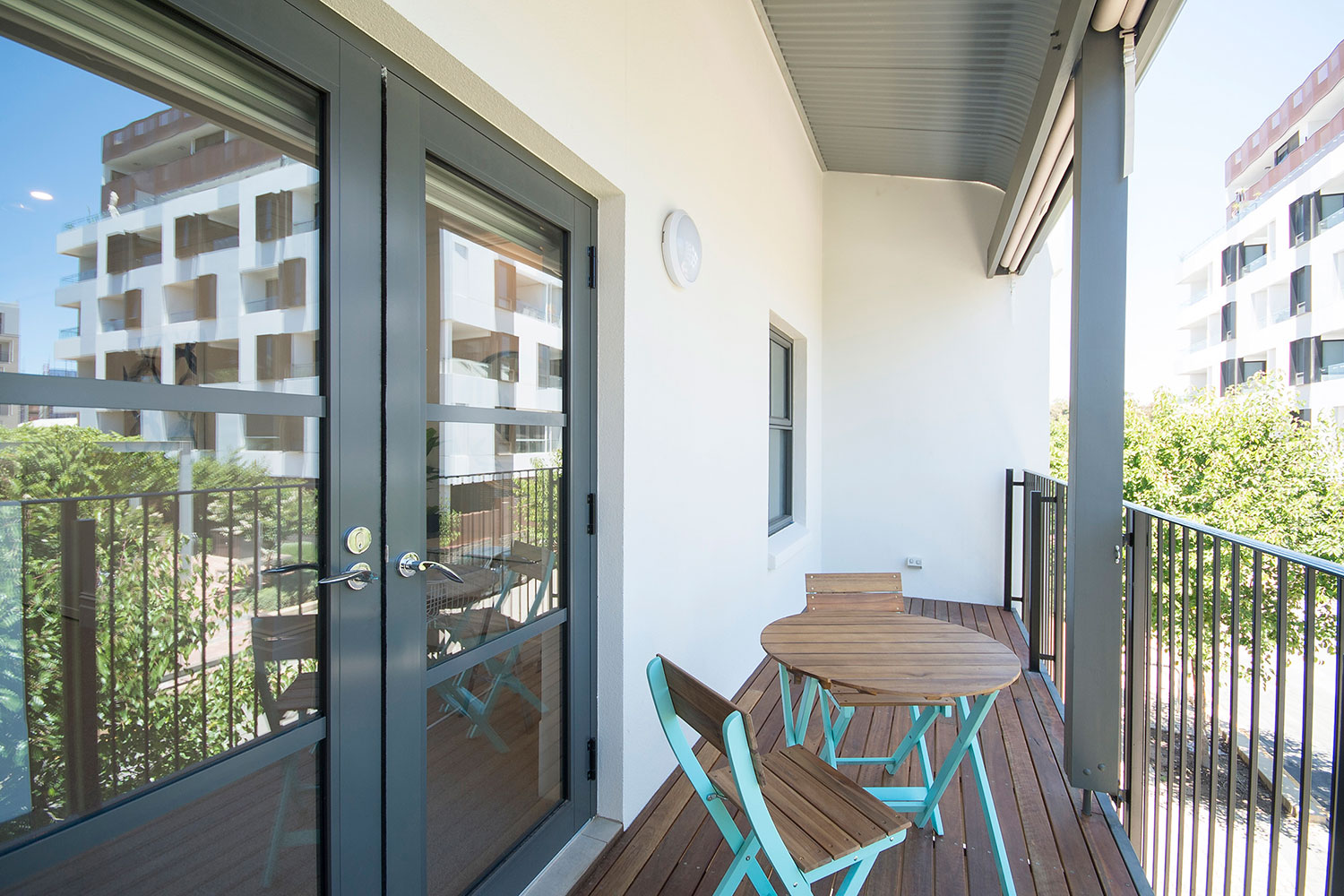
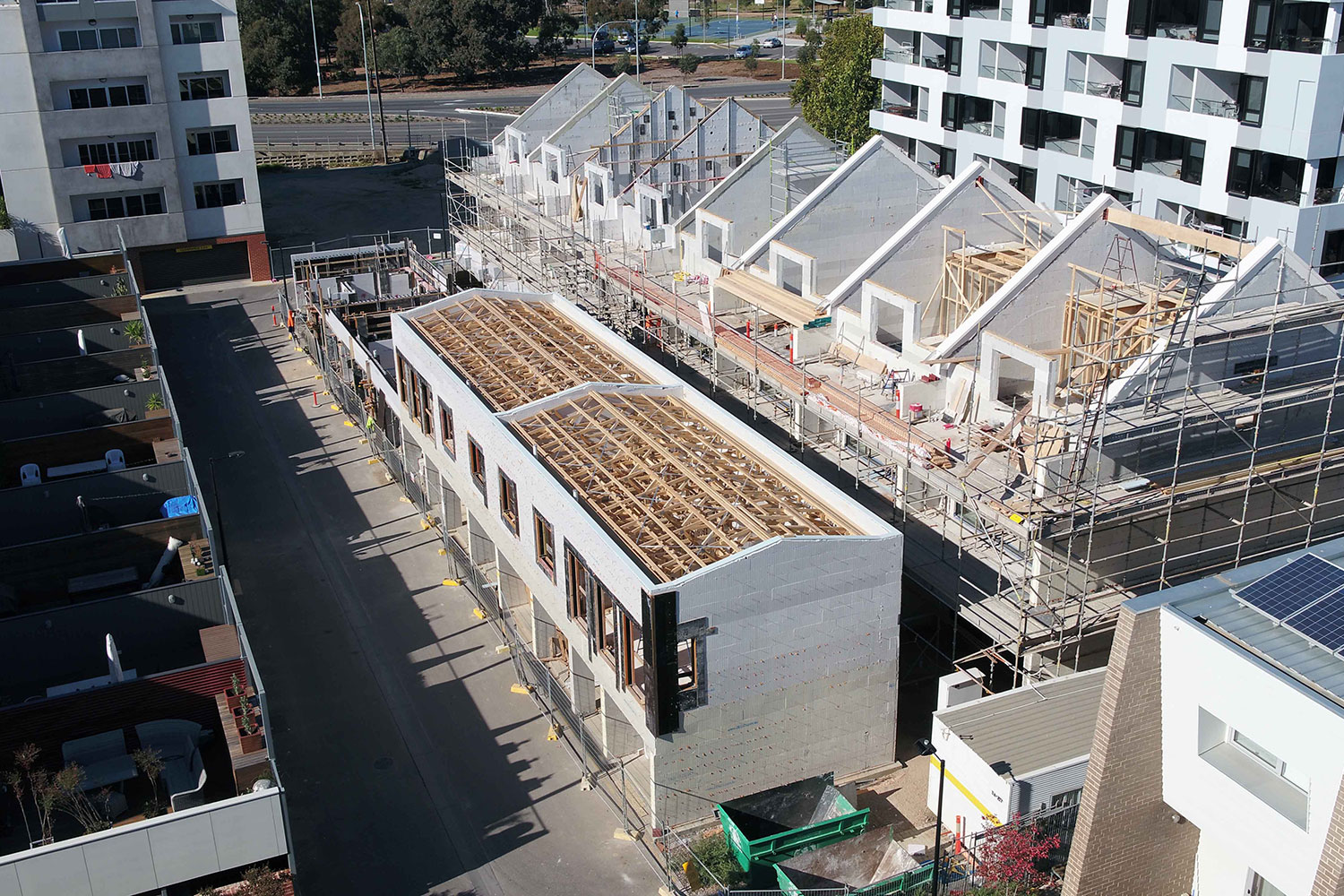
Located in Bowden South Australia, The Prince’s Terrace Adelaide comprises eight three-bedroom townhouses and four coach mews apartments. From the outset, the project strived to create sustainable housing that would support human health and wellbeing. Throughout the material specification and procurement process, the project team ensured that all internal materials selected met the Green Building Council of Australia’s (GBCA) Green Star standards for low toxicity. At project completion, 100 percent of all adhesives, sealants, paints and carpets were compliant with Green Star volatile organic compound (VOC) emission limits and 100 percent of all timber products were compliant with Green Star formaldehyde emission limits.

As such, more than 20,000 red shale recycled bricks, carefully salvaged from heritage demolition sites around Adelaide, were used in The Prince’s Terrace façade adding character and diversity to the edgy industrial architecture of the precinct while also upcycling 100 percent of brick materials from other demolitions.

At project completion, 100 percent of all adhesives, sealants, paints and carpets were compliant with GBCA Green Star VOC emission limits. This outcome goes above and beyond even Green Star criteria, which mandates that 95 percent of all adhesives, sealants, paints and carpets should be compliant.

Wallan Veterinary Hospital

Crosshatch

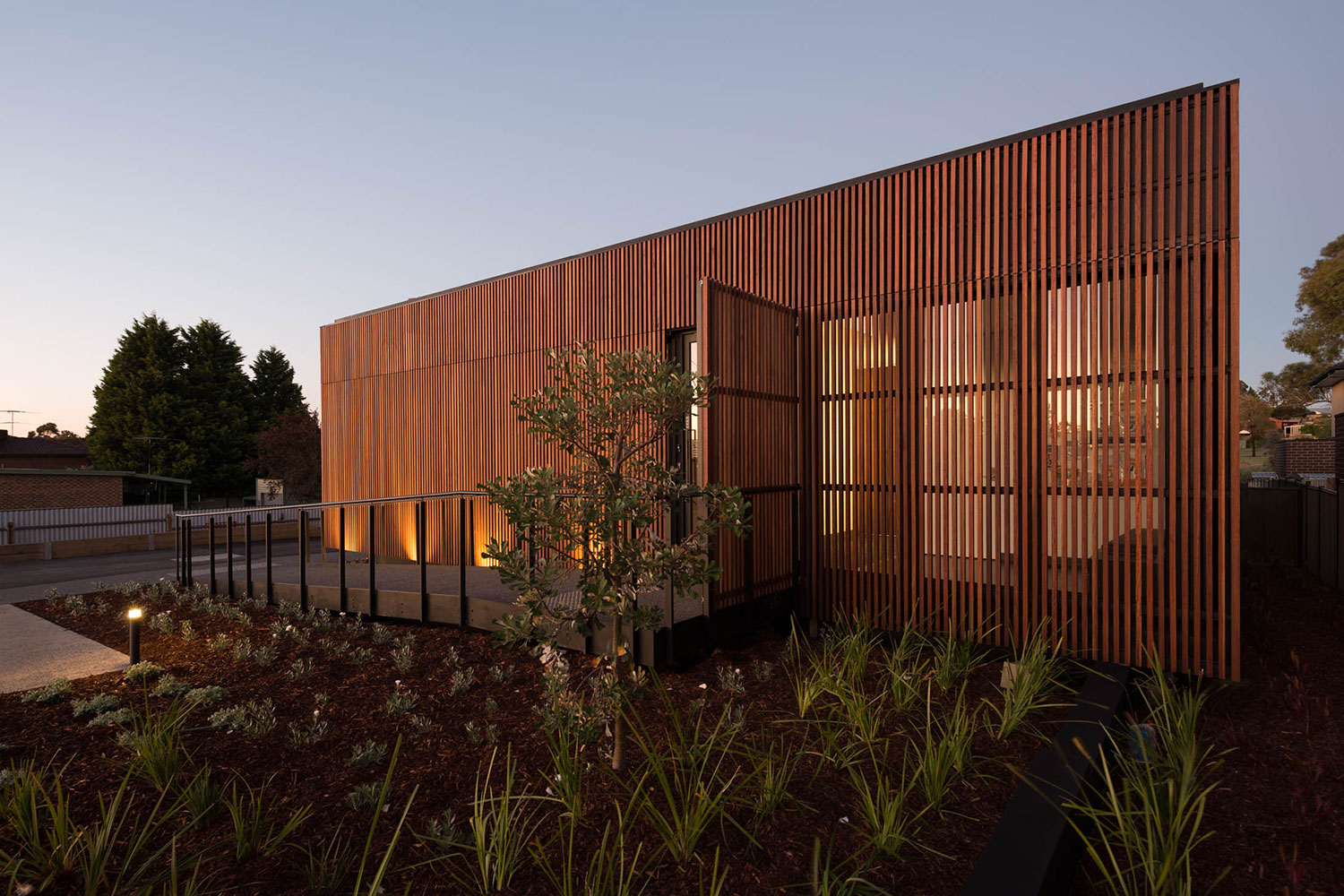
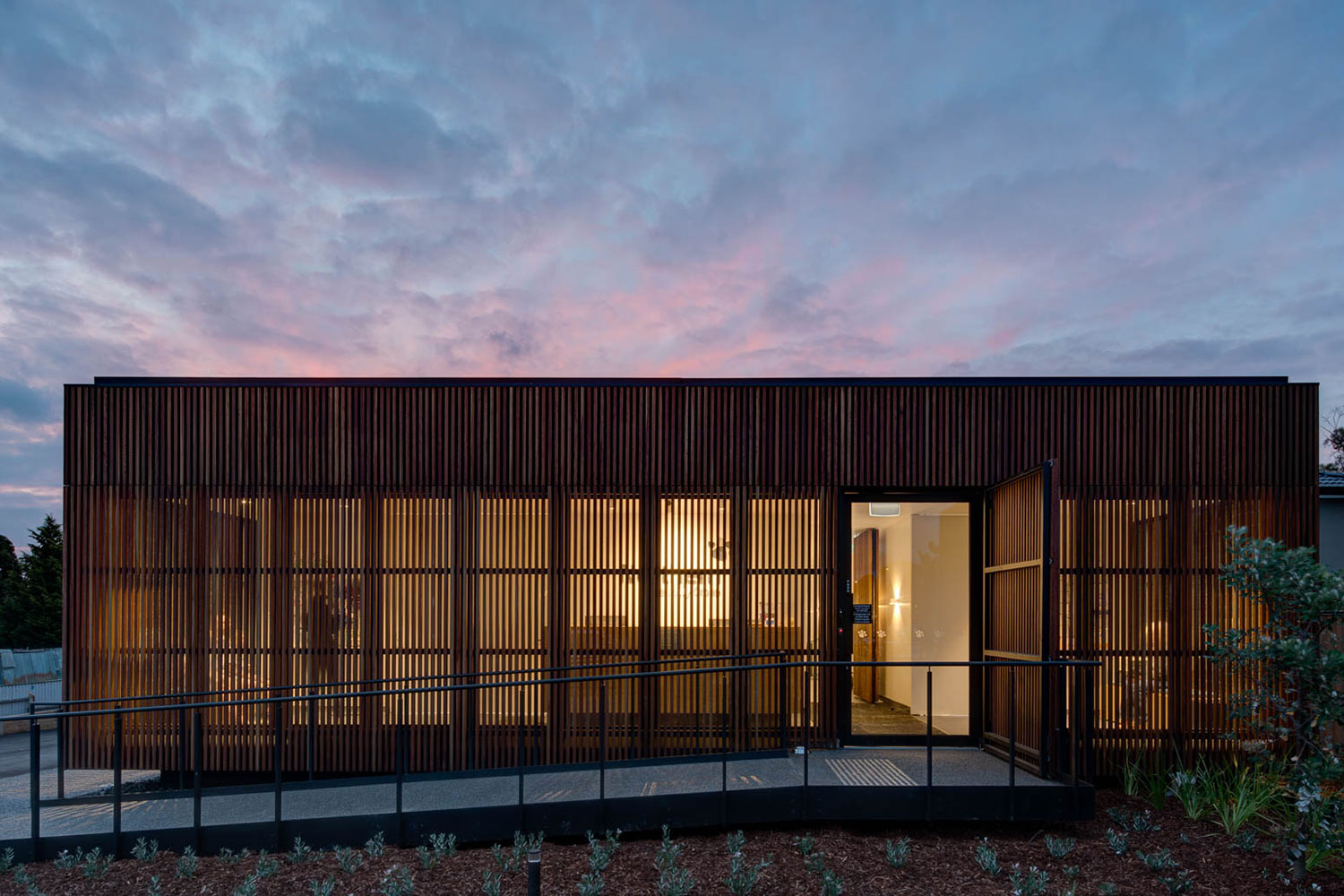
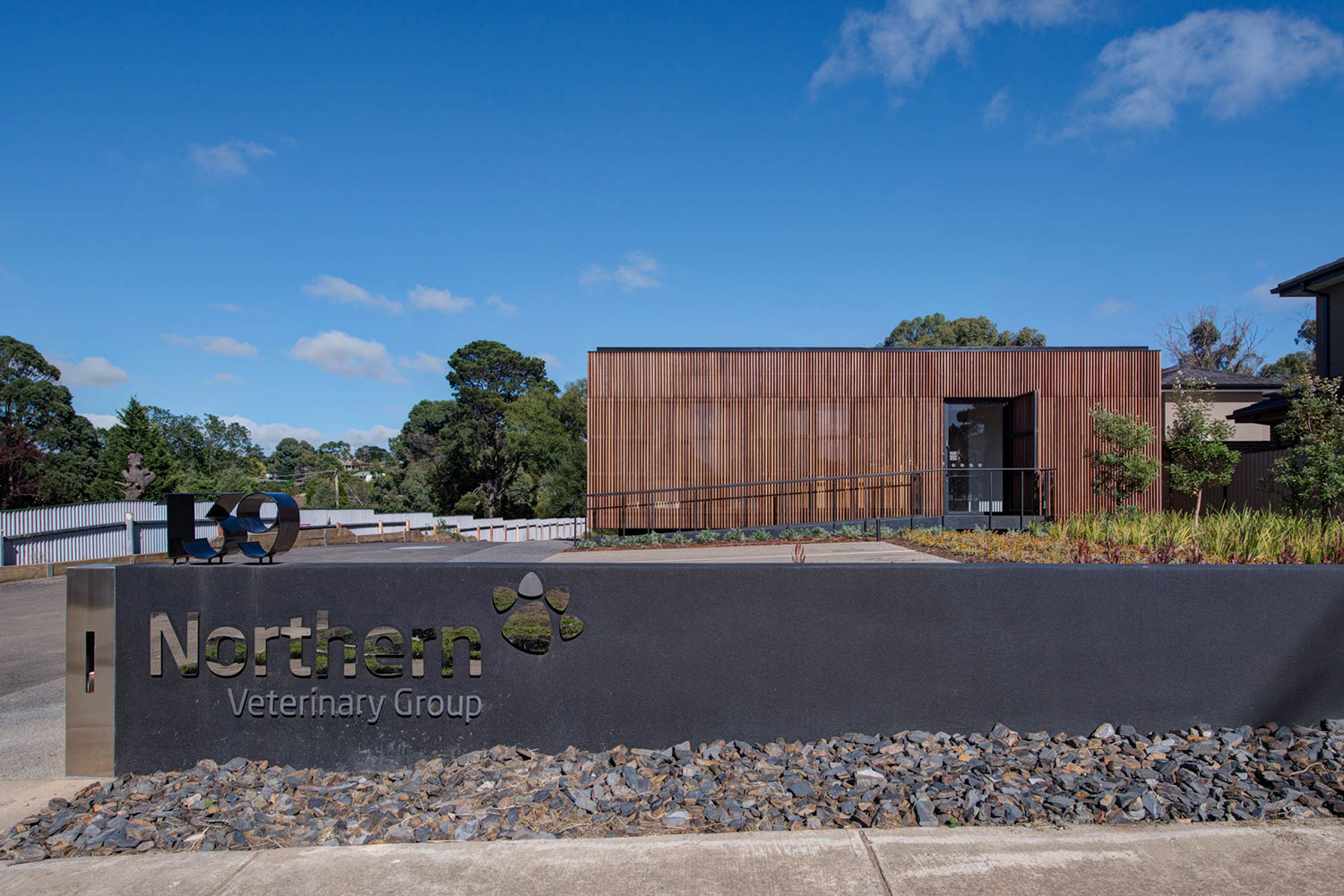
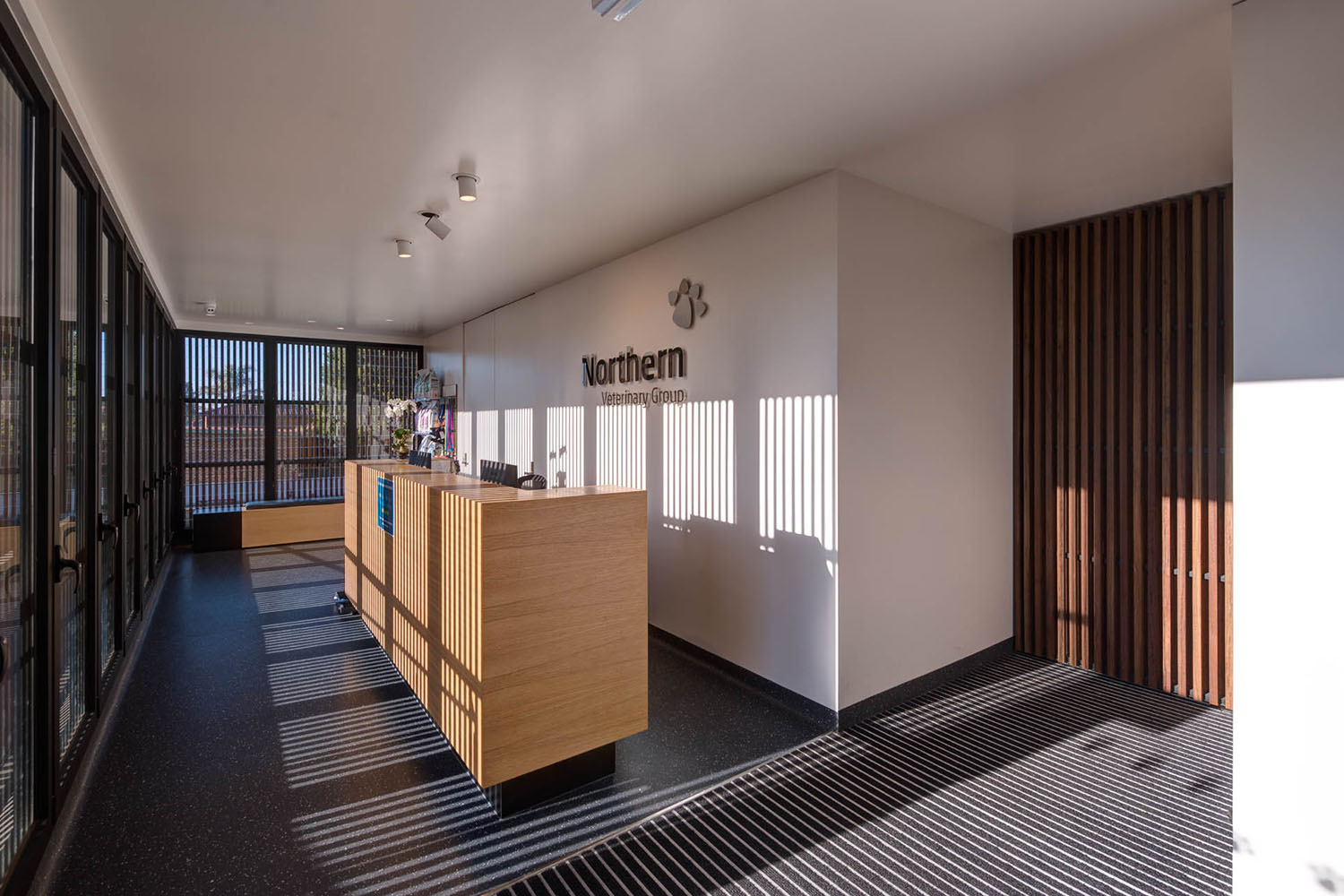
Wallan Veterinary Hospital in regional Victoria is an efficient and elegant building that successfully refreshes the traditional vet hospital typology. The 24-hour facility, open seven days a week, needed an immediately identifiable, strong street presence, yet still had to be respectful of its residential context.

The client’s brief called for a state-of-the-art facility that comfortably accommodates a range of programmatic requirements as well as addresses the site’s unique constraints. The design solution was to raise the single-level building on a recessive masonry base and set it back from the street. In doing so, flooding issues were mitigated on a challenging site that slopes down towards a creek at the rear of the property.

Three box-like volumes rationalise the plan and reflect the building’s multiple uses. The public zone is located at the front with animal wards to the side. The staff-only and operational areas are the heart of the building and occupy the largest amount of floor space. Each volume breathes with ample cross ventilation allowed by louvred windows and intersecting corridors that punctuate the double façade.

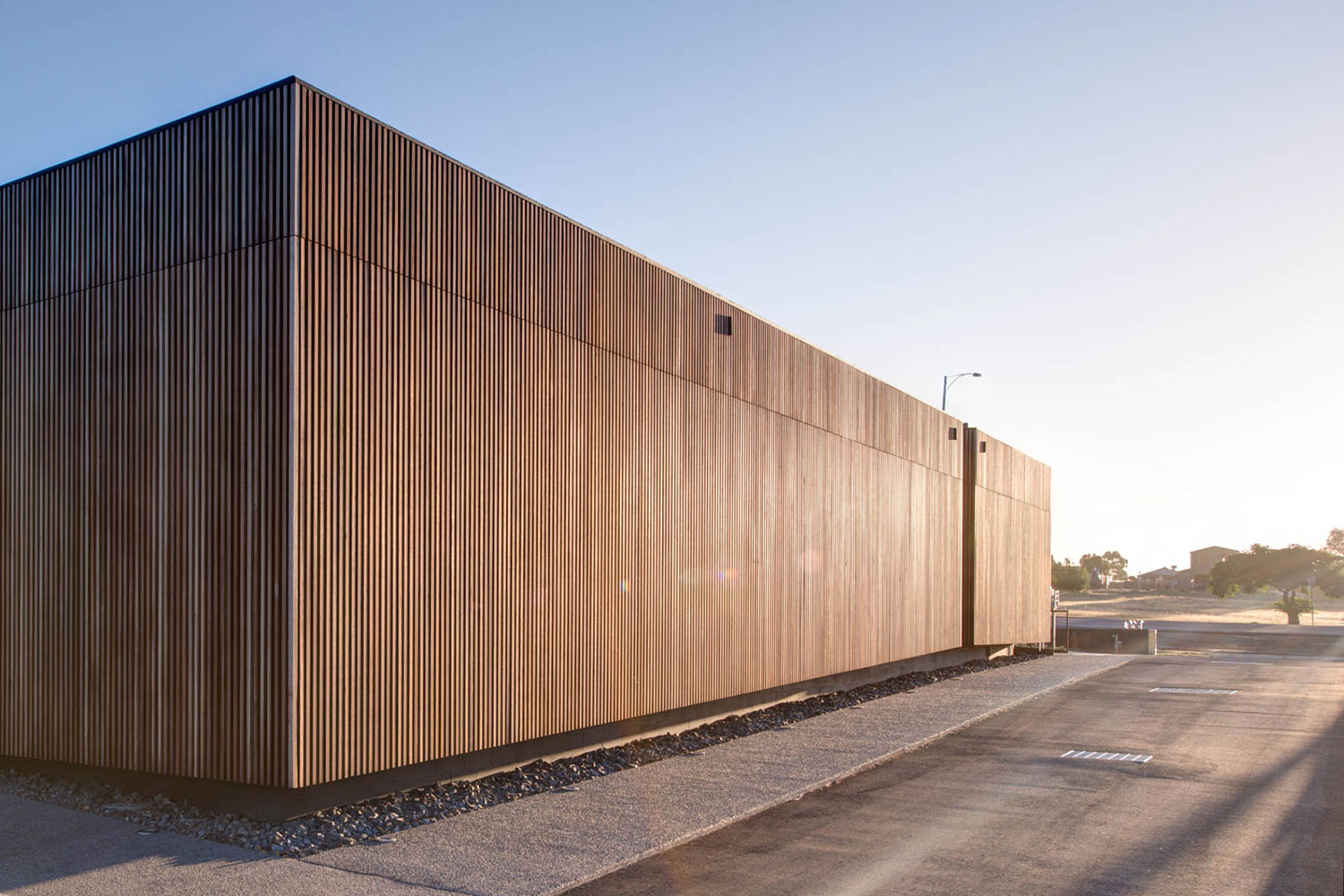
The result is a calming, airy interior with a sense of flow and connection between zones. Uniformly spaced timber battens wrap the building on the north, east and west elevations and provide effective sun-shading.

Spotted Gum cladding visually unifies the building to create a singular cohesive form. This second skin is the facility’s defining feature and also emphasises the site’s fall, investing the project with a strong connection to place.


Share

Share