-
9 January 2026
With the demand for sustainable transformation growing ever more urgent, the Sustainability Summit delivers a clear call to action for environmental responsibility, innovation and collaboration. Across a full day of presentations, panel discussions, and networking, the Summit educates, inspires, and informs built environment professionals committed to shaping a greener, smarter, and more resilient future.
Why climate risk is rewriting insurance and design
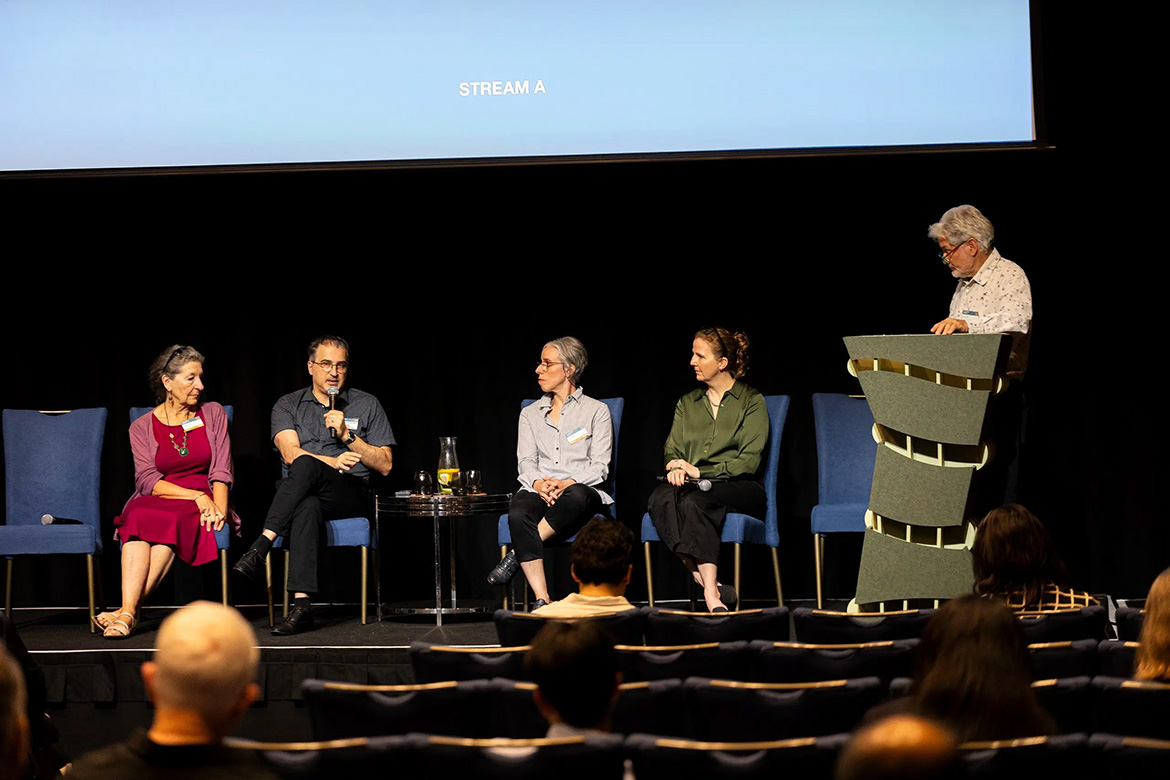
As floods, fires and hail intensify, insurance is becoming a powerful indicator of where Australia’s built environment is failing. At the 2025 Sustainability Summit, the panel moderated by Envirotecture Principal Dick Clarke reveals why code compliance is no longer enough, and how design, planning and data gaps are driving uninsurable communities.
Insurance is all-pervasive in everyday life, says Clarke, from our cars and homes to our farms. “Insurance providers can help end the climate and energy wars because, as every actuary knows, the numbers do not lie.”
Insurance pricing is grounded in risk that can be calculated, he explains. As climate change, indicated through worsening storms, floods, cyclones and bushfires, reshapes risk modelling, those calculations are changing rapidly across the insurance sector, particularly in the affected regions.
For architects, designers and builders, the consequences – rising premiums, withdrawn cover and uninsurable regions – are now influencing decisions about what can be built, where, and for whom.
Lower risk, same premium?
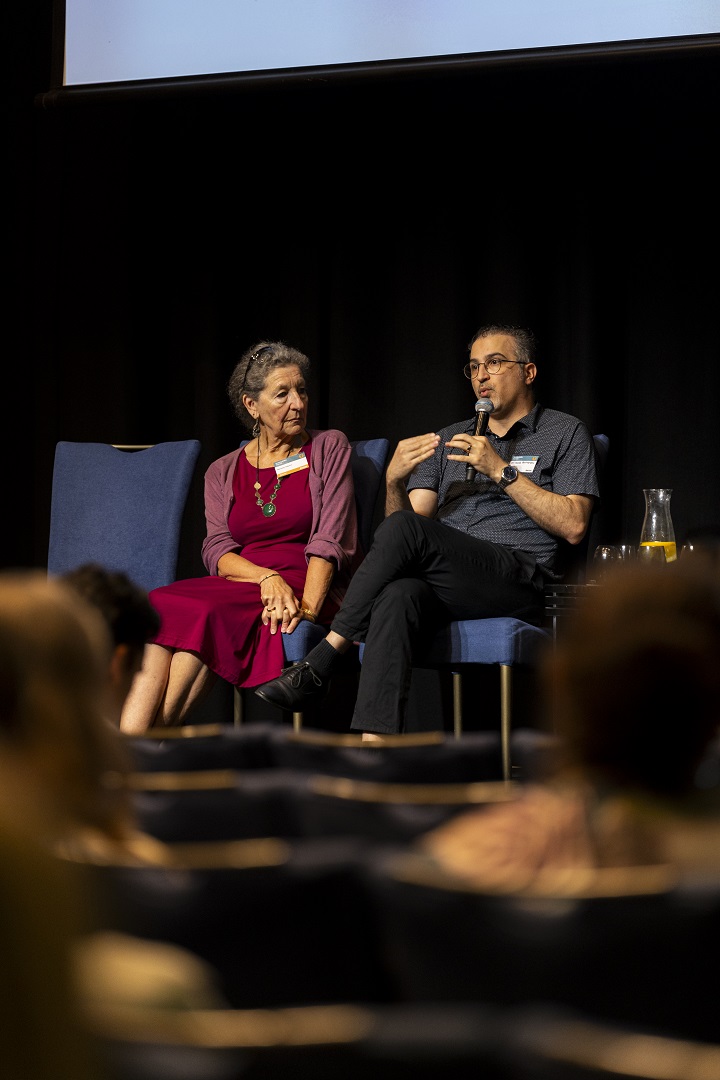
According to Mahalath Halperin of Mahalath Halperin Architects + HELP®, while the impact of floods and bushfires can be mitigated by not building in these areas, hailstorm presents a completely different challenge: A hailstorm event in Armidale in 1996, resulted in, at the time, the highest cost per capita in Australia for a natural disaster, even exceeding the Newcastle earthquake. Speaking from a personal experience, she recalls a hailstorm earlier this year, which didn’t damage her tin-roofed weatherboard home, while another house with a similar build down the road, was hit badly resulting in a big insurance claim. The difference, she says, was in the way her home was designed – no big exposed glass to the south, extra-wide gutters, and windows that can be opened without letting the rain or hail in. But both houses pay the same premium even though her home has a lower risk.
“Designing passive solar resilient buildings is going to reduce risk, surely the insurers can acknowledge that and give you a discount, because it is going to save them money in the long run,” she reflects.
The cost of climate risk
Having worked on projects in bushfire-prone areas, Dr Saeed Banihashemi, Associate Professor at the School of Built Environment, University of Technology Sydney, points to stark trends in insurance for the built environment: premiums have risen by around 30% in recent years, while some regional communities in New South Wales, Queensland, Western Australia and the Northern Territory are already uninsurable. Though there has been considerable progress on climate change and climate resilience in the National Construction Code (NCC) 2022 version, the risks of climate exposure to the built environment are growing faster than the evolvement of NCC codes, which from an insurance perspective, lead to higher premiums that communities cannot afford.
“This is how climate change imposes costs to our built environment practice,” he adds.
The missed opportunities of missing data
Expanding the conversation, Marrah + Yeh Architects Director Carol Marra identifies a deeper structural problem – that designers don’t have to design for specific climate impacts because they are not required to do so. While there is data about bushfire-prone and flood-prone land, it’s not always updated or accurate, leading to an information gap for designers in terms of the risks they are designing for. As for hailstorms, information about hail events is not currently captured within the planning system.
“You are starting from a point of disinformation or lack of information as a designer,” she says.
However, this information gap is also an opportunity for greater collaboration between the design industry and the insurance industry, because insurers have the risk profile of every property they insure – data that’s only available to them. If this information is shared and made available publicly, every stakeholder from an architect to a home or asset owner can understand the risk profile of a property and start thinking about mitigating that risk.
Why insurers don’t reward good design
Dr Kaitlin Shilling, Regional Resilience and Adaptation Lead at ARUP, agrees that data is a massive issue in Australia. As an American, she shares that climate risk data is freely available in the US for anyone to access it. In Australia, taxpayer-funded research is often locked behind commercial arrangements.
As for insurance companies offering discounts on premiums for well-designed, resilient homes, Dr Shilling explains that it’s hard because there’s no robust evidence to prove which interventions work and by how much. When a data set is compiled, comparing, for instance, a thousand houses that have made the same interventions for a specific climate impact, and delivered the same outcomes, it creates an evidence base. Also, verifying these interventions – that a specific house has been built and maintained to a higher standard – requires the support of digital technology to make house-by-house assessment feasible since insurance modelling and pricing are currently done by zone.
When code compliance fails
NSW’s Bega Valley Shire, a bushfire-prone area for many years, suffered extreme damage during the Black Summer bushfires of 2019-20, with around 500 houses completely destroyed in the blaze. When researchers looked for evidence of code compliance in these buildings, Dr Banihashemi says they found 90% compliance with NCC, exposing the gap between code compliance and minimum standards required in these areas.
Digital tools can help identify outlier issues in each zone and pinpoint areas within that zone that are more vulnerable to one or more climate risks. But without national datasets and integrated planning frameworks, their potential remains underused.
Buildings, he reflects, can comply with the NCC and still fail catastrophically when exposed to multiple, overlapping climate hazards.
Code compliance, says Marra, is not the same thing as building performance. You can be code compliant, you can tick all the boxes, but that doesn’t mean that your building is going to perform from a thermal comfort or climate resilience perspective.
Codes essentially prescribe a minimum acceptable standard for a building to keep future occupants safe and secure. “It’s not the same as having a building that’s going to perform when there’s a hailstorm, a flood, or a bushfire.”
Worse, building codes rely on static climate data based on past conditions rather than future realities. When a building is built today, it is expected to perform for the next 50-100 years. “A building is a future proposition, but our codes are based on past experience,” she adds.
Even if the codes are upgraded, the NCC will still be out of date because the impacts of climate change are happening in real time. The design and building industry, therefore, needs to go beyond code compliance to understand the specifics of a site including the location and topography to know the risks, and then plan and design for climate resilience.
Planning decisions could lock in risk
Current planning regulations from development control plans to local environmental plans do not take climate resilience into account. Marra describes negotiating with her local council to reposition her own home in a bushfire-prone area, reducing risk for herself and her neighbours. Standard planning controls would have forced her to place her house between two existing houses – a higher-risk configuration.
“There’s a fundamental flaw in the planning guidance that comes from a legacy system of town-making that has nothing to do with risk,” she observes. By challenging planning rules, she was able to achieve a community benefit by reducing risk for her neighbours.
When planning controls increase risk and exposure, there’s a corresponding impact not only on the buildings’ performance and lifespan but also on how insurance is aggregated and the risk spread across the community through premiums.
Beyond NCC-based solutions, Marra sees a world of opportunities at the planning and design stages, because “once you build a building, you can’t move it.”
Driving change through collaboration
There should be greater communication between the design industry and the insurance industry, says Marra. “Until I met people from the insurance industry, I actually didn’t understand what their issues were, and how I could help address some of those issues as an architect.”
Architects are involved in a project at the beginning while insurers deal with the aftermath of a disaster after the building is built, each operating in their own siloes without talking to each other. Architects should ideally have access to data collected, compiled and analysed by insurance companies after a weather event to be able to design resilient buildings.
By coming together, the two industries can collectively try to influence decision-making in planning laws, creating opportunities for useful, productive change to happen, Marra argues.
Observing that policy change, in the context of building codes, can take years, Dr Shilling agrees with the need for collaboration because it leads to greater understanding of problems from different perspectives, allowing them to figure out the simplest solutions that can have the maximum impact.
“Climate change is changing too fast for us to try and have regulation keep up, so you need to create something that’s flexible.”
Drawing a parallel with the shipping industry, where insurance, design and construction are tightly integrated, Clarke wonders whether a similar model could be applied to buildings to ensure design that goes beyond standards.
Insurance companies are already doing that, says Dr Shilling, not for residential projects but for larger commercial buildings and infrastructure.
The built environment has a different kind of framework, particularly in the residential space, explains Marra. In most cases, the homeowner buys insurance after the building is completed. “When there’s an asset to insure, you do not buy insurance before you actually have an asset filled with stuff to insure.”
From hail-resistant houses that receive no premium discount, to code-compliant homes destroyed by bushfire, the panel agrees that resilience must be designed in from the start – through better data sharing, stronger collaboration with insurers, and a shift from minimum compliance to performance-based, place-specific design.
This panel was sponsored by our partners, Dincel Structural Walling and Planet Protector Group.
Sign up now to receive updates for the 2026 Sustainability Summit – where practitioners, thinkers, and community leaders will continue shaping the future of sustainable design.
Main image: (L-R) Mahalath Halperin, Dr Saeed Banihashemi, Carol Marra, Dr Kaitlin Shilling and Dick Clark
