-
26 June 2026
The 2026 Sustainability Awards’ Landscape & Urban category recognises projects at the forefront of climate resilience and technological integration. This award celebrates biophilic, multi-functional spaces that prioritise biodiversity, universal access, and smart-city innovation to create adaptable, inclusive, and future-proof urban environments.
Landscape and urban design have evolved in recent years, in line with broader society-wide shifts towards sustainability, technological integration and inclusivity. These trends are redefining the way our cities, suburbs, and public spaces are conceptualised and constructed. Right now, the key trends shaping landscape and urban design include the following.
Sustainable Design
Now more than a slogan or buzzword, at least for those with genuine environmental commitment, sustainability has begun to base itself on a tangible set of practices and principles.
In an effort to mitigate the impacts of urban heat and manage stormwater, the best designers are integrating climate-responsive approaches, such as green roofs, rain gardens, and permeable pavements.
Meanwhile, by focussing on native and drought-tolerant plant species, they are reducing maintenance needs and supporting local ecosystems. Net-zero developments and carbon-neutral precincts are being prioritised, ensuring that future urban growth aligns with national and international climate targets.
Technological Integration
Thanks to digital connectivity and the much-discussed ‘Smart City’ concept, the ways landscape and urban spaces are planned, built, and managed has been reshaped.
In line with this, technologies like sensor-based lighting, real-time water management, and interactive public art, are being integrated into urban environments to enhance functionality, safety, and sustainability; and tools like Geographic Information Systems (GIS), Building Information Modelling (BIM), and virtual reality (VR) have made it possible to visualise and simulate projects before construction begins.
Biophilia
Biophilia, or the ambition to connect human beings with nature and other living systems, is also making a mark on landscape and urban design. As such, previously unheard-of things like green walls, rooftop gardens, and urban forests are popping up around our urban centres. Here, the overall ambition is to enhance psychological well-being, improve air quality, and increase urban biodiversity.
Climate resilience
Faced with the prospect of a warming climate and an increased incidence of extreme events like bushfire, draught, floods, and rising sea levels, designers are looking to create resilient landscapes capable of adaptation.
Here, the approaches worth noting include resilient planting palettes, floodable parks, and coastal buffer zones. In addition, urban designers have also begun to include disaster mitigation feature, like fire breaks and shaded refuges, into public spaces.
Diversity and inclusivity
Acknowledging the social aspect of sustainability, landscape and urban designers are factoring the needs and experiences of diverse users into their work. This can be seen in the increased emphasis on universal access, culturally sensitive design and even things like intergenerational play spaces; and of places that are welcoming and accessible to people of all ages, abilities, and backgrounds.
Multi-Functional Spaces
Flexibility and the increased prevalence of multi-functional spaces is another landscape and urban design trend. Schools, parks, streetscapes, and urban plazas – places which previously were designed with set uses in mind – are being reimagined to accommodate a variety of uses. For examples, according to this model, schools might more often become home for markets on weekends or exercise classes after hours.
Nominations for the Landscape & Urban Category of the 2026 Sustainability Awards can be completed here.
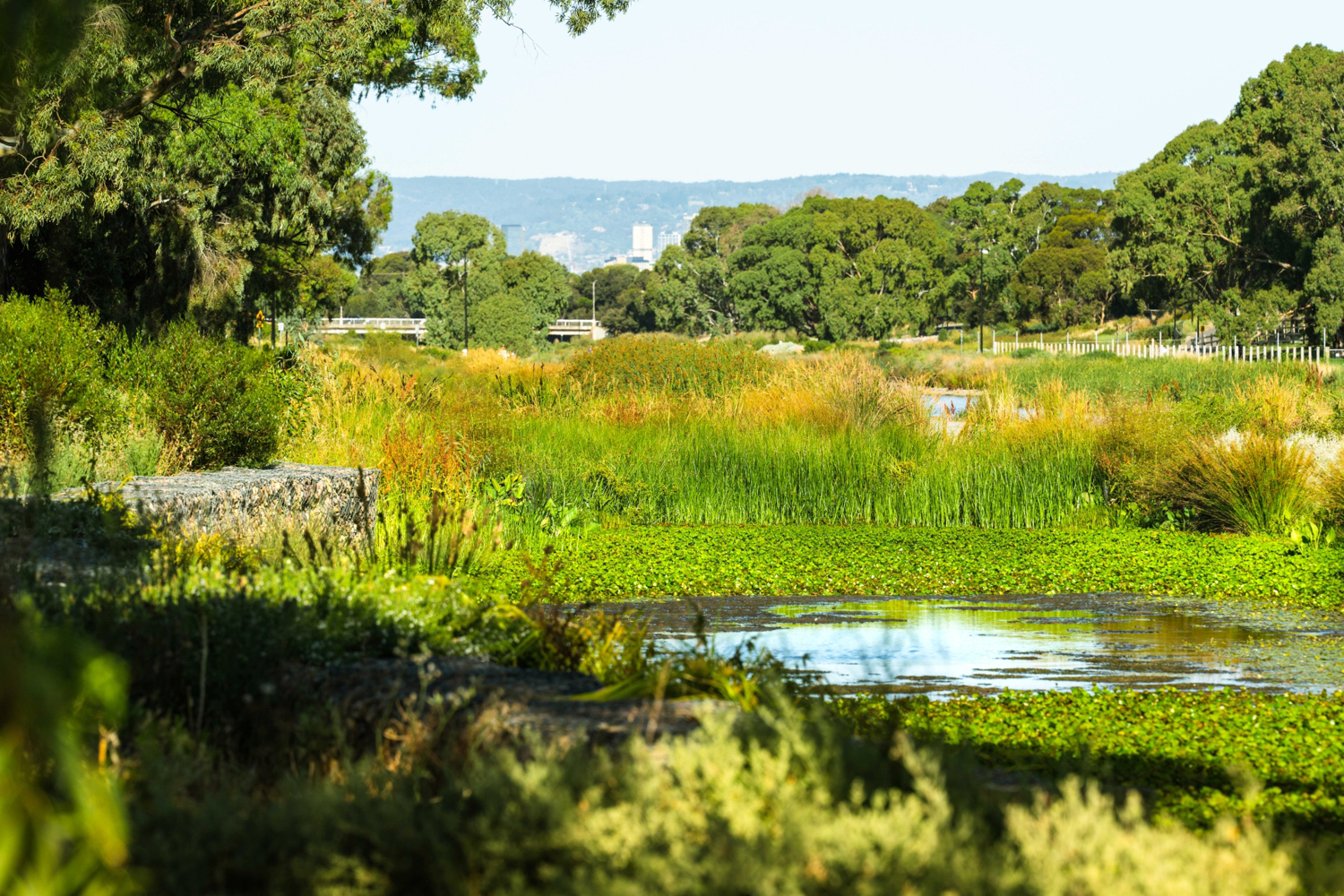
Image: Last year’s winners – Breakout Creek / Purruna Pari Stage 3 by TCL with Green Adelaide, City of Charles Sturt, and City of West Torrens / Photography by Jackie Gu
Article written by Matt McDonald and originally published on www.architectureanddesign.com.au
