-
28 November 2025
Last night in Sydney’s historic Town Hall, Architecture & Design celebrated the 2025 Sustainability Awards Gala night with a loud bang but also with a quiet reckoning.
After 19 years, the Sustainability Awards have become famous across the built environment for holding up a mirror to the built world, together with its ambitions and its anxieties while also acting as a magnifying glass to where it’s heading next.
The 2025 winners did more than just showcase beautiful projects; they also revealed a profession in a state of transition.
Sustainability, once a checklist of solar panels and certifications, has become the lingua franca of many inter-woven disciplines.
And this year’s winning cohort seems less interested in novelty than in nuance. The most compelling works are not about being “green,” but about being gentle—with land, with history, and with each other.
Consider The Stopover, by Taylor Buchtmann Architecture. The project transforms an old stone grain store into a place of calm restraint. Its sustainability lies in what’s left untouched: weathered walls, a textured spine of space, a view that pulls the eye back to the landscape. It’s not preservation as nostalgia but a living conversation between eras.
At the same time, Archer Office’s Boot Factory and Mill Hill Centre Precinct widens the dialogue, adapting heritage structures into civic space, a reminder that communities, too, can be recycled.
Across the world, on France’s Rhône River, the Beaucastel Winery by Studio Mediterranean and Studio Mumbai offers a humbler kind of innovation. Built from the very earth excavated on-site, its walls breathe with the rhythm of soil and air. The project rejects spectacle in favour of sensibility: ancient methods reimagined for a warming planet.
Back in Australia, new models of domestic life take shape. Subtle Shift, by Steffen Welsch Architects, questions the suburban script—one room, one function and proposes something looser, more adaptive. In Castlemaine, CROSBY architects’ Paddock Cluster Housing extends that experiment into community, weaving biodiversity, shared governance, and local food systems into everyday life. It’s the rare eco-village that feels practical, even replicable.
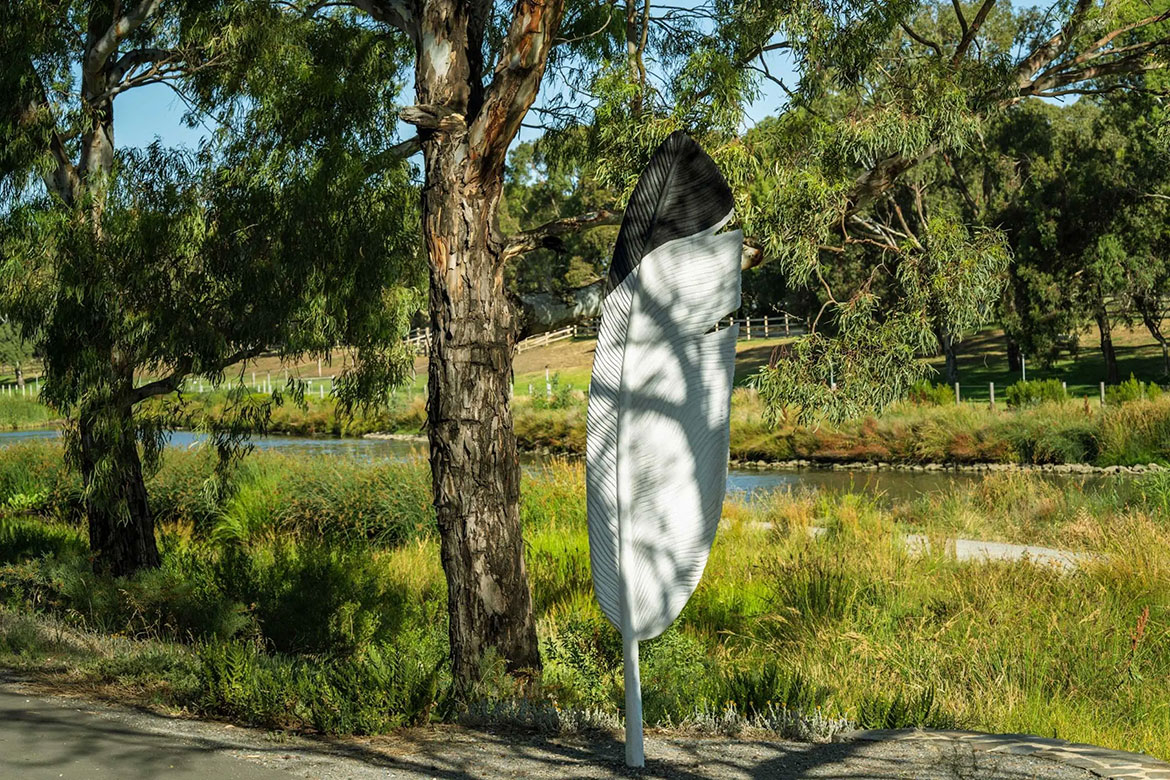
Then there’s Breakout Creek / Purruna Pari, this year’s Best of the Best. Six kilometres of renewed wetland carve a corridor of life through Adelaide’s urban fringe. Designed with Kaurna cultural leadership, the project feels less like landscape architecture than like ecological mending. It reminds us that infrastructure can heal, that culture and climate care are not separate disciplines.
Every category, from education to interiors, hums with this same quiet insistence. Schools that teach sustainability by embodying it. Workplaces designed around empathy and light. Rural silos reborn as eco-lodges. Even apps and materials tools like Powerhaus and Viva Straw Panels suggest that innovation can be small, subtle, and systemic.
The awards’ ultimate message feels both pragmatic and poetic: the future of design is less about building more, and more about building wisely. These architects are not chasing utopias; they’re grounding them, literally, in soil, water, and time.
And so, the winners of the 2025 Sustainability Awards – brought to you by our Platinum Carbon Neutral Partner Autex Acoustics and Gold Partner GH Commercial are:
COMMERCIAL ARCHITECTURE – LARGE (Brought to you by Network Architectural)
A Class 5, 6, 7 or 8 building used for professional and/or commercial purposes of over 500 sqm in floor size.
JOINT WINNERS
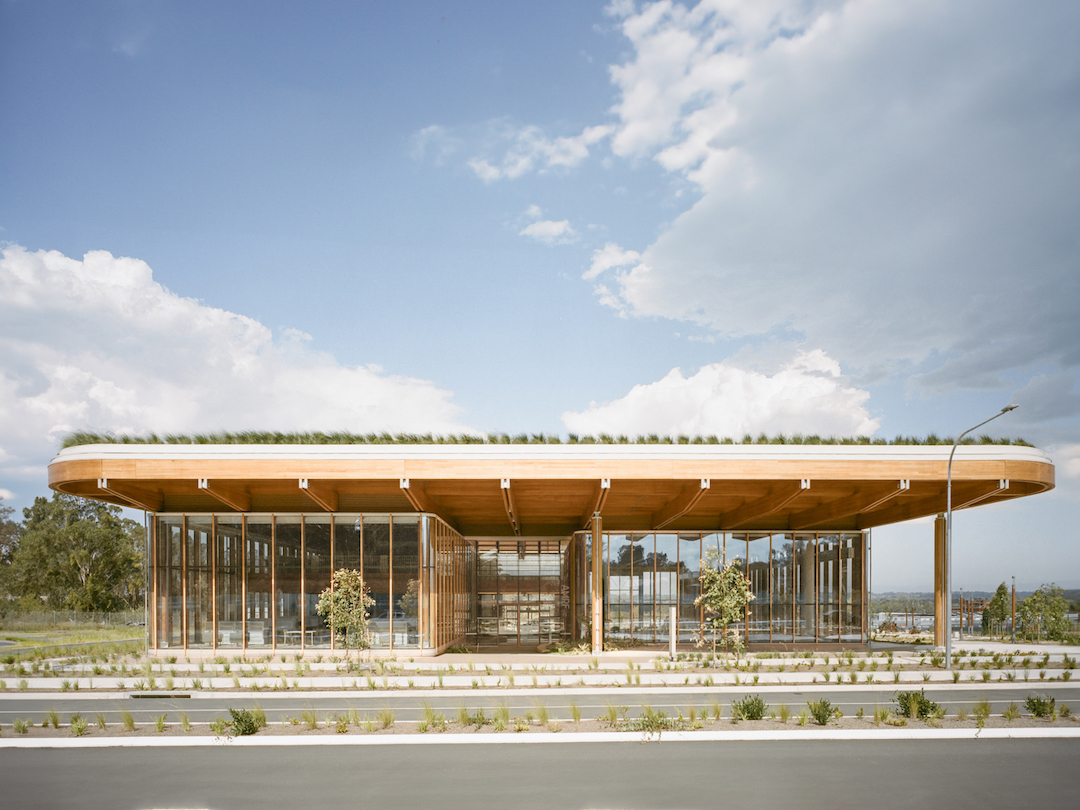
FIRST BUILDING, BRADFIELD CITY CENTRE – HASSELL STUDIO
As the first completed building in Australia’s newest city — Bradfield City Centre — First Building houses stage one of the Advanced Manufacturing Readiness Facility (AMRF), an innovation accelerator.
Designed with adaptability, circularity, and resilience, it sets a new benchmark for how cities can be regenerative and integrate with Country. Guided by First Nations cultural research and design agency Djinjama, the design is deeply embedded in Dharug Country, honouring, and respecting the building’s location on the Cumberland Plain and the ephemeral waterways of Wianamatta.
PHOTOGRAPHY: Vinchy Wu.
NORTHERN MEMORIAL PARK DEPOT – SEARLE X WALDRON ARCHITECTURE

PHOTOGRAPHY: Peter Bennetts.
Northern Memorial Park Depot is a two-storey mass-timber operations hub for the Greater Metropolitan Cemeteries Trust (GMCT) which challenges the conventional typology of a Depot by providing a beautiful workplace for people who work in emotionally challenging roles, dealing daily with grief and loss.
Timber’s natural warmth and connection to nature contribute to a biophilic design, improve acoustics in an industrial setting and enhance overall staff well-being.
COMMERCIAL ARCHITECTURE – SMALL (Brought to you by DuraCube)
A Class 5, 6, 7 or 8 building used for professional and/or commercial purposes of under or equal to 500 sqm in floor size.
WINNER
CROSSROADS MARRICKVILLE – MACKENZIE PRONK ARCHITECTS & MAKE PROJECTS
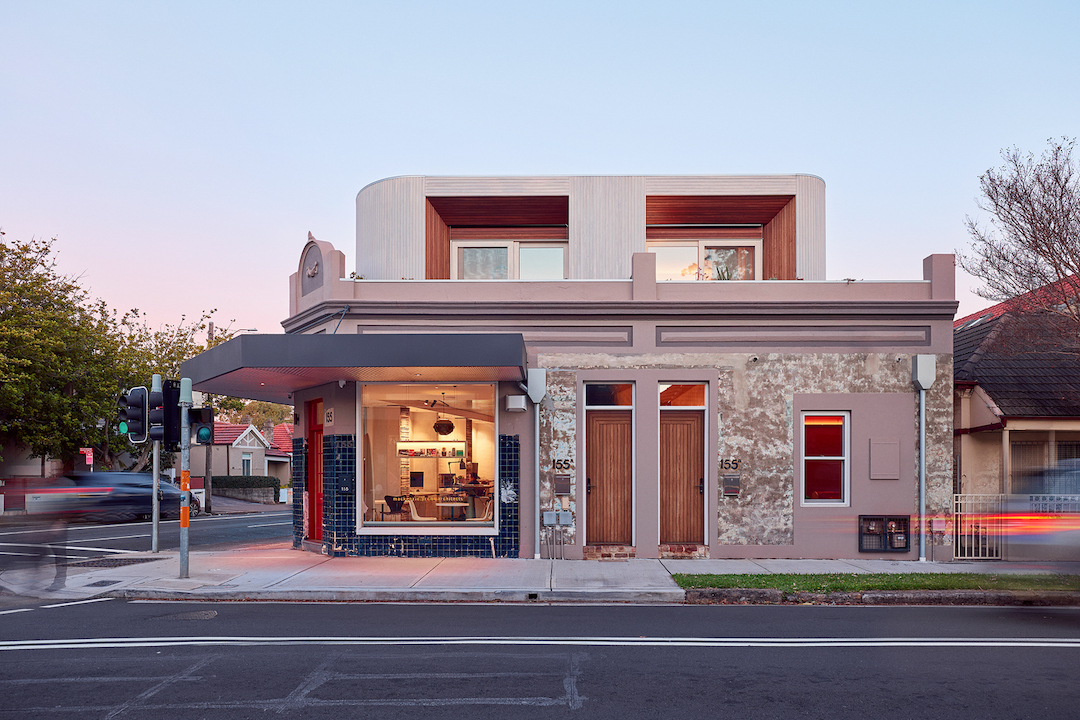
This project is an adaptive reuse of a dilapidated 1890s corner shop and residence in Marrickville, transformed into a small footprint mixed-use development with a commercial tenancy, shop-top housing, an additional three-bedroom residence and sunny courtyards with access through lofty garage/workshops to the rear lane.
PHOTOGRAPHY: Andreas Bommert.
HIGHLY COMMENDED
CROP FITZROY – OLAVER ARCHITECTURE

PHOTOGRAPHY: Ashley Ludkin.
EDUCATION & RESEARCH (Brought to you by Wood Solutions)
A child care centre, preschool, primary, secondary or tertiary educational facility or a facility where an educational institution is a partner.
WINNER
WOODLEIGH REGENERATIVE FUTURES STUDIO – MCILDOWIE PARTNERS + JOOST BAKKER

The Woodleigh Regenerative Futures Studio is a productive, living ecosystem that provides a dynamic, project-based learning environment for students to explore and address these challenges while growing rooftop native gardens, harvesting solar power, cultivating fish in aquaponics tanks, sequestering carbon dioxide, and filtering pollutants in a net-zero building.
Set on a sloping site on the outskirts of the senior campus, the Futures Studio comprises three pavilions linked by courtyards and sheltered learning areas, which frame views of the farm, nature reserve, and school campus.
PHOTOGRAPHY: Earl Carter.
HIGHLY COMMENDED
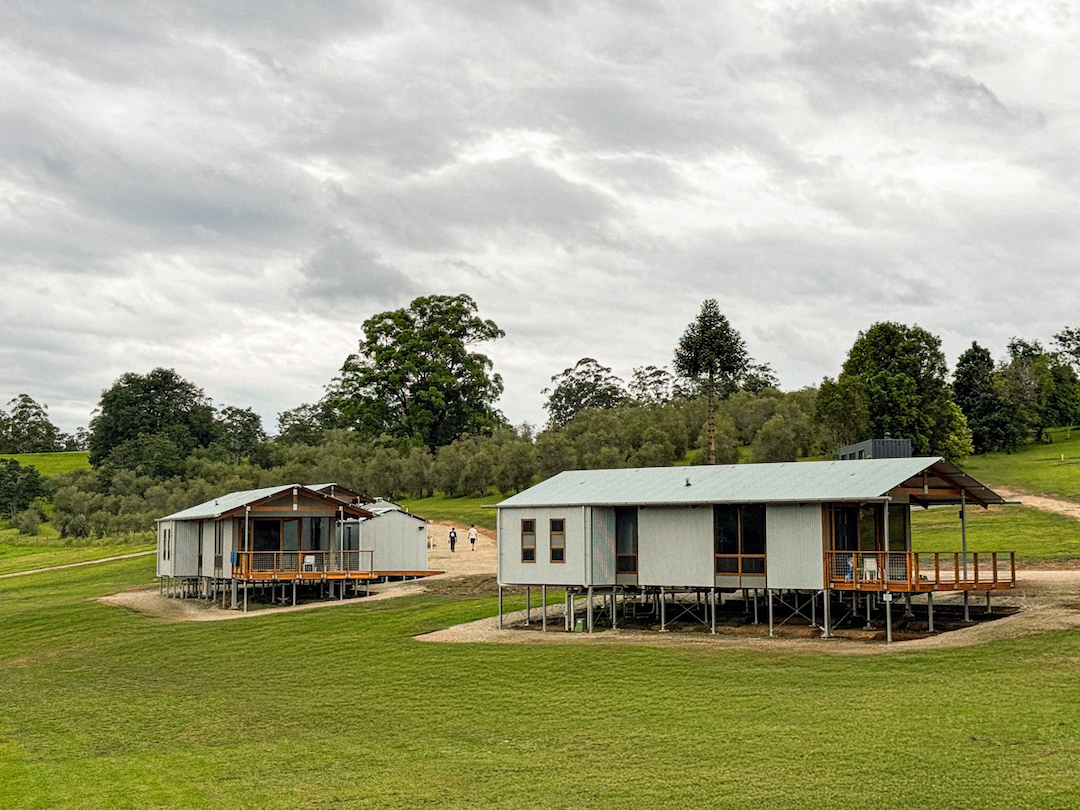
NEWINGTON COLLEGE EUNGAI CREEK CAMPUS (STAGE 1) – AJC ARCHITECTS
PHOTOGRAPHY: Samuel Trevena.
MULTIPLE RESIDENTIAL DWELLING (Brought to you by Nero)
The design of a new townhouse, duplex or residential complex that contains multiple residential dwellings. Projects nominated under this category are classifiable as Class 2 or Class 3 buildings.
WINNER
THE PADDOCK CLUSTER HOUSING DEVELOPMENT – CROSBY ARCHITECTS

The Paddock is a 27-dwelling cluster housing development in Castlemaine, Central Victoria. Contributive self-governance, return of biodiversity, food production, water conservation and net energy production are core goals.
An integrated design approach was used, involving workshops with the consultant team, clients, builder, prospective occupants, service supply authorities and academics.
PHOTOGRAPHY: Iwan Baan.
HIGHLY COMMENDED
ECHO.1 – C STREET PROJECTS
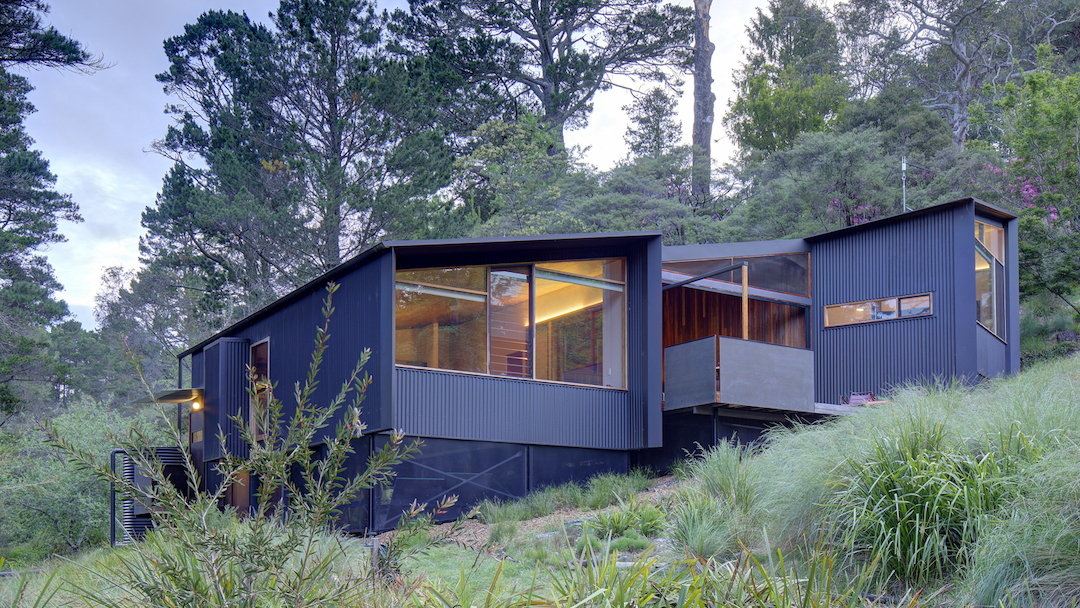
PHOTOGRAPHY: Tom Ross and Lisa Cohen.
ADAPTIVE REUSE – ALTERATION/ADDITION (Brought to you by Planet Protector Building Circularity)
Recognises the adaptive reuse of a building (heritage and/or new) that has minimal impact on the historical significance of the building and its setting, while also pursuing a design that is sympathetic to the building to give it a new purpose.
WINNER
THE STOPOVER – TAYLOR BUCHTMANN ARCHITECTURE

The structure was originally a stone grain store. Part of a wider grouping of agricultural buildings.
The highly tactile materials of the original building are matched in character in the new materials selections. Minimal finishes are used. The original walls are retained with minimal patching.
PHOTOGRAPHY: TBArch.
HIGHLY COMMENDED
BOOT FACTORY AND MILL HILL CENTRE PRECINCT – ARCHER OFFICE

PHOTOGRAPHY: Hamish McIntosh, Peter Bennetts, Murray Fredericks.
SINGLE DWELLING – NEW (Brought to you by Billi)
The design and construction of a single-residential building which is also a Class 1a Building category.
WINNER
CANOPY CLT HOUSE – STILL SPACE ARCHITECTURE
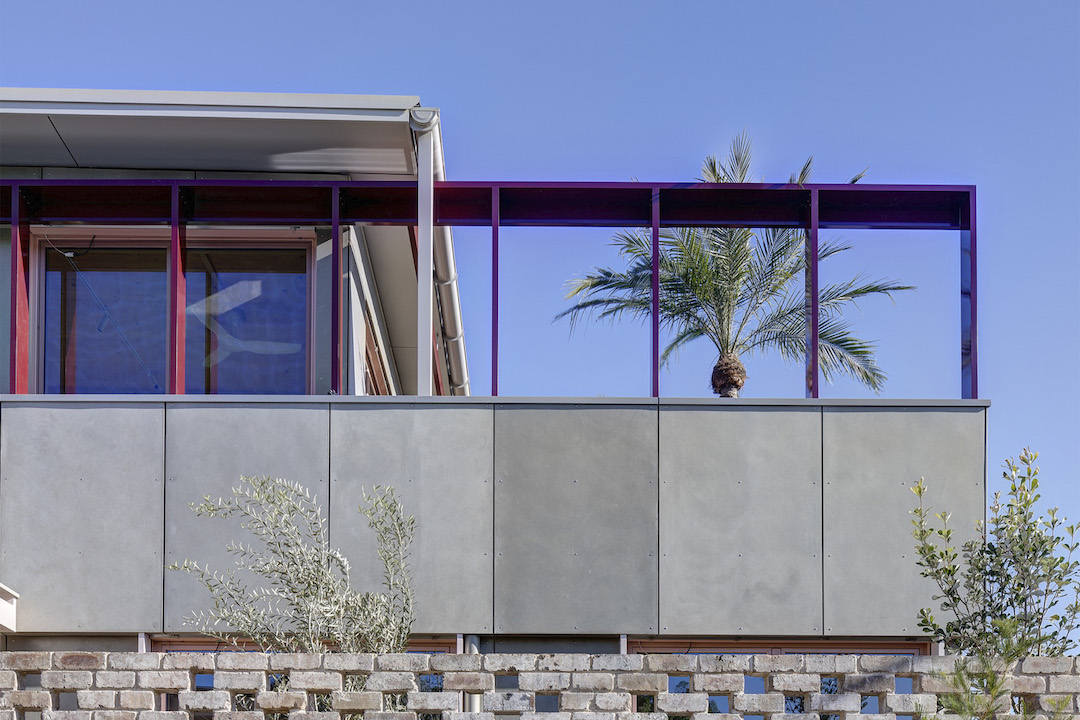
Located on a busy corner in riverside Putney, this suburban site presented both challenges and opportunities.
The neighbouring property is large and imposing, so the new home was carefully oriented toward a private garden. A mature Lillipilli tree became the heart of the design, anchoring the house and landscape with its generous canopy and providing a strong connection to nature. Given the site’s exposure, the design needed to create its own microclimate and sense of enclosure.
PHOTOGRAPHY: by Brett Boardman.
HIGHLY COMMENDED
ECO-HOUSE LEURA

PHOTOGRAPHY Brett Boardman.
LIVE, LOVE, LOFT – COOEE ARCHITECTURE

PHOTOGRAPHY: Ben King.
SINGLE DWELLING – ALTERATION / ADDITION (Brought to you by DECO)
WINNER
SUBTLE SHIFT – STEFFEN WELSCH ARCHITECTS

Subtle Shifts’ transformed an inefficient suburban house into a functional, comfortable and energy-smart affordable home within its existing footprint. This was successfully achieved by simply moving away from the traditional and rigid “one room, one function” mindset, which ultimately leads to homes that can be used more intensively within a smaller footprint and volume. The design aimed to be very adaptable over the building’s’ lifespan as a sustainable strategy.
PHOTOGRAPHY: Tatjana Plitt.
HIGHLY COMMENDED
CAKE HOUSE – ALEXANDER SYMES ARCHITECT

PHOTOGRAPHY Barton Taylor.
LANDSCAPE & URBAN (Brought to you by Dincel Structural Walling)
Buildings or non-building projects at the intersection of architecture, landscape design and urban planning. Examples include parks, pedestrian bridges and walkways, pools, shelters, picnic facilities, toilet blocks and playgrounds. Can also include green roofs, green walls and other urban gardens and similar installations.
WINNER
BREAKOUT CREEK – TCL (WITH GREEN ADELAIDE, CITY OF CHARLES STURT, AND CITY OF WEST TORRENS)

Breakout Creek /Purruna Pari Stage 3 successfully demonstrates the ecological, visual and recreational benefits of a well-functioning Blue/Green Infrastructure. The project achieves a climate-positive impact within 11 years of construction, aligning with the Australian Institute of Landscape Architects’ 2040 target. Greatly increased biodiversity of landscapes, aquatic ecologies, wildlife habitats, and water quality enhancement have strengthened community amenity alongside environmental benefits. Historical levee banks were retained to manage flooding and allow continued horse agistment on part of the site The project includes over 6.2km of walking trails and shared paths, 11,400m2 of permanently vegetated wetlands, five viewing decks, a new river crossing and a universally accessible boardwalk.
PHOTOGRAPHY: TCL_Jackie Gu.
HIGHLY COMMENDED
477 PITT STREET NATIVE FOOD GARDEN – YERRABINGIN
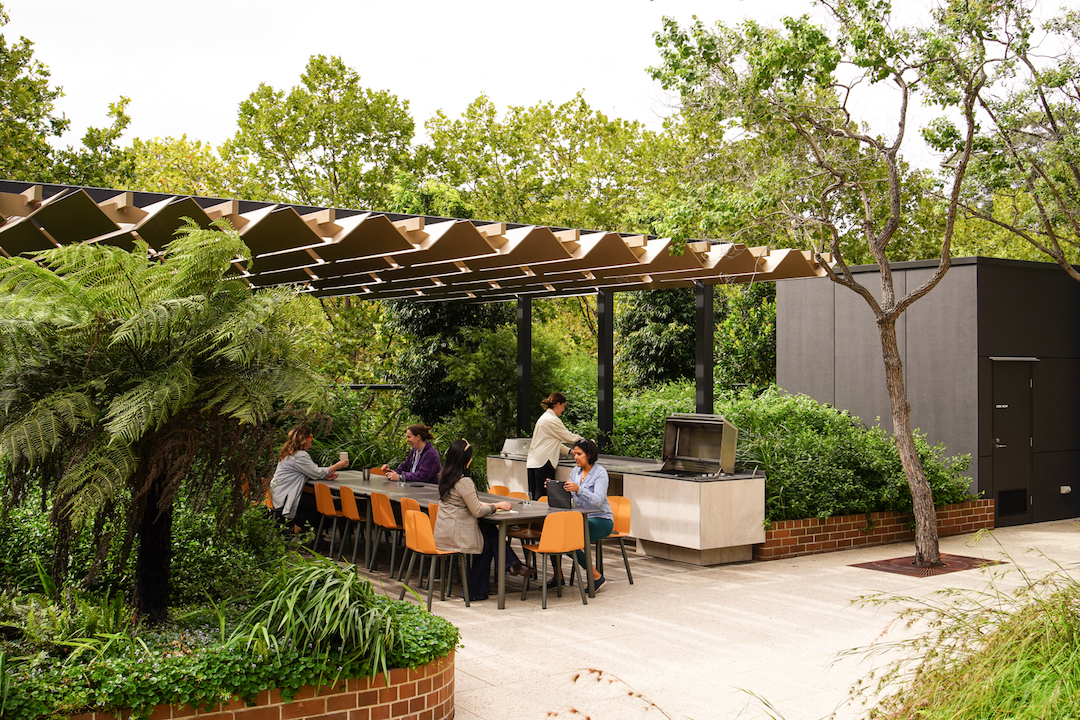
PHOTOGRAPHY Blossom and Finch Photography.
INTERIOR DESIGN (Brought to you by GH Commercial)
A renovation or fit-out of the interior of an existing building where the sustainable design is involved with such factors as determining the efficient and effective use of space, selecting construction materials that offer low environmental impact and lowering pollution, waste, and the lowering of the overall energy consumption.
WINNER
BOOT FACTORY AND MILL HILL CENTRE PRECINCT – ARCHER OFFICE
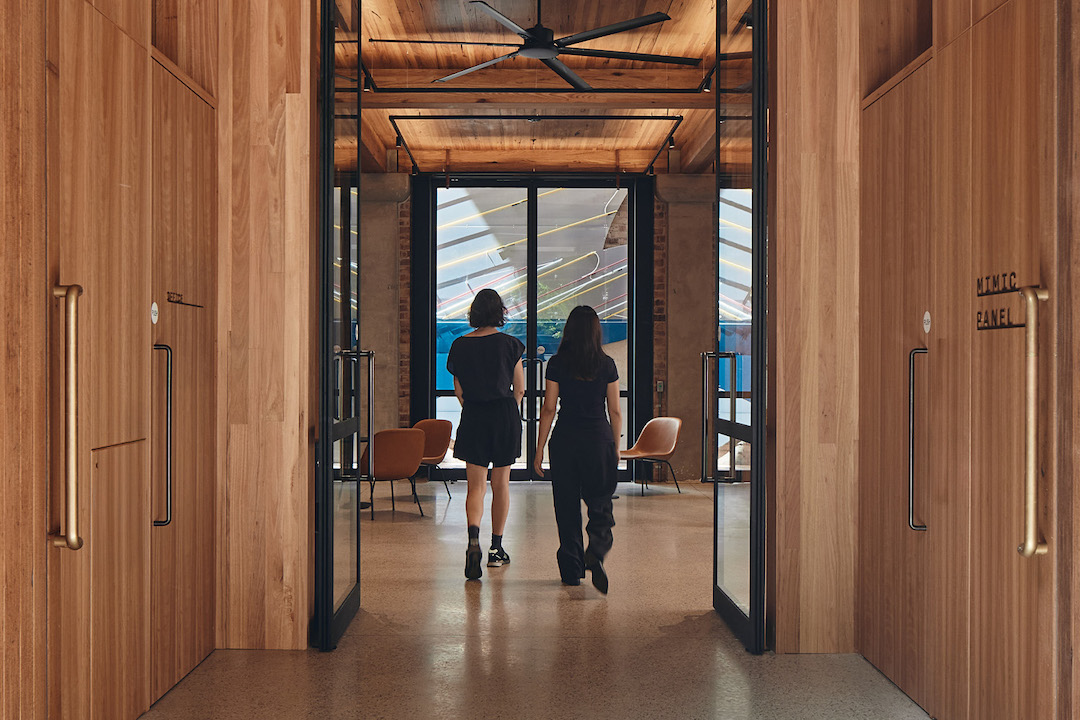
The Boot Factory, a structurally condemned 1892 industrial building, was transformed through a carefully considered design strategy that retained its original brick walls while replacing the failed interior with a prefabricated
Australian hardwood structure. Passive strategies, such as natural ventilation, solar control, and thermal mass, are supported by geothermal heating and cooling, solar energy, and sustainable landscape elements.
Crucially, the project delivers significant public benefit and operational efficiency without increasing building mass. Material selections, including glue-laminated Australian hardwood, low-VOC finishes, and recycled timber, were guided by longevity and performance.
PHOTOGRAPHY: Hamish McIntosh, Peter Bennetts, and Murray Fredericks.
HIGHLY COMMENDED
ARUP BRISBANE WORKPLACE – ARUP

PHOTOGRAPHY: David Chatfield.
GREENHOUSE GROVE – ENVIROTECTURE

PHOTOGRAPHY: Marnie Hawson.
PUBLIC BUILDINGS (Brought to you by SUPAWOOD)
A building or facility, or artwork that primarily serves or is used by the public, except educational facilities. This can include hospitals, medical centres, sports ovals and facilities, transport hubs, parliament houses, zoological gardens, museums, government department buildings and religious structures.
WINNER
FIRST STEPS COUNT CHILD AND COMMUNITY CENTRE – AUSTIN MCFARLAND ARCHITECTS
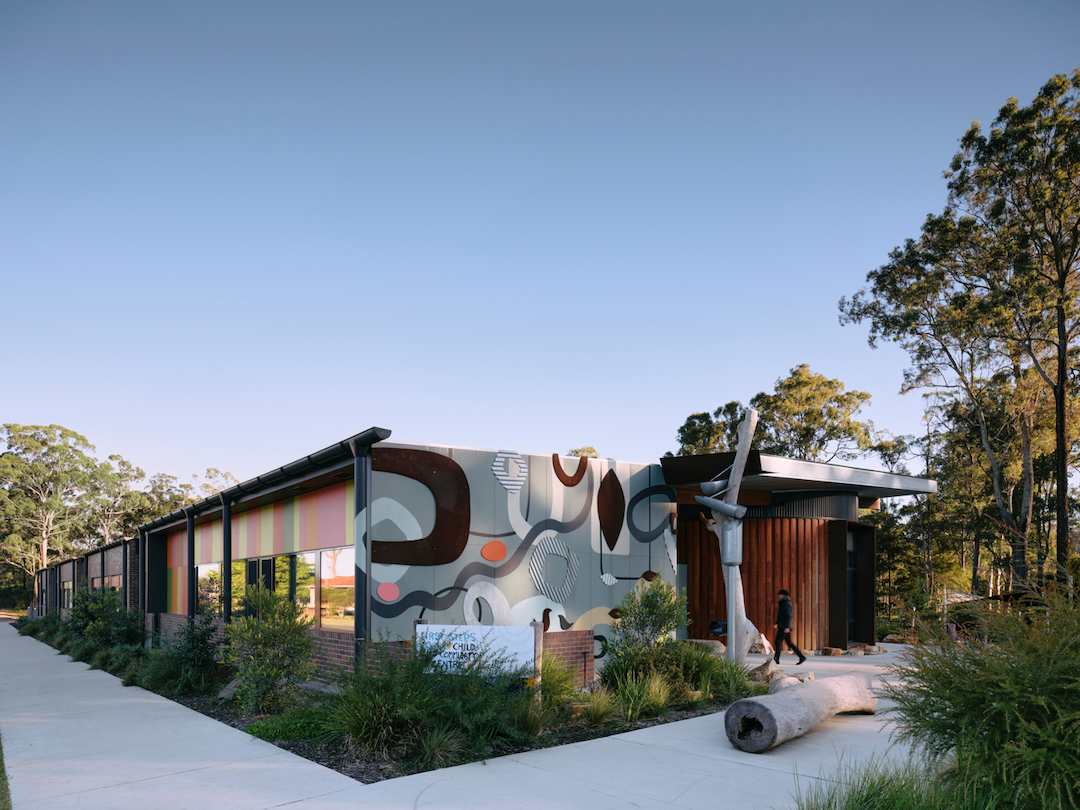
The First Steps Count Child and Community Centre is a purpose-built living building, that uses biophilic design to bring nature into the building structure. The building was completed in 2024, after 15 years of planning, fundraising, and building. This unique, ecologically sustainable, and community-responsive building serves as a dynamic hub providing integrated early childhood services for families with children between the ages of 0-12, designed to support children and their families in a safe and welcoming environment.
PHOTOGRAPHY: Matthew Carbone.
HIGHLY COMMENDED
BOOT FACTORY AND MILL HILL CENTRE PRECINCT – ARCHER OFFICE

PHOTOGRAPHY: Hamish McIntosh.
INTERNATIONAL DESIGN (Brought to you by SAS International)
The best environmentally responsible designed project from around the world, recognises the design and environmental qualities of a building that is located outside of Australia, while also pursuing a design that is sympathetic to its local surrounding to give it a new purpose.
WINNER
RENOVATION AND EXTENSION OF THE BEAUCASTEL WINERY – STUDIO MÉDITERRANÉE & STUDIO MUMBAI
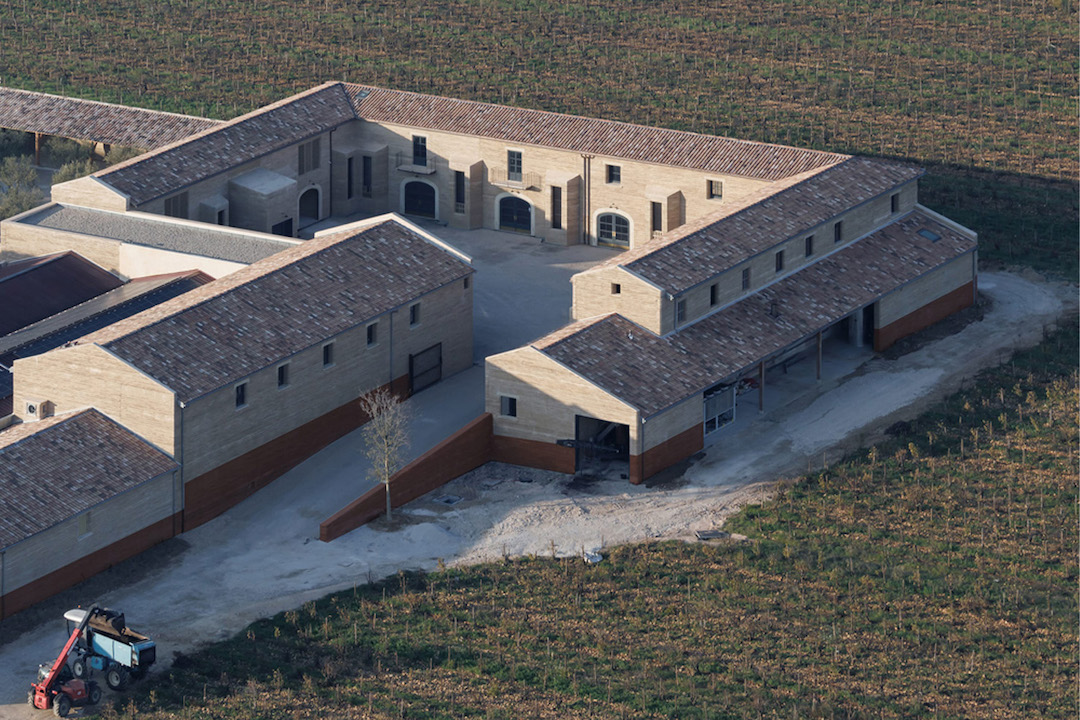
Domaine de Beaucastel is in the South of France in the wine growing region of Côtes du Rhône. The estate situated in the heart of the Quaternary terrace of Châteauneuf du Pape is known for its exceptional terroir, producing quality wine from this landscape.
Tuned into the cyclical flux of the moon, the project harnesses materials found in the immediate environment. The construction primarily made from the earth excavated, compressed, and relocated in a balance of cut and fill, provides a volume of space for the wine cellars and a water cistern set into the earth.
The cistern collects water from the rain. Reservoir for the water used in the wine making process, it is also used as a passive mechanical device modulating the mistral air through the interiors in a process of passive cooling.
PHOTOGRAPHY: Iwan Baan.
HOSPITALITY & TOURISM (Brought to you by Stormtech)
Examples of Hospitality & Tourism Design include projects that help create locally owned business and employment opportunities, environmentally friendly operations, education and awareness programs, energy and resource conservation, and waste & carbon dioxide reduction.
WINNER
THE SILOS ACCOMMODATION – COOEE ARCHITECTURE
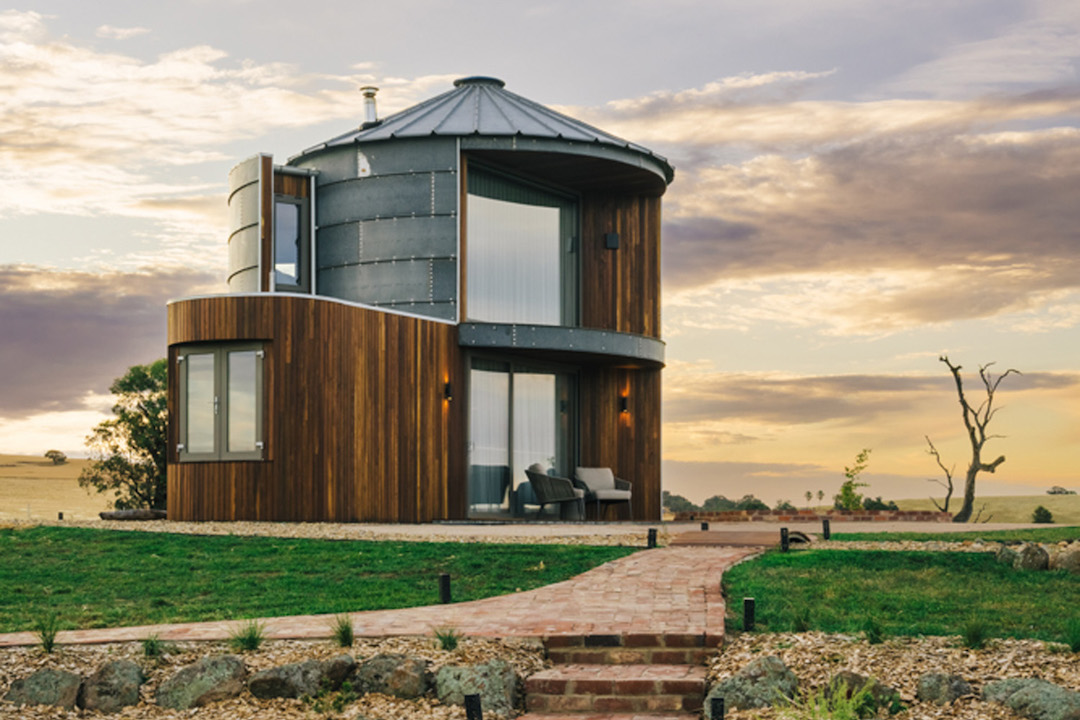
A fifth-generation farmer dreamed of converting a 60-year-old grain silo into quality sustainable farm stay to diversify their farming business, share their lifestyle and region with the public, and create a legacy for their children. The result – The Silos Accommodation – is a bucket list experience.
PHOTOGRAPHY: Matthew Carbone.
HIGHLY COMMENDED
KAVILLO STUDIOS – CAMERON ANDERSON ARCHITECTS

PHOTOGRAPHY Amber Hooper.
GREEN BUILDING SOLUTION (Brought to you by Cosentino)
A building product that is renewable, environmentally responsible and where the impact is considered over the entire lifetime of the product.
WINNER
POWERHAUS APP – POWERHAUS ENGINEERING
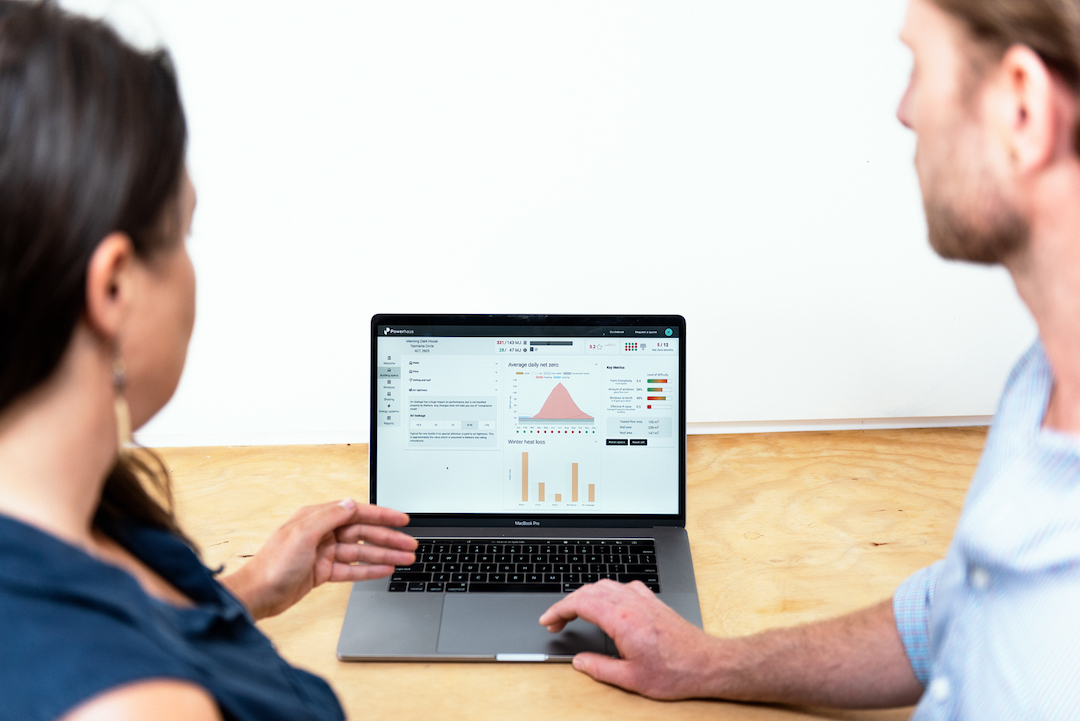
Powerhaus is the first DIY interface for NatHERS — and the first Australian tool to combine insulation, airtightness, solar and systems into one live, holistic energy efficiency dashboard.
PHOTOGRAPHY: Richard Stokes.
HIGHLY COMMENDED
VIVA STRAW PANELS – VIVA LIVING HOMES

PHOTOGRAPHY Viva Living Homes, Steve Garland.
PLANET PROTECTOR DENIM INSULATION – PLANET PROTECTOR GROUP

PHOTOGRAPHY: Planet Protector Group.
SMALL SUSTAINABLE PRACTICE (Brought to you by Knauf)
This award is open to all architecture and design firms with 10 or less staff and recognises and rewards their achievements including those that demonstrate alignment with the UN 17 SDGs by integrating sustainability principles and practices across business activities and outcomes, such as sustainable energy, climate resilience, environmental and social best practice, environmental and social innovation, and gender and economic inclusion.
WINNER

Founded 40 years ago by Tone Wheeler, environa studio is a highly innovative architectural practice, with an emphasis on the triple bottom line of social, environmental, and economic responsibility.
PHOTOGRAPHY: environa studio / Supplied.
EMERGING SUSTAINABLE ARCHITECT/ DESIGNER (Brought to you by Alspec)
Open to architects/designers in their first five years of their career and recognises an outstanding achievement or development in the field of sustainable and/or environmental architecture planning or design across any of the building categories.
WINNER
GABRIELLE PAVICIC – GREEN BUILDING COUNCIL OF AUSTRALIA

With a background in architecture and interior design, Pavicic brings a practical, design-informed approach to shaping more sustainable outcomes across the built environment. Her strength lies in bridging design thinking with technical delivery – and using that to drive real, measurable change.
PHOTOGRAPHY: Gabrielle Pavicic.
LIFETIME ACHIEVEMENT (Brought to you by AWS)
A person who has over their career, shown exemplary efforts in advancing the progression of the sustainable built environment in Australia.
WINNER – SCIENTIA PROFESSOR DEO PRASAD
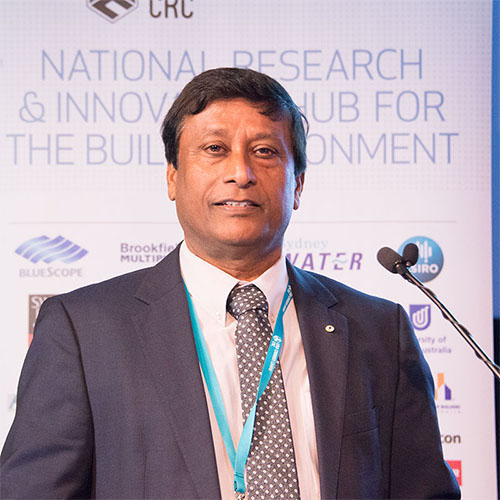
Distinguished Professor (Scientia) Deo Prasad AO FTSE is now an international authority and recognised as a national leader in the field of sustainable buildings and cities and among the leading advocates for sustainability in Australia, with his contributions having been widely acknowledged at all levels of government and professions in Australia.
Elected as a Fellow of the Royal Australian Institute of Architects in 1991, he has been a highly influential, driving force for sustainable design in both academia and professional practise and in 2006 he received the Royal Australian Institute of Architect’s National Education Award for contribution to ‘sustainability education, research and design’.
In summary, over a period of more than 28 years Professor Deo Prasad has made truly world-class contributions to the advancement of sustainability of the built environment.
PHOTOGRAPHY: Professor Deo Prasad / Supplied.
EDITOR’S CHOICE (Brought to you by James Hardie)
Editor’s Choice is an award given by the Architecture & Design editorial team. All shortlisted projects are assessed for their suitability for this award based on their contribution to and consultation with their local community.
WINNER
GUULABAA: PLACE OF KOALA – GENSLER (WITH FORESTRY CORPORATION OF NSW, KOALA CONSERVATION AUSTRALIA, AND THE BUNYAH LOCAL ABORIGINAL LAND COUNCIL)

This project represents a ground-breaking collaboration between Forestry Corporation of NSW, Gensler, Koala Conservation Australia, and the Bunyah Local Aboriginal Land Council. At the core of Guulabaa is a wild koala breeding program that prioritises naturalistic environments and minimal human contact to ensure animals can be safely released back into the wild.
Sustainability is embedded at every level, from passive design strategies and low-impact construction to the incorporation of Indigenous-led cultural burning practices, which reduce bushfire risk and regenerate the forest. Innovative use of fire-resilient native hardwoods, approved through regulatory collaboration, demonstrates the potential of locally sourced timber in high-risk zones.
PHOTOGRAPHY: Forestry Corporation of NSW
BEST OF THE BEST (Brought to you by Autex Acoustics)
The Best of the Best is selected from among all the categories based on both sustainable outcomes and aesthetics and/or innovative design principles.
WINNER
BREAKOUT CREEK – TCL (WITH GREEN ADELAIDE, CITY OF CHARLES STURT, AND CITY OF WEST TORRENS)
Breakout Creek /Purruna Pari Stage 3 successfully demonstrates the ecological, visual, and recreational benefits of a well-functioning Blue/Green Infrastructure. The project achieves a climate-positive impact within 11 years of construction, aligning with the Australian Institute of Landscape Architects’ 2040 target.

PHOTOGRAPHY: Jackie Gu / TCL.
If would like to read this article online as a PDF magazine, click here.
