-
9 December 2025
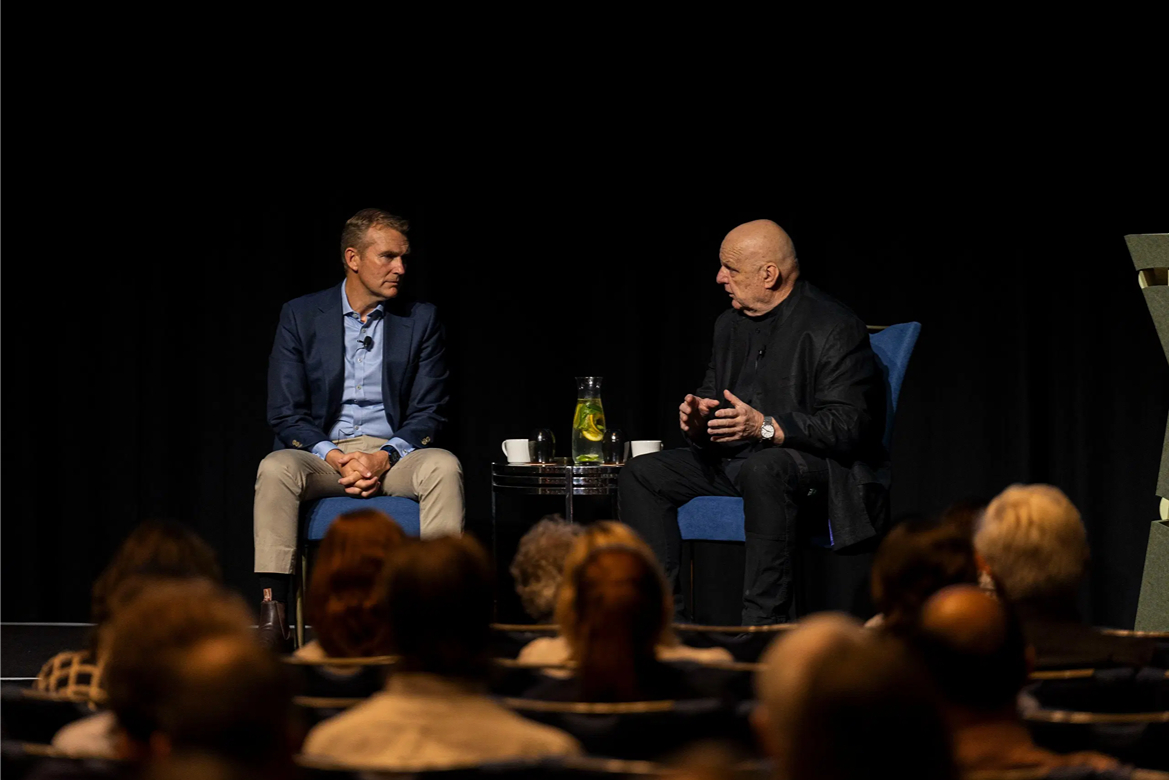
At the 2025 Sustainability Summit, the keynote on the conflicting relationship between inequality and sustainability saw award-winning architect, author and sustainability advocate Tone Wheeler and former politician, planning expert, academic and housing executive Dr Rob Stokes explore the deep and often problematic interconnections between the two issues, particularly through the lens of housing.
Sustainability as an idea: Is it enough?
The conversation began with a rather provocative questioning of the use of the word ‘sustainability’. Dr Stokes, a former Planning Minister in the NSW Government and currently working with Anglicare as Group Executive for Housing, recalled an exchange he had with a theologian about the use of the term ‘sustainability’ as they discussed sustainability strategies.
“Sustainability… is that it? Is that the best we’ve got?” the theologian asked.
Sustainability, he said, is another word for viability, and a synonym for liveability is survivability. Therefore, wanting sustainable, liveable cities meant wanting cities that are viable and survivable. However, as a benchmark, the theologian reflected, it left a lot to be desired. The better term, in his view, was ‘flourishing’ – flourishing environment, flourishing people, flourishing communities. It was much more restorative, reconciliatory and rehabilitative, as it involved taking something that’s broken and making it better, rather than taking what’s broken and hoping not to break it any further.
Agreeing with the critique, Wheeler observed that the sustainability rhetoric was often focused on energy, building and planning metrics while ignoring the human dimension. It’s “not enough”, he said, “and the reason for that is, we don’t look at what sustainability does for people. We’re not talking about the people flourishing.”
Inequality and housing: a system designed to divide
“Australia is becoming unequal,” said Wheeler as he turned the conversation sharply towards inequality, particularly in housing, which he described as “the prism through which you can see the maximum amount of inequality”. Laying out Australia’s housing distribution, he said roughly a third of households own their home (and often another house as well), another third own homes through mortgages, while the rest don’t own a home – they rent, mostly from the people in the first third. Government policies favour those owning homes, further deepening the inequality.
No one’s looking out for the renters, he added.
Extrapolating from the words of an American observer from the 1950s who described Australia as a ‘home-owning democracy’, Dr Stokes said that the great Australian dream is home ownership, but it’s tied to citizenship. By implication, it means if you don’t own a home, you’re not really a citizen. “If you’re a renter, you’re not really quite as important. Over time, that’ll erode the social contract, and the whole thing will fall apart.”
To Wheeler’s argument that tax and financial policies should be changed to achieve 90% home ownership, Dr Stokes called for normalising long-term renting as a perfectly acceptable way of owning a home.
Housing justice and the faith sector
One important point of discussion in the keynote was the role of philanthropic organisations in addressing homelessness, social housing and housing affordability, with the government not moving fast enough to mitigate these issues.
Faith Housing Australia, chaired by Dr Stokes, is an inclusive organisation that works with diverse religious communities and faith groups to address homelessness by helping deliver secure and affordable housing to those in need.
“One of the really important things about Faith Housing Australia is that it’s an expression of our multiculturalism in an effective way,” he said. “It’s wonderful to see people working together in common cause for something that matters to everybody, regardless of whether you have a faith or not. That’s a pretty good thing to be involved in.”
Common cause, in this case, being housing justice.
Faith Housing, he said, not only advocates on behalf of religious communities that want to create more social and affordable housing but also works with faith groups owning land assets to repurpose excess lands for the common good.
Housing and the moral dimension
Any discussion on housing is missing the big moral point, according to Dr Stokes. Taking a couple of examples from history, going all the way back to the Industrial Revolution, he said thinkers like Adam Smith, who wrote about capitalist economic theory, and William Wilberforce, who led the movement to abolish slavery, spoke about human morality and were more concerned about how these issues impacted society.
In terms of the housing crisis, that’s the concern that we collectively need to have as well, he added. Housing prices have to be brought down but no developer wants to do that; besides, it would also crash the economy.
However, when migration peaks, Australia will face a major challenge in reshaping the economy at that point, Dr Stokes warned. “An economy based around property and development brings benefits to many in the room, but ultimately, that’s not going to be sustainable.”
Sustainability measures that worsen inequality
The sustainability policies of the government essentially drive inequality, Wheeler observed. For instance, homeowners install photovoltaic panels on their roofs and benefit from savings. However, they rarely install these systems in their rental homes – renters, therefore, are effectively subsidising the energy bills of people who own these properties.
Another issue for sustainability is ‘meanwhile use’ – an idea pioneered by Housing all Australians, which involves repurposing empty buildings that are in disrepair or not in use into temporary housing. While these conversions may not meet perfect sustainability standards, they can immediately alleviate inequality. Yet, it also sets the sustainability policy on a collision course with housing justice.
Heritage and community use
“I don’t think heritage is the problem – it’s the conceptualisation of it,” Dr Stokes remarked.
The interpretation of ‘what’s heritage’ blocks the pathway to repurposing buildings for community housing.
He shared an interesting example from Marrickville – a derelict church that was rated the 32nd best of 34 Edwardian ecclesiastical architecture buildings in an old Council review and hadn’t been used for 30 years. Though the church sought to redevelop it into 55 affordable homes, there was opposition to the proposal, citing its heritage status.
However, the Marrickville story had a happy ending with the council reversing their position and basically celebrating opportunities to use faith lands for social purposes.
“It’s the speculative development model that often upsets people in the community,” Dr Stokes noted.
When a faith group redevelops its premises to provide opportunity for social housing and decides to stay there as well, it gives the community confidence that it will be done well. Speculative developers build, sell and leave, impacting the long-term quality of the property. On the other hand, real estate investment trusts owning shopping centres know it’s in their long-term interest to make sure the buildings are properly constructed and maintained.
When developers say, ‘We don’t care what happens in 20 years,’ Dr Stokes says they may be right from a commercial perspective that it’s not their problem, but ‘we need to make it, because it’s all of our problems.’
Because sustainability demands this long-term view to ensure equity.
The Summit message: Inequality undermines sustainability, and sustainability worsens inequality
The keynote argued that ‘sustainability’ is too limited a goal, urging a shift towards ‘flourishing’ communities that prioritise people, not just energy or planning metrics. The speakers highlighted how housing reveals Australia’s deepening inequality, with policy favouring owners and marginalising renters. They called for rethinking ownership, empowering long-term renting, and leveraging faith-based organisations to deliver social housing.
Moral responsibility, not just economic logic or environmental benchmarks, must drive reform. Current sustainability measures can unintentionally worsen inequality, while holistic, long-term approaches to land use, heritage, and community benefit are essential for genuine housing justice and a fairer, more resilient future.
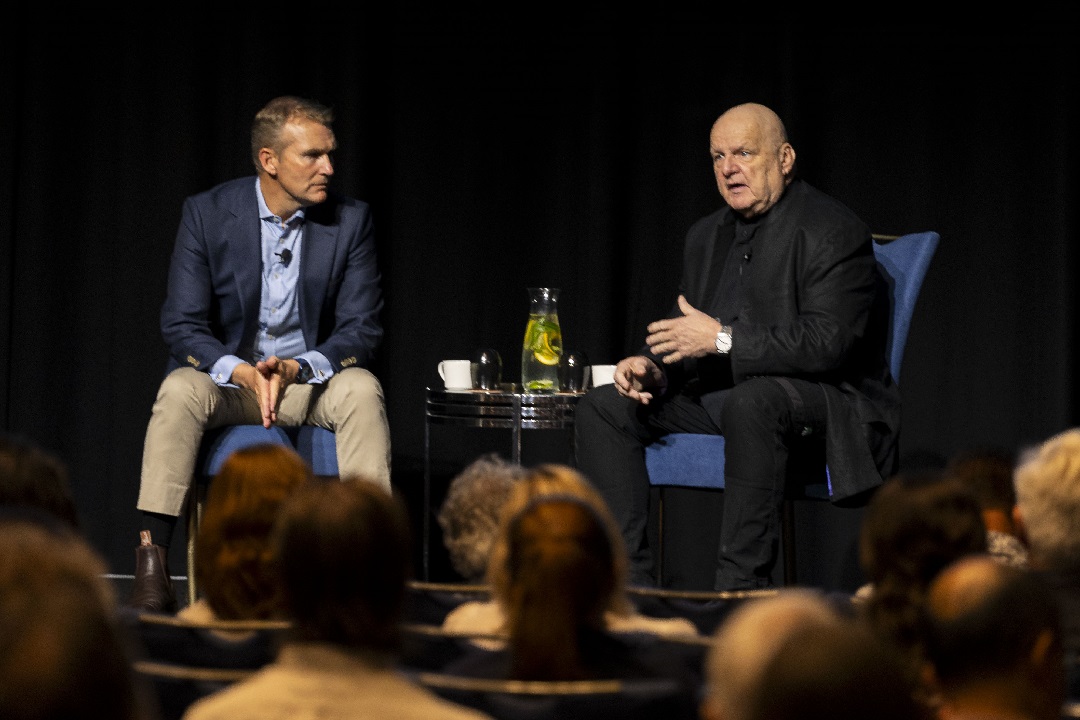
Image: Dr Rob Stokes (left) and Tone Wheeler (right) at the 2025 Sustainability Summit.
