-
9 January 2026
Every year, the Sustainability Summit invites built environment professionals to be part of the national conversation on sustainable design. Through a full day of expert presentations, panels and networking, the Summit inspires new thinking, builds connections, and empowers industry leaders to shape a greener, smarter and more resilient future.
Reframing circularity in the built environment
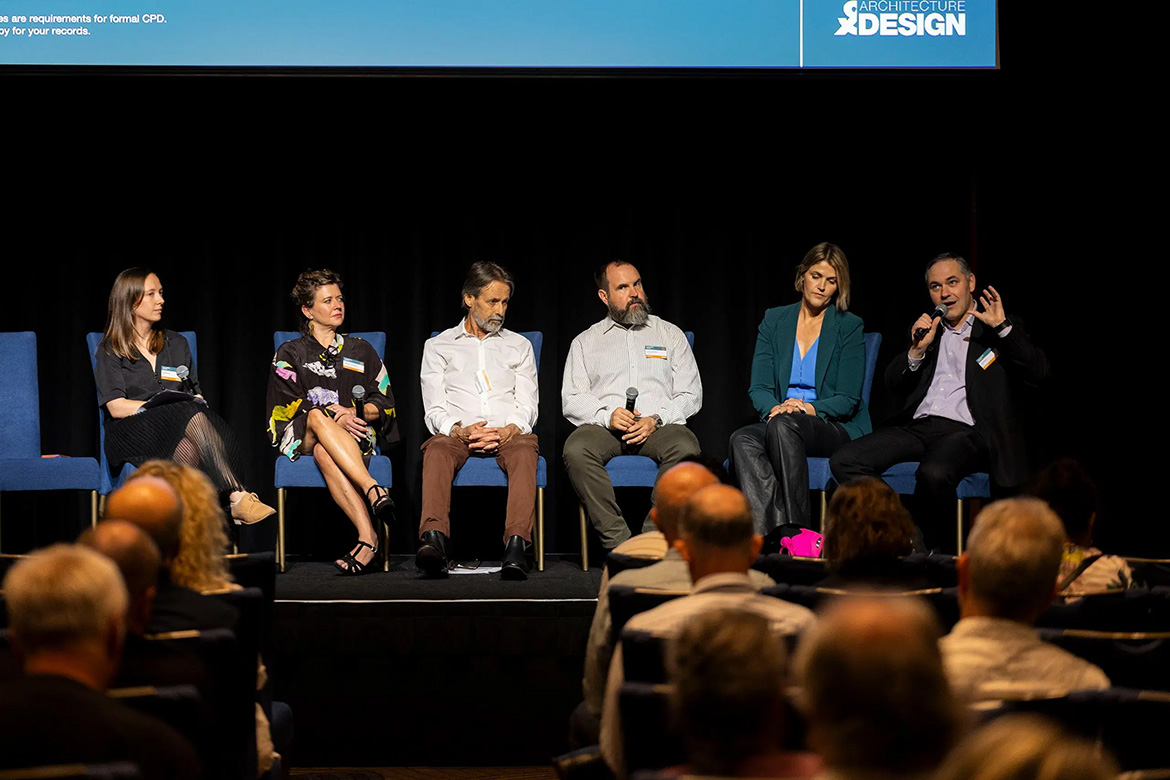
During the panel discussion on the topic of circularity in the built environment at the 2025 Sustainability Summit, experts from across the architecture, engineering and policy sectors challenged conventional thinking on circularity as they shared insights on material transparency, business models, nature-positive outcomes, and the cultural and economic shifts needed to make circularity standard practice.
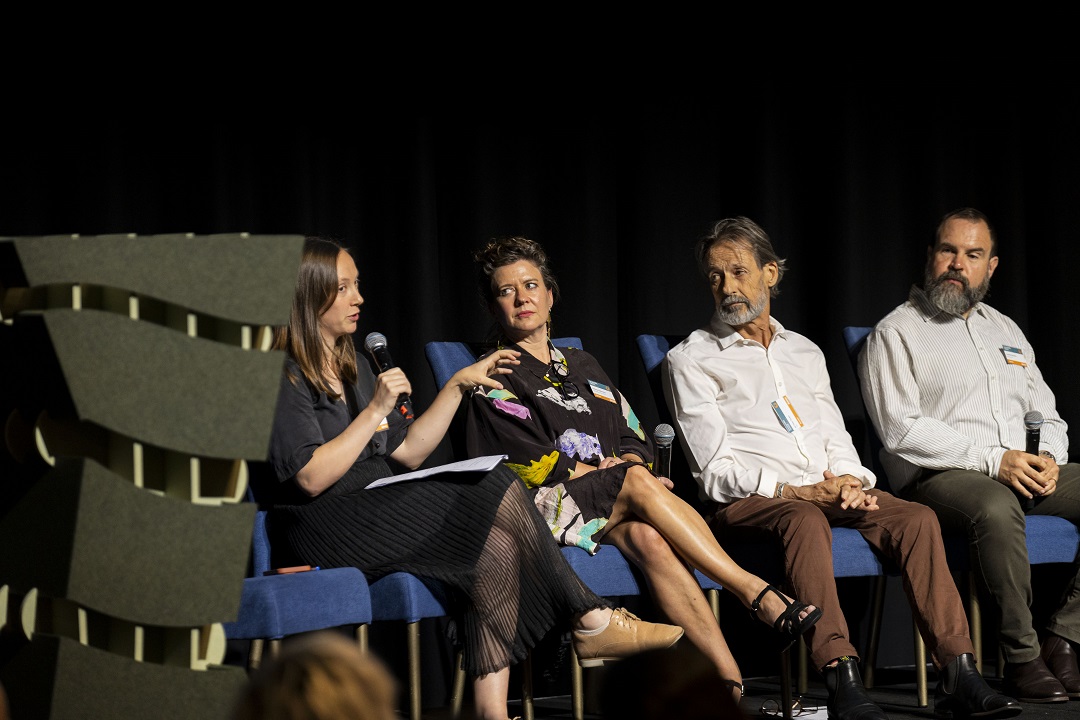
Opening the discussion, moderator Emily Gentillini, Senior Engineer and Sustainability Consultant at ARUP, observes that circularity in the built environment is often misunderstood as little more than recycling or specifying recycled content. The Australian Government’s Circular Economy Framework, which introduces metrics such as material productivity and material footprint, points to the evolving circular thinking in Australia, she adds.
Defining circularity: Designing for what’s next
To Katherine Featherstone, Senior Manager for Products and Materials, Green Building Council of Australia (GBCA), circularity is inherently future-focused and full of possibilities. “The interesting thing about circularity is that there isn’t an end in sight, so everything that you’re designing for, is for what’s next.”
Speaking from the perspective of his field of expertise – buildings – Dr Peter Tonkin, Founding Director, Tonkin Zulaikha Greer, says it’s about buildings that are robust and long-lived, and designed for loose fit and long life. “Loose fit means you can change them, and long life means they’re durable and robust, and often the things that the community values,” he explains.
Jonathan Mountfort, Urban Director, Autex Acoustics takes an even broader view, framing circularity as a principle as old as evolution itself. Nature, he argues, has always operated in closed loops, continuously reusing materials without waste. Similarly, manmade materials in the built environment present an opportunity to be kept in use for as long as possible to provide long-lasting benefit to humanity without harming the ecosystem at end-of-life. “That’s how we need to start thinking about the way that we use materials so that we actually work in tune with how natural cycles move through things.”
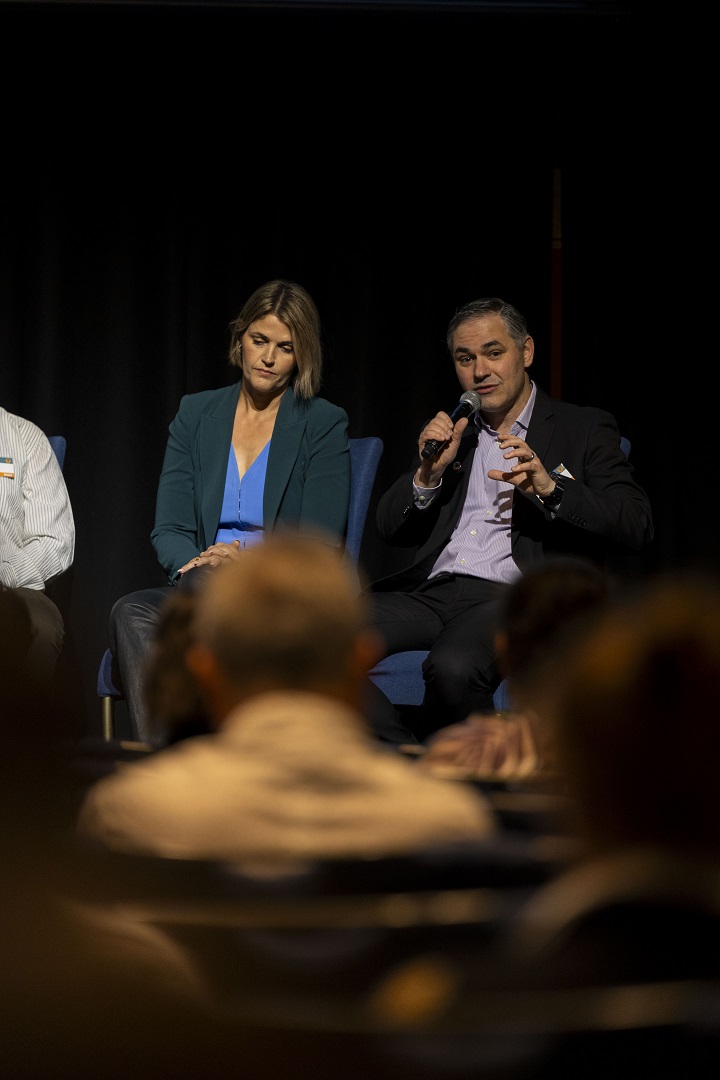
“For me, it’s all about value, and how we perceive value,” says Jo Taranto, Environmental Strategist and co-founder, Good for the Hood. While recycling has played an important role in diverting waste from landfill, she describes it as a retrofit solution to a fundamentally linear economy. A true circular economy, by contrast, unlocks entirely new ways of understanding value, longevity and business models, which are shifting from ownership to providing services. Building parts such as facades, furniture and fitouts, for instance, become assets that can be leased, recovered and redeployed, presenting opportunities for value throughout the supply chain.
GECA’s Josh Begbie distils his definition of circularity in the built environment into two parts: Selecting materials that can be used as long as possible, and having the ability to take them apart at end-of-life without damaging the environment, and reclaim and reuse them.
“The materials that we choose really matter,” he says, explaining that circularity demands design strategies that allow buildings and infrastructure to be adapted rather than destroyed when needs change. How materials are put together matters, because disassembly is a prerequisite for extended use into the future.
Barriers to circularity: Culture, cost and complexity
While the discussion underpins the importance of long-term future focus and value in designing projects and creating places, not just for people but also for the environment, Gentillini reflects on the significant barriers to implementing circularity.
Circularity – contrary to popular perception – doesn’t necessarily mean degrowth, Taranto says. Introducing the concept of ‘consumption sufficiency’, she explains it is about producing only what’s needed, and also being comfortable with the fact that quality might be better than quantity.
For those who grew up in the consumer-driven economy of the 80s, this represents a profound cultural adjustment for fear that “if we do something differently, we might damage our way of life”. This fear must be removed, she adds, especially when it comes to repurposing buildings that are still useful and healthy.
From a product manufacturer’s perspective, Mountfort identifies the current infrastructure and logistics as major barriers. While innovative circular processes exist, getting consistent material flow back into the process is a major issue. Recovering materials from buildings, particularly in remote locations, is difficult without systems designed to bring them back into productive use.
Autex, he says, has developed acoustic panels manufactured using textile transformed from the rigid polymer of PET bottles. At the panel’s end-of-life, the textile waste is broken down back into a rigid polymer again through a special process created by Autex so that the material re-enters the recycling process.
Mining the city: Unlocking hidden material value
Emphasising the urgent need to “mine the city” for value sitting in rubbish, Mountfort recalls a recent experience in London where he came across a company, whose business model was based on dismantling building fitouts and channelling each material into a specific reuse pathway. This entrepreneurism is required to prevent “so much value leaving a building site in a skip”, especially when money can be made from repurposing these materials.
In response, Dr Tonkin highlights that the absence of cost mechanisms that reward material recovery and reuse is a major barrier. In most cases, sending waste to landfill remains the cheapest option for builders and building owners, making circular outcomes financially unattractive. Creating a business model would help capture that value, leading to the reuse of materials in a way that supports the planet rather than destroying it.
Achieving high recycling rates also often depends on committed clients, such as local councils willing to invest time and money, which for many commercial developers, are a deterrent.
Economic incentives underpin many of these challenges, observes Begbie, pointing out that when circular options are more expensive upfront, they are often dismissed as “too hard”. Shifting this dynamic requires a broader understanding of long-term value and costs, not just immediate budgets. It’s not an option about doing the right thing – it’s about doing the right thing in the most effective way, and financial incentives can be redirected to drive innovation, he says.
The information gap: Data as a missing enabler
Data, or the lack of it, is another critical barrier to circularity, notes Featherstone, pointing to research showing how little information Australia has on construction and demolition waste. Without reliable data on cities’ materials bank – what materials exist and where they are – it is impossible to plan effectively for reuse. Better data would enable projects to anticipate material availability and reduce costly delays from having to source materials from distant locations, improving both economic and environmental outcomes.
Designing for disassembly
Design decisions also play a crucial role, with Mountfort stressing the need to embed circularity in the specifications. Doing the right thing should be made easy and possible. For instance, glued or nailed assemblies, composite materials and complex hybrids make disassembly difficult or impossible, creating a barrier to reclaiming the material and recycling it for reuse.
Simple choices such as using mechanical fixings instead of adhesives, specifying homogenous materials instead of layered composites, and creating demountable designs can dramatically improve recovery outcomes.
However, enforcing these processes on site has a time and cost component, and also requires oversight.
“Designing that into the system helps so much, because they have no choice but to use a system if you’ve systematised the circularity,” he adds.
Product innovations and closed-loop thinking
Elaborating on the processes at Autex for recycling products at end-of-life, Mountfort says they have a technical nutrient cycle in place for their acoustic panels beyond their typical downcycling pathways. To get the textile waste back to the top of the recycling tree, they have developed a special pelletization kit that turns the waste into PET pellets, creating a closed-loop system that feeds material back into global recycling streams and new products.
To overcome the limitations in recycling plastic, Autex is also trialling a new process that deconstructs the material into its constituent polyols and oil, returning it to its pre-plastic state, which creates new opportunities for reuse as virgin, high-value materials, thereby, delivering true circularity in a technical cycle.
Tracking impact and accountability
Speaking about creative innovations in the building material space from alternative reinforcement components to advances in low-impact concrete, Begbie underlines the importance of designing materials with end-of-life recovery in mind, rather than deferring responsibility to future generations. By planning and designing for a material’s end-of-life phase, there is more opportunity to mine the built environment for a materials bank needed in the future to avoid using virgin materials.
Considering the long-term impact, accountability and transparency, particularly in construction and demolition waste tracking, are essential to identifying lost value and driving change, says Begbie.
Cross-sector collaboration and industrial symbiosis
Featherstone argues for better sharing of information between different sectors so that materials considered low value in one sector could be reused in another where they may be of high value. Australia’s geographic vastness has led to the development of regional hubs that could provide data on the location and availability of materials, creating opportunities for industrial symbiosis. By not having this high-level picture, she says “we are missing the value because we’re not systematising the thinking that goes into it”.
Reinforcing this point, Taranto highlights the potential for cross-sector collaboration between the built environment and industries such as textile, fashion, agriculture, FMCG and packaging. “Unless we look beyond our own sector, we will miss the bigger picture.”
Adaptive reuse and regenerative outcomes
Adaptive reuse, explains Dr Tonkin, is specifically related to what is being adapted and for what purpose. Cautioning against treating adaptive reuse as a universal solution, he notes that its feasibility depends on the original building’s structural capacity and flexibility without being limited by a particular use. Beyond materials, the third pillar of circularity – regeneration – underlines the importance of planning building projects in a way that they support nature, not destroy it.
Examples such as the transformation of a former brick pit landfill, about the size of a suburb in southern Sydney into a thriving, heavily used park over a couple of decades, illustrate how long-term, regenerative thinking can restore ecosystems and create lasting value for the community. “That’s a factor of the built environment – that you’ve really got to think about the future,” Dr Tonkin says.
Unintended consequences
Being mindful of what goes into a material can prevent harm to the environment, says Begbie. The choices one makes about materials to get the desired design outcomes have consequences, not only during production and use but also during demolition, when soil and water can be impacted by chemicals, sometimes forever. Thinking about the impact of those choices and how these materials create value in the long-term through recovery can improve long-term outcomes, he adds.
Adding to the contamination conversation, Featherstone speaks of the unintended consequences on nature from doing something good. Sugarcane bagasse plates, considered a green alternative to the traditional disposable plates, have one of the highest concentrations of PFAS, a highly toxic chemical that has major health risks.
Not scrutinising the ingredients right at the beginning of designing a new product will lead to these unintended consequences, adds Mountfort. “You get greenwashed before you even start,” he reflects as he underscores the need to follow supply chains back to their origins to eliminate harmful inputs.
Certification, transparency and the road ahead
Certification emerges as a critical tool in navigating both process and material complexities, with Featherstone stressing the value of having a product certified to confirm that it meets the necessary standards. Third-party certification provides confidence, accountability and trust in a landscape where it’s difficult to independently assess and verify every product claim.
“When you have data,” explains Begbie, “you have transparency, clarity, and certainty about what you’re getting.”
However, the understanding of intellectual property is presenting as a major barrier to certification, with companies unwilling to disclose the ingredients in their products. The ingredients are not the trade secret, it’s the process and the combination, says Mountfort as he calls for more transparency because people need to know what the products contain so that they can reuse them.
Like building safety regulations that took decades to evolve to their present form, Dr Tonkin believes environmental circularity is moving towards a future where compliance will be mandatory, not discretionary. “It’d be great to see a circularity culture, like our safety culture. I hope the governments of the world get behind that level of urgency to start to put in place those kinds of regulations.”
This panel was sponsored by our partner, Autex Acoustics.
Sign up now to receive updates for the 2026 Sustainability Summit – where practitioners, thinkers, and community leaders will continue shaping the future of sustainable design.
Main image: (L-R) Emily Gentillini, Katherine Featherstone, Dr Peter Tonkin, Jonathan Mountfort, Jo Taranto and Josh Begbie
