The Forest
Woods Bagot
Muwinina Country | Hobart, TAS
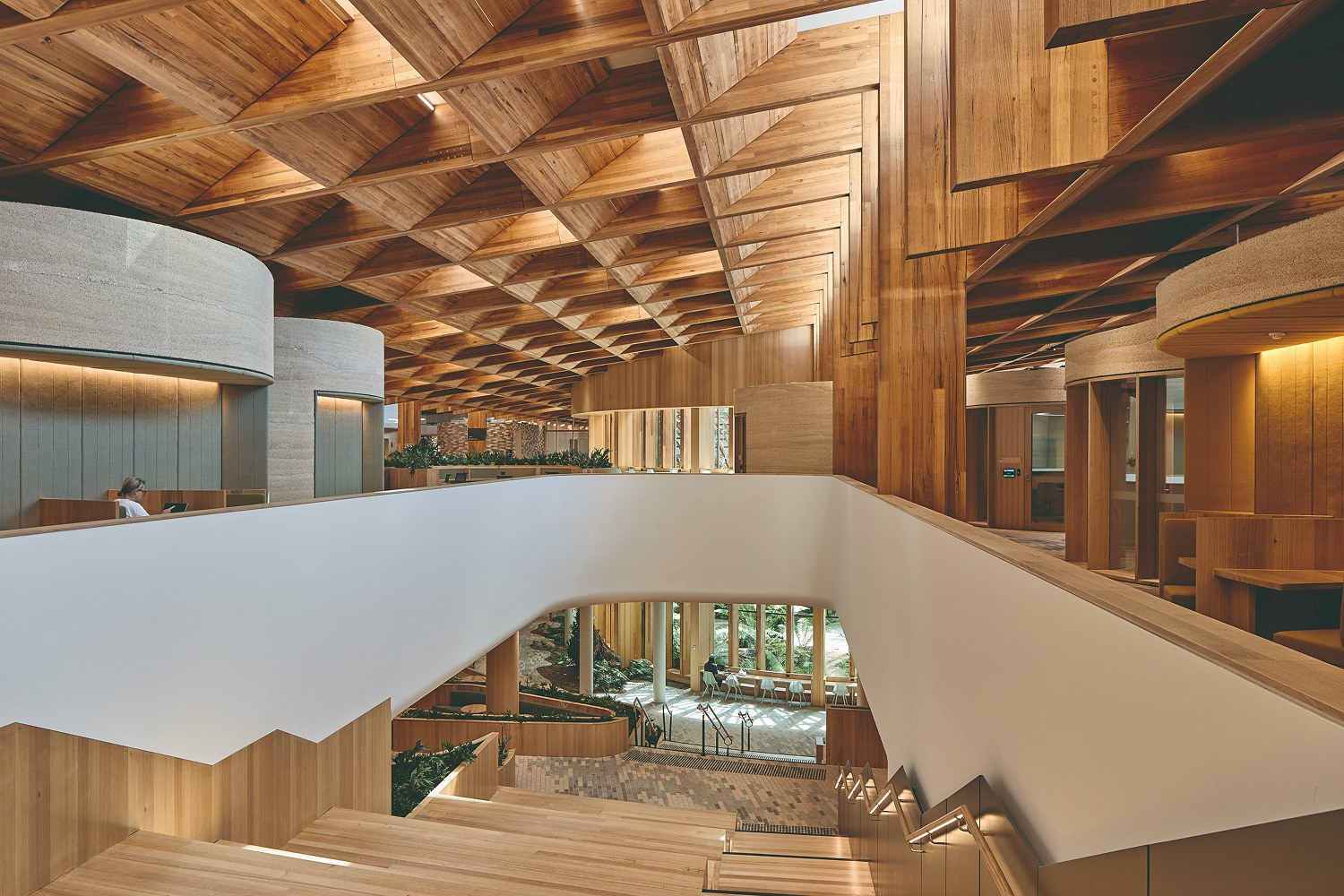
The Forest is the University of Tasmania’s flagship Hobart campus, providing an inner-city hub for learning, research, collaboration and community. Designed by Woods Bagot, it is a highly connected campus that weaves together existing structures and new interventions with integrated landscape, through-block connections and publicly accessible green seams.
The project objectives were to revitalise, adapt and activate the Melville Street site through a highly connected masterplan that honours heritage, celebrates natural landscape, and accommodates the diverse teaching needs of the university. Key design principles included a building that enhances the distinctive natural and human qualities of nipulana/ Hobart; is warm and welcoming to staff, students, and the community; and embraces people and their ways of working on a human scale.
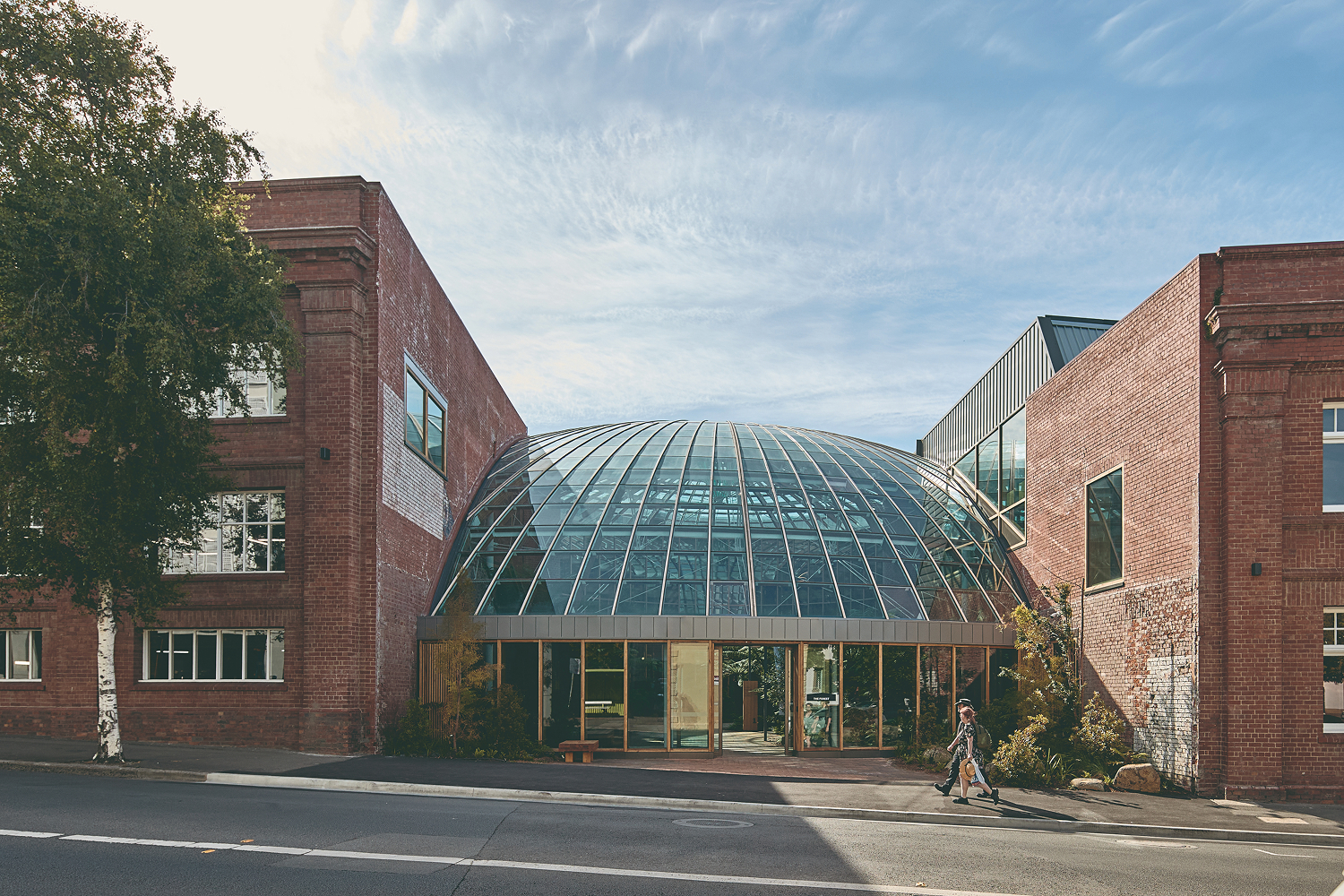
Working with found conditions, the design team used the existing to drive the conceptual direction of the new. These included the heritage-listed brick warehouses dating back to 1922, when the site was used as a dry timber store and sawmill outlet. The redevelopment also includes the restoration of the iconic conservatory dome, designed by Morris-Nunn and Associates in 1997.
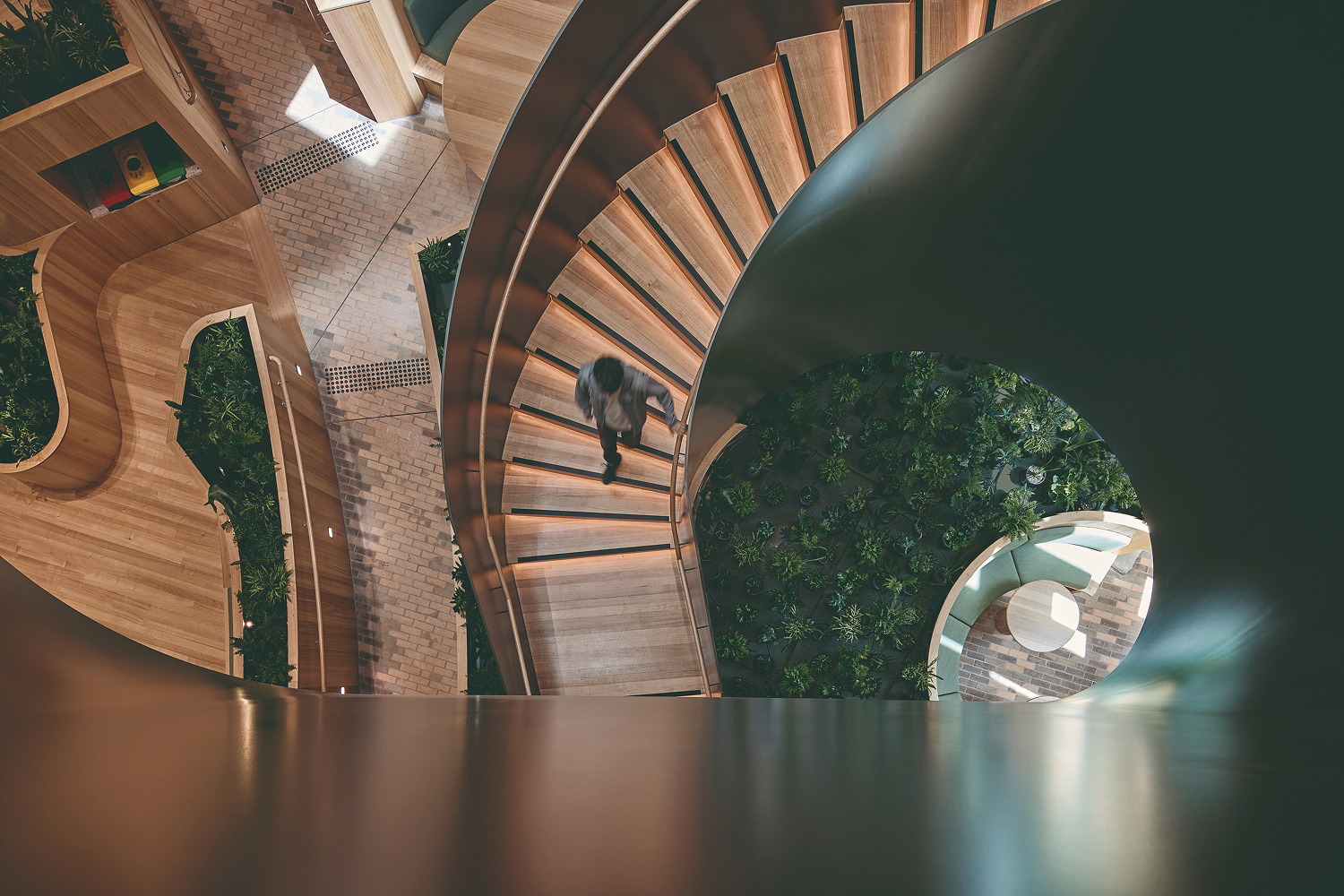
Beneath it, a reinstated forested atrium provides the civic heart of the campus, celebrating history, biophilia, and climate-responsive design. With landscape architecture by REALMstudio, the planting re-establishes a pre-colonial ecosystem within the city through ethically sourced mature trees and visible water systems that recreate the historical rivulets that ran through the site.
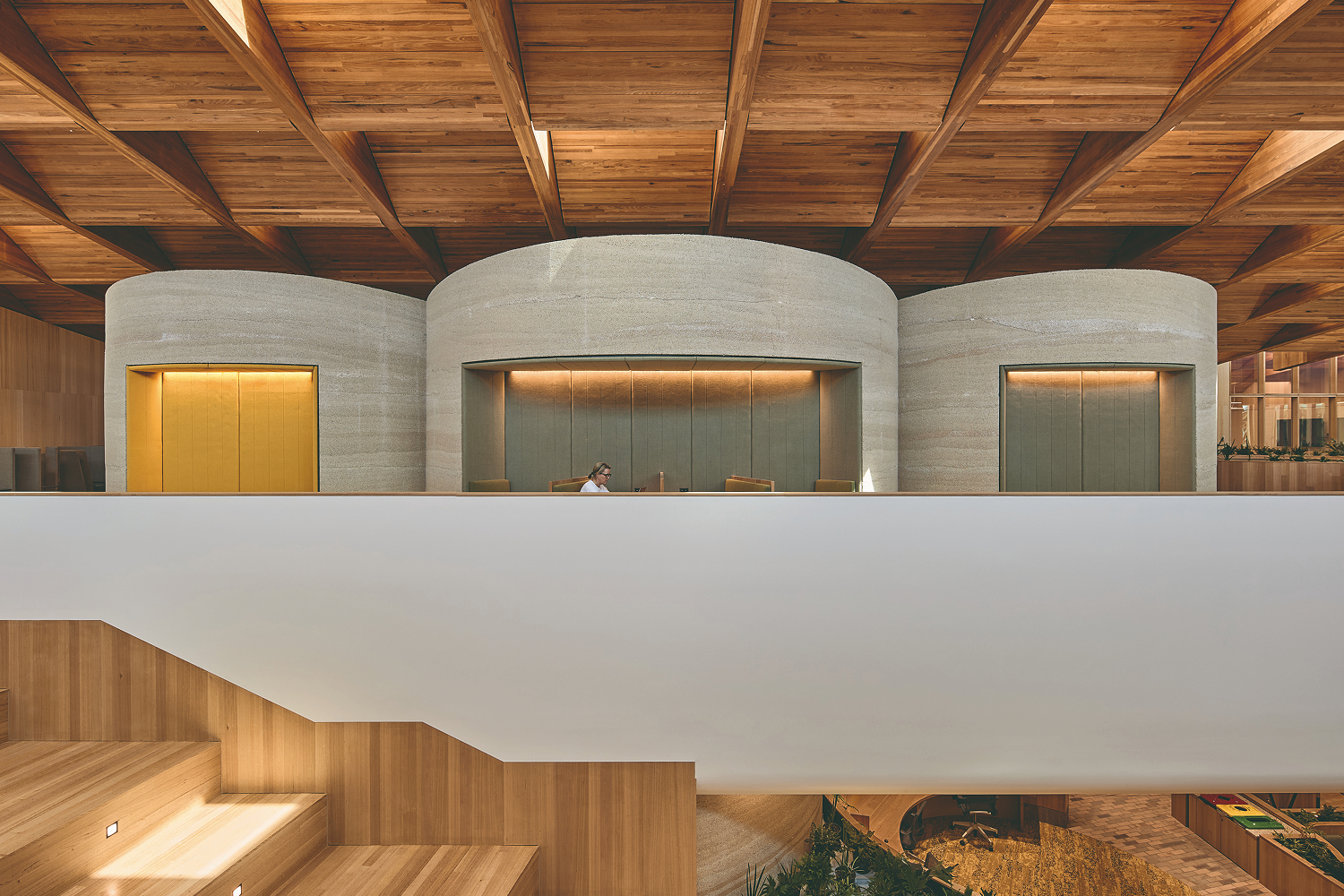
As a highly sustainable university campus, the project includes strategies for climate resilience and inclusive urban transformation, integrating solutions to address climate action, community resilience, and carbon reduction. As an example of mass timber construction, adaptive reuse, and the largest commercial use of hempcrete in Australia, the new campus combines innovative and experimental approaches to resilient and sustainable design while reviving an iconic piece of local heritage.
Photography: Peter Bennetts
