New Sydney Fish Market
3XN GXN Architects in association with BVN Architecture and Aspect Studios
Gadigal and Wangal Country | Glebe, NSW
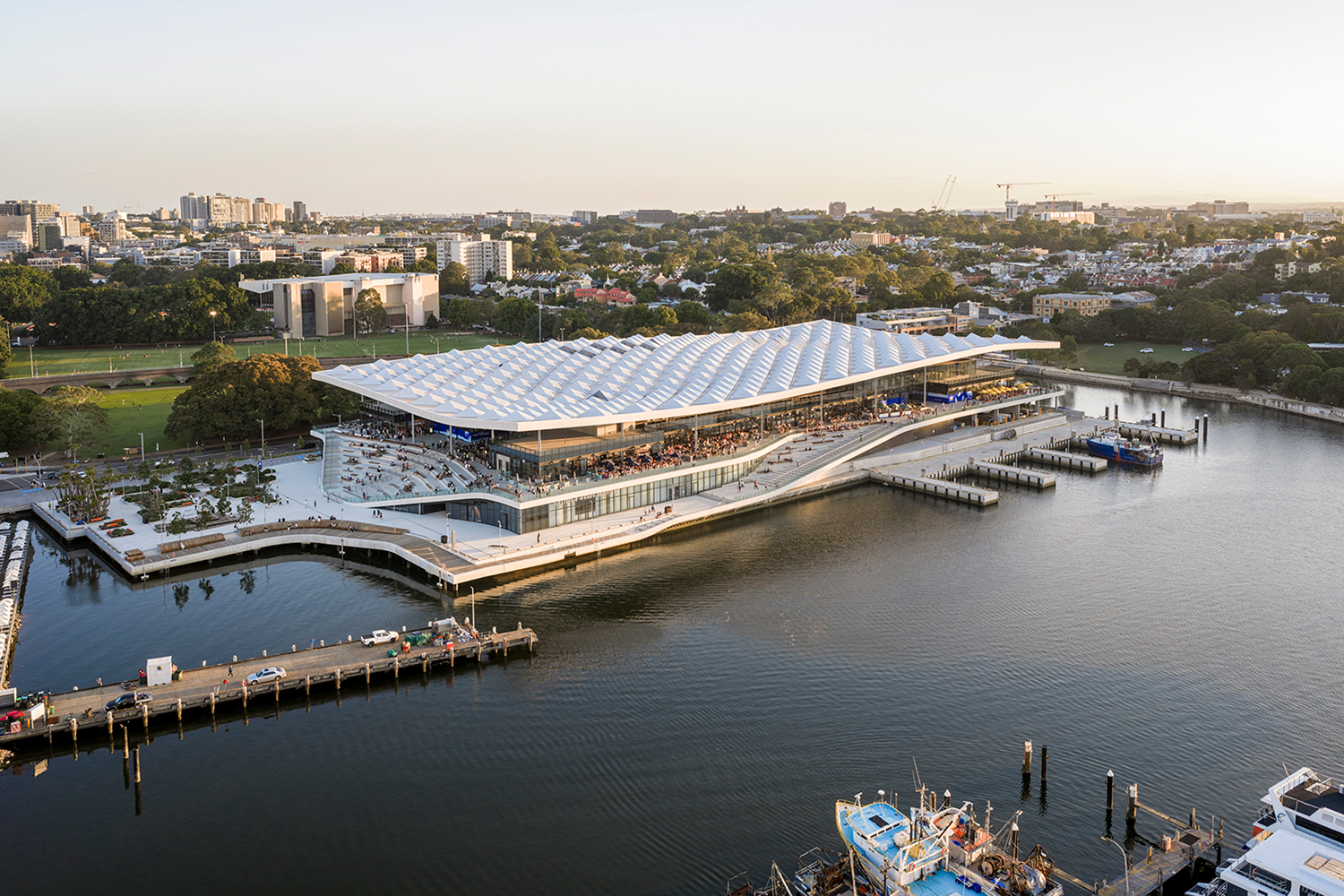
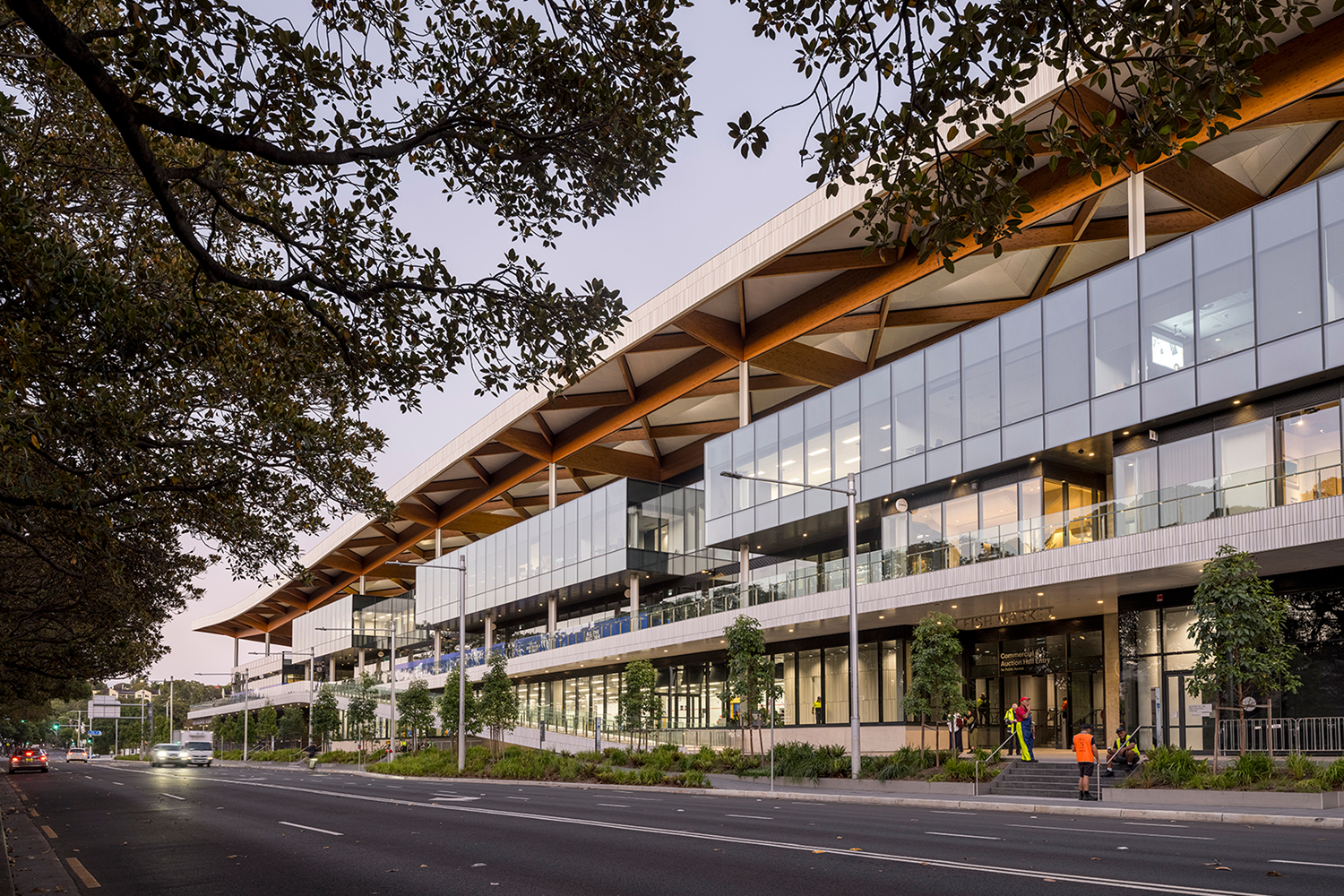
The new Sydney Fish Market embeds sustainability across architecture, infrastructure and landscape, demonstrating how a complex industrial building can operate as a high-performance civic asset while regenerating its harbour-edge environment. Integrated sustainability initiatives address urban ecology, energy and water savings, material selections, waste redirection and community outcomes.
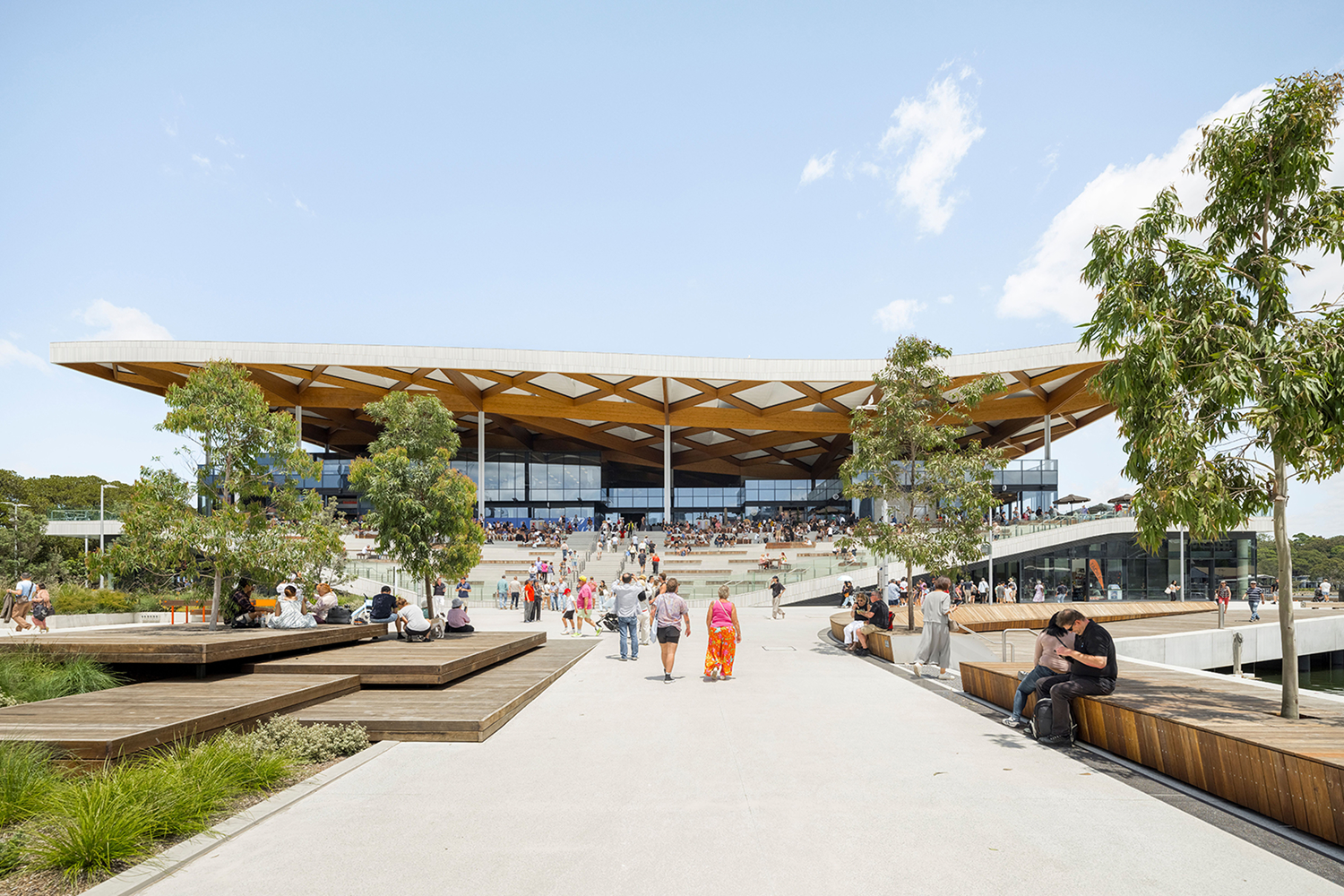
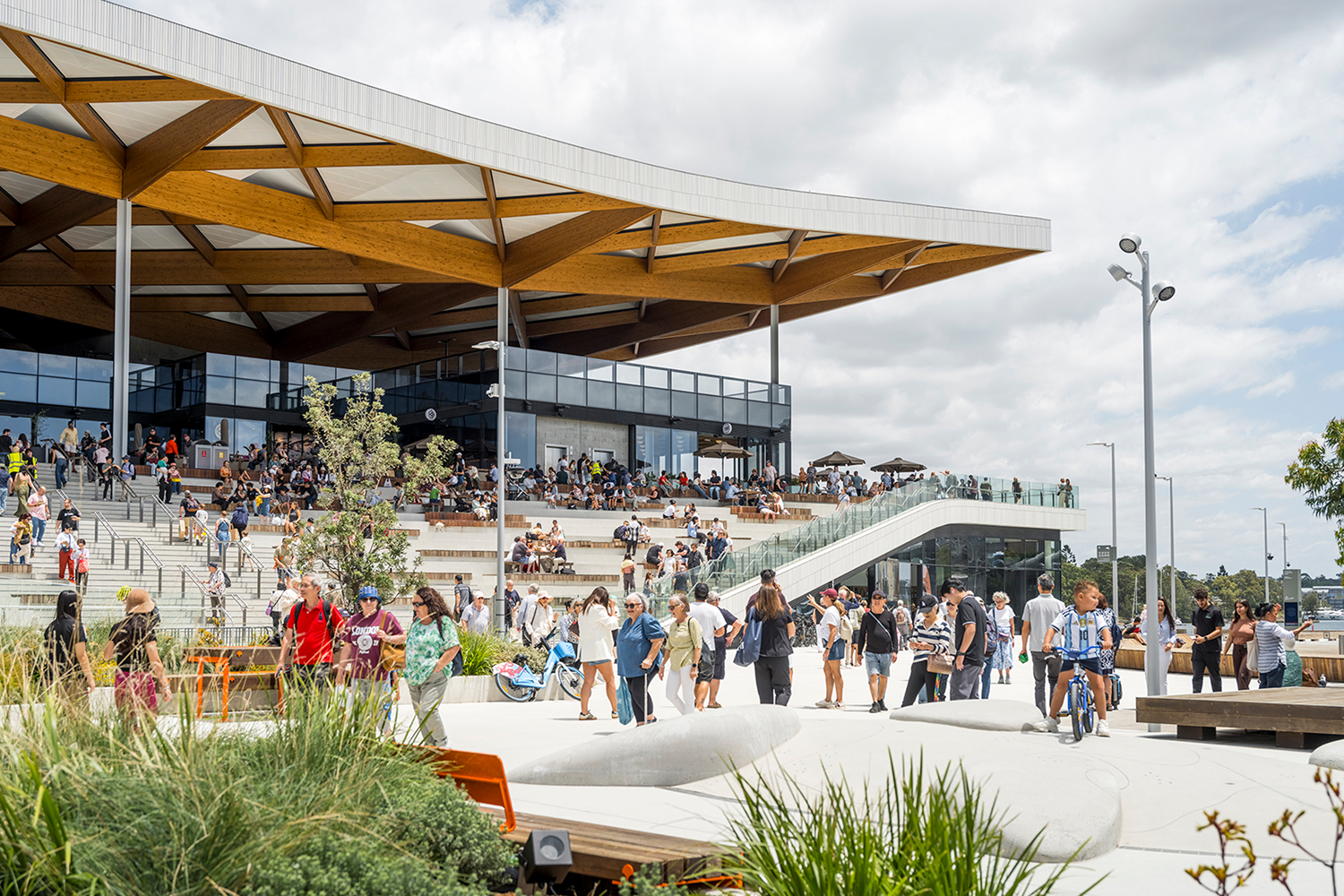
Urban ecology is central to the project’s response to its waterfront setting. Indigenous and wetland planting increases biodiversity, filters runoff and improves microclimate conditions. Beneath the waterline, artificial reef structures, 3D-printed coral panels, suspended fish habitats and sea-bins integrated into the seawall support marine habitat formation and biodiversity recovery, transforming the building’s interface with Sydney Harbour into an ecological asset.
Energy performance is driven by passive design and integrated building systems. The 20,000 square metre roof canopy with extensive skylights maximises daylight penetration while its geometry mitigates solar heat gain and promotes natural ventilation, reducing mechanical energy demands. Approximately 10,000 square metres of rooftop photovoltaic panels contribute on-site renewable energy generation, while rainwater harvesting and closed-loop recycling dramatically reduce consumption of potable water for daily market operations.
Water-sensitive urban design measures capture and treat stormwater, and operational waste systems have been comprehensively re-engineered to divert up to 80% of waste from landfill through integrated sorting, recycling and food-waste processing. Together with over 6,000 square metres of public waterfront space reconnecting the community to Blackwattle Bay, these initiatives demonstrate a holistic sustainability approach where environmental performance, ecological regeneration and civic benefit are embedded within the architecture.
Photography: Rasmus Hjortshøj
