-
22 April 2026
What emerges is not a single doctrine of sustainable design, but a set of recurring preoccupations: energy, scale, restraint, beauty, and an increasingly urgent reckoning with carbon.
Together, these judges map the profession’s slow but unmistakable shift from sustainability as accessory to sustainability as ethos.

In 2018, now-veteran jury member Jeremy Spencer (above), imagined the suburban home not as a passive consumer of energy, but as a small-scale power station.
His vision was pragmatic and quietly radical: garages humming with electric vehicle chargers, rooflines subtly reoriented northward, photovoltaic systems expanding until they ceased to be novelties and became architectural givens.
The future, as Spencer saw it, was not just electrified but domesticated sustainability folded into daily life, governed by something as intimate as a household energy budget.

That same year, Elizabeth Watson Brown (above), now a Greens Member of Parliament was less speculative and more blunt. Climate change, she insisted, was the issue, while carbonisation and fossil fuels are its unmistakable villains. Her frustration was directed not at a lack of technology, but at a lack of fundamentals: oversized houses, squandered space, and a profession too easily distracted by “whizz-bang” solutions at the expense of passive design principles long since understood.
Sustainability, in her account, had not yet escaped its status as an add-on; it remained something applied rather than assumed.
One time UNSW lecturer Steve King, from consulting firm Linarch, offered a characteristically dry counterpoint. He had no objection to bolt-ons, he noted at the time—after all, what can be bolted on can also be removed, reused, rethought.
But King’s deeper concern lay elsewhere: in greed, entitlement, and the cultural appetite for excess. His prediction for sustainable design was not technological but moral—a return to smaller dwellings and simpler expectations, driven less by innovation than by acceptance.

If King diagnosed the cultural roots of environmental damage, David Palin (above), from Mirvac, focused on systems. Sustainability, he argued at the time, only works when it is embedded—when its intent survives the journey from drawing board to occupant behaviour.
His emphasis on indoor environmental quality and wellbeing marked an expansion of the sustainability brief, one that recognised buildings not just as energy users, but as environments that shape productivity, health, and daily experience.
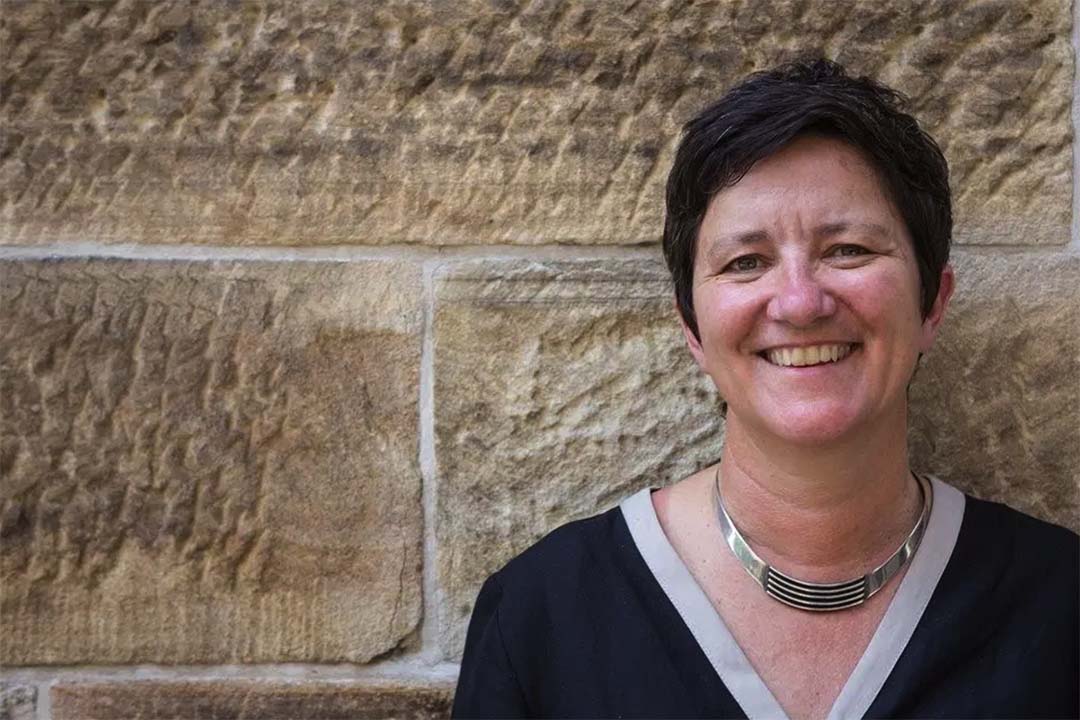
Always on the cutting edge, architect Caroline Pidcock (above), went further still, rejecting incrementalism outright. Business as usual, she warned, could not be refined into adequacy. What was required was a paradigm shift—one that drew inspiration from nature’s own long-running research and development program.
Biophilic design, in her framing, was not aesthetic garnish but a form of systems thinking, capable of producing buildings that were net-positive, waste-free, and genuinely joyful to inhabit. Sustainability, if it was to be realised, could not be layered on; it had to be inseparable from the whole.
By 2020, the conversation had acquired a new confidence, despite the raging global Covid pandemic that now overtook everyone’s lives.
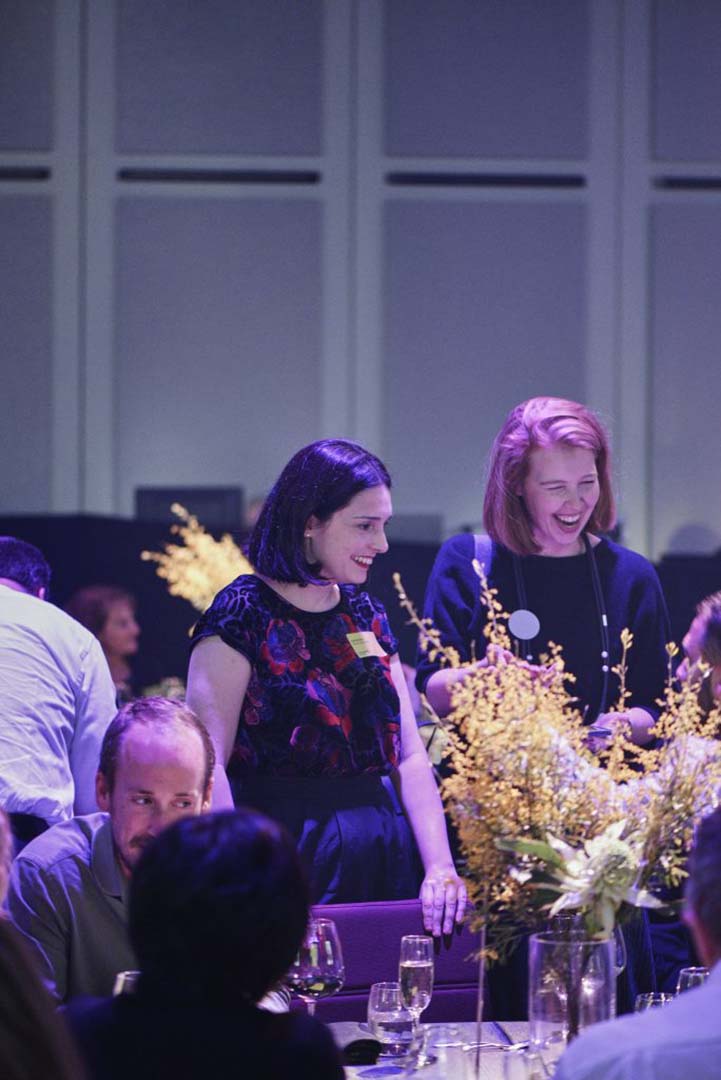
Architect Jean Graham (above, left) spoke less about sacrifice than about celebration.
“The Sustainability Awards entries”, she once wrote, “should demonstrate that environmental responsibility and architectural beauty were no longer opposing forces”.
For her, “Beauty without compromise” was not a slogan so much as a challenge—to prove that sustainable design had matured beyond virtue signalling into sophistication.
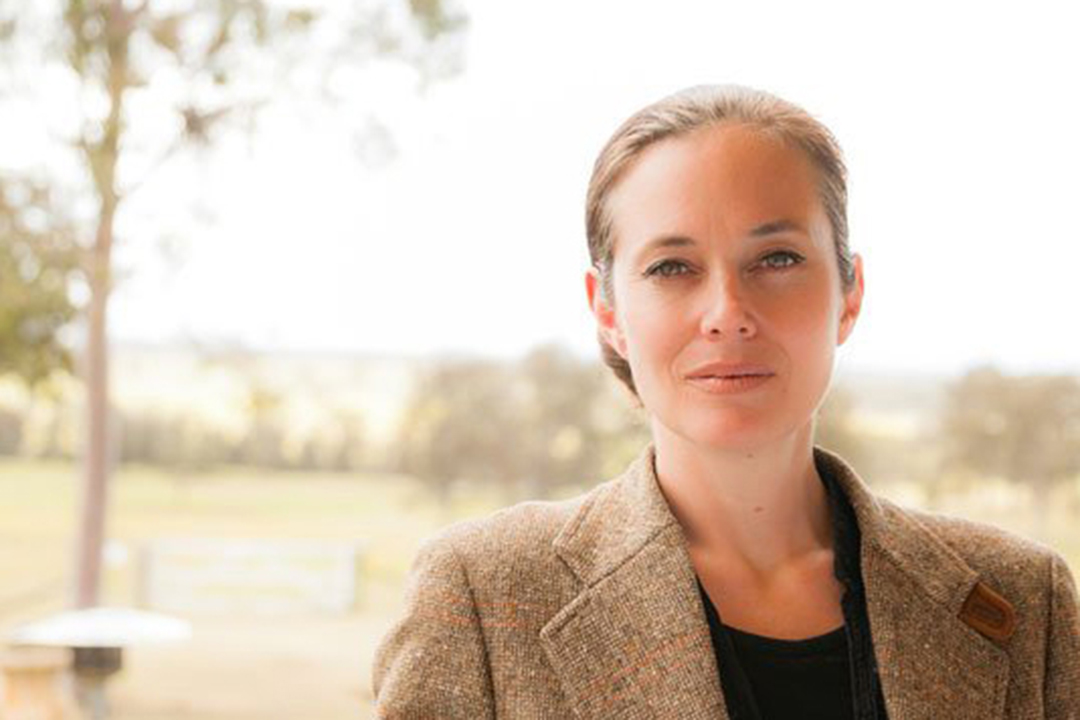
Known as a trend setter in the industry, Kate Harris (above), then CEO of GECA, sensed the same inflection point. The industry, she said, knew what needed to be done; the task now was to recognise leadership and real implementation.
Climate change and materials loomed large in her thinking; particularly as extreme weather events made abstraction impossible. “Sustainability was no longer theoretical, but rather logistical, ethical, and increasingly material-specific,” she said at the time.

Suzanne Toumbourou (above), then from ASBEC but now CEO of the Australian Council for Recycling, grounded that urgency in numbers. Buildings accounted for nearly a quarter of Australia’s emissions and more than half of its electricity consumption. “Net-zero was not a future aspiration, she argued, but a present capability.
The slow uptake of solar and batteries was beginning to accelerate, and with it, a broader acceptance that sustainability and quality were not separate ambitions,” noted Toumbourou.
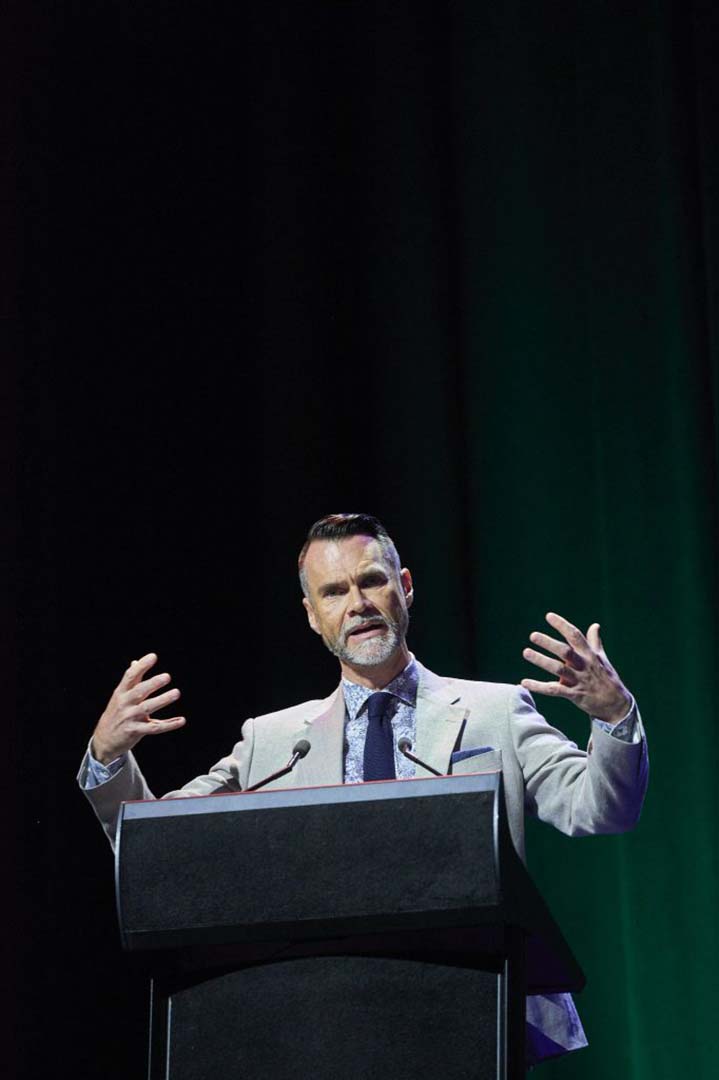
The Supply Chain Council’s Robin Mellon’s (above) contribution subtly widened the frame again. Sustainable design, he observed, was finally beginning to look beyond energy, water, and waste to social and economic outcomes: human rights in supply chains, resilience, local economies, inclusion.
The promise of sustainability lay not just in minimising harm, but in multiplying benefits.
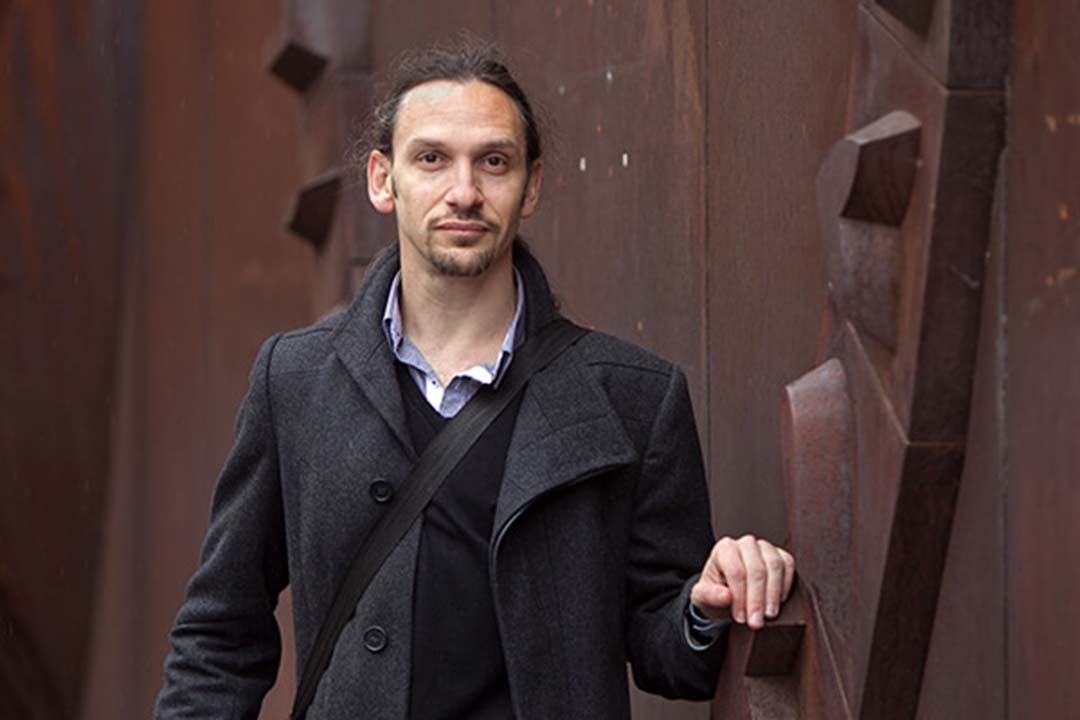
And then there was Indigenous architect Jefa Greenaway (above), who articulated perhaps the most expansive view of all. The Sustainability Awards, he suggested, were valuable not merely as recognition, but as a forum—a place where the diversity of approaches could be seen, debated, and legitimised. Sustainability, in this telling, was not a single pathway but a field of possibilities, underpinned by creativity as much as responsibility.
Taken together, these judges reveal a profession in transition. Early optimism about technology gives way to harder questions about scale, consumption, and values.
Add-ons become systems; systems become cultures. The language shifts from mitigation to regeneration, from efficiency to care. What once sounded aspirational now reads as overdue.
If there is a common denominator in all this, it is this: sustainable design is no longer about doing less harm. It is about imagining—then insisting upon—a built environment that actively contributes to a better future. The judges saw it coming. The challenge, as ever, is catching up.

According to the head Sustainability Awards judge, Dick Clarke (above), “Judging criteria have tightened up over the time I have been involved, in an effort to eliminate greenwash and spin, and get down to the facts of the matter.”
“At the same time standards and regulations have lifted, although not consistently, and not to the heights we might want. But as the minimum approvable standards lifted, projects which might have been leaders years ago have been overtaken,” says Clarke, who has also for the head judge for the past 11 years.
“That’s not to say those projects are now worthless – far from it! They are rungs on the ladder of progress, of architectural evolution – demonstrating progress, sharing lessons, and inspiring those who took notice and followed,” he notes.
“When human history moves forward”, says Clarke, “achievements always stand on the shoulders of those who went before. While we are seeing some idiots in power dismantling progress, their impact will be very temporary, and more evolved intelligence will recover and move further forward.”
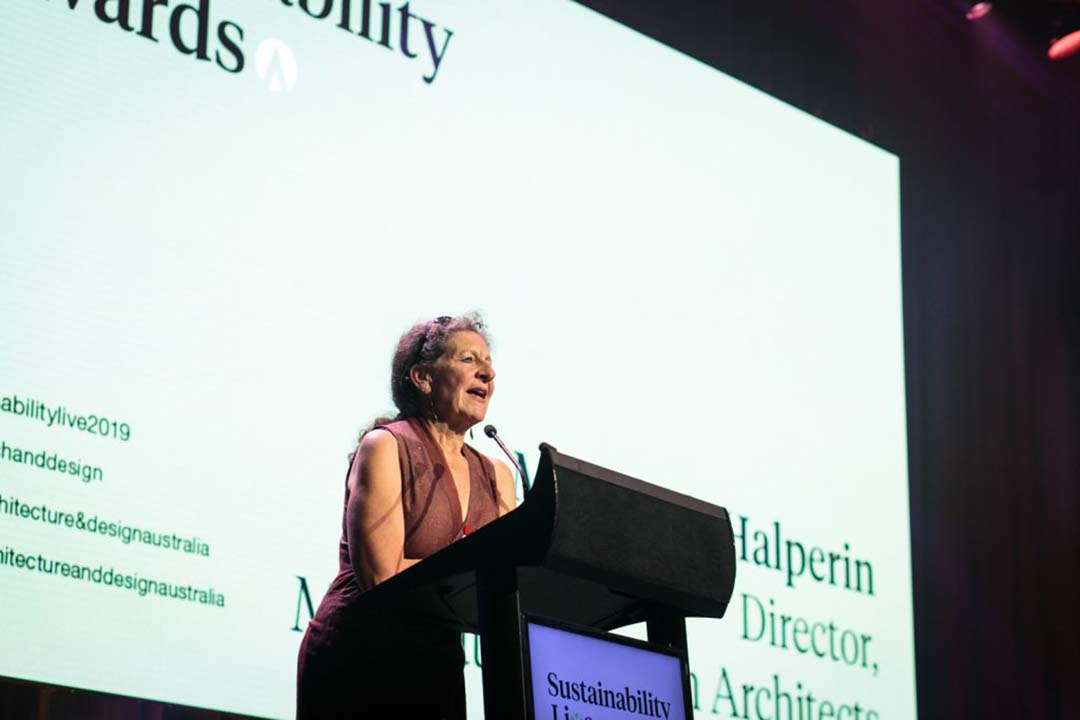
As former and current judge Mahalath Halperin (above) puts it, “…now we tend to take a more holistic approach, more than just the physical side of design and materials, but better technology, social and health issues, much improved materiel options and more innovation in solutions from totally passive to super hi tech.”
“Ideally in theory everything being built now must be better than 20-30 years ago simply because the regulations are more energy, efficiency and sustainability focused – and yet that doesn’t seem to be the case. Thus, the need to promote the exemplars and keep pushing the cause”, she says.
Images: Supplied.
About the Sustainability Awards
Celebrating its 20th anniversary in 2026, the Sustainability Awards is Australia’s longest running and most prestigious program recognising excellence in sustainable design and architecture. Entries are evaluated by an expert judging panel, with winners across multiple categories announced at the annual Sustainability Awards Gala on 12 November 2026 in Sydney. For updates on entry openings or to enquire about remaining sponsorship opportunities, please click here.
